
Alice: IFC Leads US$40M to Turn a Brazilian Health Plan Into an AI Company
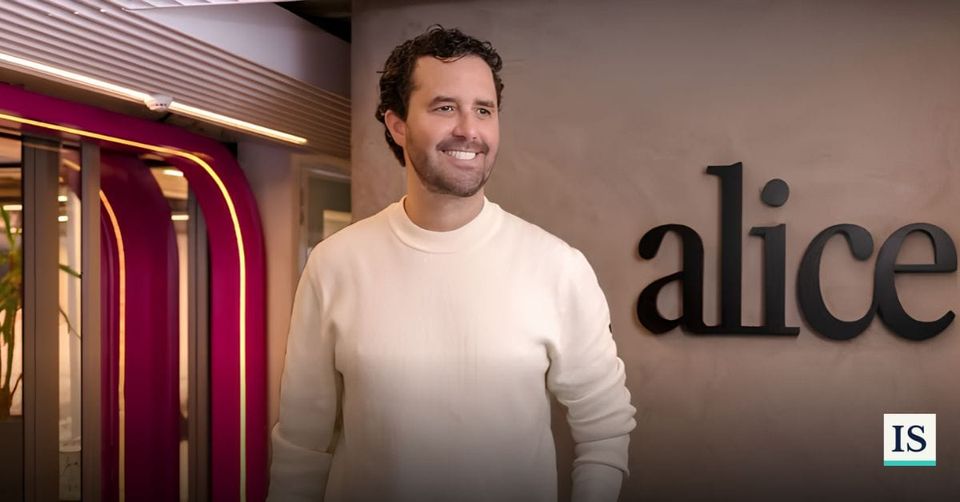
Alice, a São Paulo-based health plan operator, raised US$40 million in a Series D round led by the International Finance Corporation (IFC), the World Bank Group's private-sector investment arm, announced on October 20, 2026. Development finance institutions DEG of Germany and Finnfund of Finland joined as new investors, alongside existing backers Kaszek, ThornTree Capital and Canary. The valuation was not disclosed. It is Alice's first major equity round since a US$127 million Series C led by SoftBank, which was followed by a US$22 million extension led by Kaszek in 2025. SoftBank did not take part in the new round, sold part of its stake to Canary and left Alice's board. The company was founded by CEO André Florence, a former CFO of ride-hailing app 99, along with Guilherme Azevedo and Matheus Moraes, and launched its plan in 2020.
Alice now has more than 100,000 members, up from about 6,000 at the end of 2021. Its annualized recurring revenue passed R$1.2 billion (roughly US$220 million), growing about 70% year over year, and the company targets R$2 billion by 2027. The funds will expand its use of AI across operations and member care. In November, Alice plans to roll out Alice AI to all members, an in-app assistant that uses each person's medical history to guide them to telemedicine, specialists or hospitals. The company says the tool does not make diagnoses and is reviewed weekly by its clinical team. Alice also reports that AI has cut care operating costs by 18%, shortened waiting times by 12.5% and roughly halved the time doctors spend on paperwork, and that nearly all of its software code is now written by AI agents.
Market Context
Alice operates in Brazil's private health plan market, which covers about a quarter of the population and is regulated by the National Supplementary Health Agency (ANS). After several difficult years, operators are profitable again: the sector posted net income of R$12.1 billion in the first half of 2026, slightly below the R$12.9 billion of the same period in 2025, according to ANS. Medical costs still absorb 81.9% of revenue, which leaves little room for administrative expenses.
That is where Alice is positioning itself. The company says it is working toward administrative costs of about 2% of revenue, compared with an estimated 7.5% to 12% across the market. Its model combines the insurance plan, the medical record and the care team in one company, an approach similar to integrated U.S. players such as Kaiser Permanente. The IFC, DEG and Finnfund lineup also follows a broader trend of development finance institutions taking larger roles in Latin American tech rounds as some global growth investors pull back.
Key Signal
"AI models are available to any company. What isn't available is context." André Florence, co-founder and CEO, Alice (via Startups, translated from Portuguese)
Regional Relevance
For the United States, Alice is a test case for a debate already under way at home: how far insurers should go in using AI with patient data. Large U.S. insurers have faced lawsuits and regulatory scrutiny over algorithms used in coverage decisions. Alice is applying AI to guidance, paperwork and routing rather than to approving or denying care, a distinction U.S. regulators and health systems are watching closely. The deal also shows that IFC, in which the U.S. is the largest shareholder, is willing to lead growth rounds in AI-driven health businesses in emerging markets.
For Brazil, the round signals that institutional money is returning to health tech after the post-2021 funding slowdown, with development banks partly filling the space left by investors like SoftBank. If Alice can show that AI meaningfully lowers costs while keeping care quality high, it puts pressure on established operators that run with heavier administrative structures. It also raises new questions for ANS about how AI assistants that use medical records should be supervised.
The Other Side
Is Alice profitable? The company disclosed revenue and growth but not profit, losses or cash burn. Brazil's health plan market rewards scale, and 100,000 members is still small next to the country's largest operators. Without margin data, the efficiency gains are hard to judge.
What does SoftBank's exit say about valuation? SoftBank sold part of its stake and left the board, and neither the sale price nor the Series D valuation was disclosed. That leaves open whether the round was priced above or below Alice's 2021 levels.
How reliable are the AI results? The 18% cost cut, shorter waits and halved documentation time are all company figures, not independently audited. An AI assistant built on medical records also brings privacy and liability risks under Brazil's data protection law (LGPD) if guidance turns out to be wrong.
Sources & Transparency
- Alice raises $40M Series D led by IFC
- Alice capta US$ 40M para ser healthtech AI-first
- From SoftBank exit to World Bank backing: Brazil's Alice secures $40M Series D
- Brazil's Alice raises $40 mn in Series D to expand AI-powered health insurance
- Alice capta US$ 40 milhões e leva IA da engenharia ao atendimento de saúde