
Blacksmith: Sequoia Leads US$66M at US$1B to Test the Flood of AI-Written Code
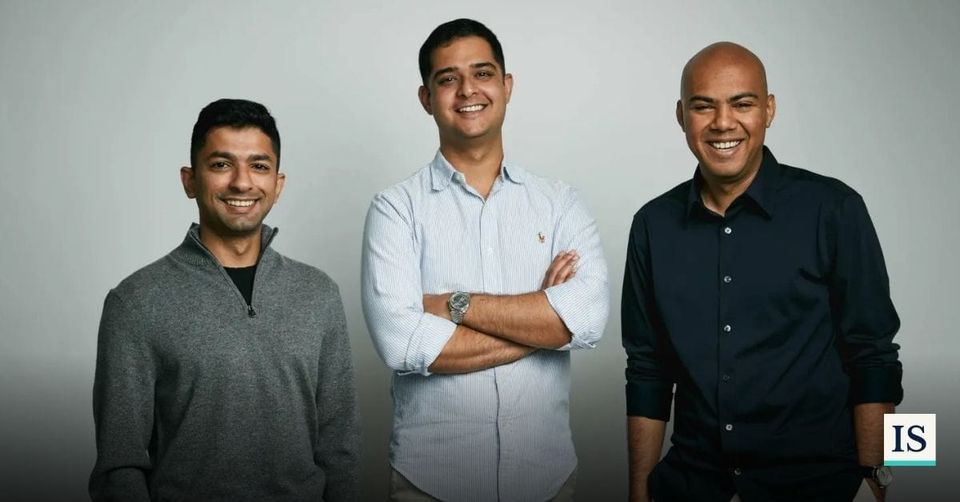
Blacksmith, a San Francisco-based startup that runs automated software testing for developers, announced on October 21, 2026, that it raised US$66 million in a Series C round led by Sequoia Capital, at a US$1 billion valuation. Premji Invest, the investment arm of Wipro founder Azim Premji, joined existing investors Peak XV Partners, GV and Y Combinator. The company was founded in 2024 by CEO Aditya Jayaprakash, previously an engineer at Faire, and Aayush Shah and Aditya Maru, both formerly at Cockroach Labs. All three studied computer science at the University of Waterloo. Blacksmith has now raised about US$125 million in total.
Blacksmith works on continuous integration, or CI: the automated step where every code change is built and tested before it is merged into a product. Instead of renting general-purpose cloud servers, the company runs these jobs on hardware it owns and operates in the U.S. and Europe, and says customers finish jobs twice as fast at about 60% lower cost. Weekly CI jobs on the platform grew from 5 million in January to more than 90 million, and annual recurring revenue grew 17-fold, according to the company. Customers include Mercury, Granola, Supabase, LangChain and Handshake. The money will go to hiring and computing capacity, which Blacksmith plans to expand fivefold in 2027 from just under 10 megawatts today.
Market Context
The valuation jump is unusually fast. Blacksmith raised a US$10 million Series A at a US$60 million valuation, announced in September 2025, and a US$45 million Series B led by Peak XV at US$550 million, which closed in March and was announced in August 2026. Its customer count went from about 800 at the Series A to more than 10,000 today, according to the company.
The driver is AI coding. As tools like Claude Code, Codex and Cursor write more software, the volume of code that needs to be checked is rising sharply. Anthropic said in September that its own CI jobs grew 25-fold in six months. Investors are backing the infrastructure underneath that shift: in the same month, Daytona reached a US$1 billion valuation and Modal raised US$750 million at a US$15.75 billion valuation. Blacksmith competes with GitHub Actions, the big cloud providers and the validation features built into AI coding tools themselves.
Key Signal
"As agents write more of the world's software, the question that matters is whether it can be trusted." Aditya Jayaprakash, Co-founder and CEO, Blacksmith
Regional Relevance
For the United States, Blacksmith shows where AI value is starting to spread. Most attention goes to the models that write code, but every line still needs to be built, tested and approved before it reaches users. That checking layer is turning into its own business, and U.S. investors are paying unicorn prices to own it. The company's decision to run its own hardware also reflects a wider trend of startups buying compute capacity directly to control costs.
For San Francisco, the deal adds to a wave of AI developer tooling companies reaching billion-dollar valuations within two years of founding. The investor base also points to strong ties with India's tech ecosystem, through Peak XV, formerly Sequoia India and Southeast Asia, and Premji Invest. For Latin America, where software teams increasingly work for U.S. companies and adopt AI coding tools, faster and cheaper testing could lower development costs, but it also raises the bar for quality control as more code is generated automatically.
The Other Side
Is the growth as strong as the headline numbers? The 17-fold revenue growth and 10,000-customer count come from the company, and Blacksmith has not disclosed actual revenue. Many customers are likely on small or entry-level plans, so the number of paying enterprise accounts is unclear.
Can a startup out-compete the platforms it runs on? GitHub, AWS, Microsoft and Google offer their own testing services, and coding tools such as Claude Code and Codex are adding validation features. If those platforms cut prices or bundle testing for free, Blacksmith's speed and cost advantage could narrow.
Is owning hardware a strength or a risk? Running its own servers helps Blacksmith control costs, but it also ties up capital in physical infrastructure and data center contracts. A fivefold expansion in 2027 assumes AI code volumes keep rising at today's pace. A slowdown would leave the company with expensive excess capacity.
Sources & Transparency
- Blacksmith hits unicorn valuation after Sequoia leads Series C
- Blacksmith's valuation jumps 17x in 13 months as $66M Series C backs AI code testing
- Peak XV-Backed AI Startup Blacksmith Nets $66 Mn At A Unicorn Valuation
- Blacksmith Raises USD 66 Mn at USD 1 Bn Valuation
- Blacksmith hits $1 billion valuation two months after its last round
- Sequoia-Backed Blacksmith Raises $66M at $1B to Fix CI Broken by AI Coding Agents