
Embo Launches With US$110M From a16z, Khosla, and Nvidia
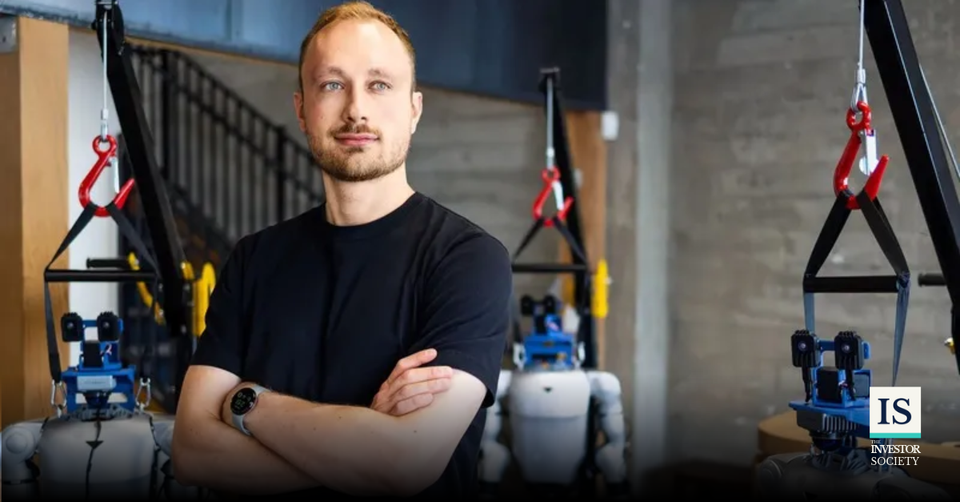
Embo, a San Francisco startup building AI models meant to serve as general-purpose "brains" for humanoid robots, has raised a US$110 million seed round. The round was led by Andreessen Horowitz and announced on November 23, with Khosla Ventures, DST Global and Nvidia's venture arm NVentures also participating. Striker Venture Partners joined as well; the company was founded in April and the funding was its first public announcement. Co-founder and CEO Danijar Hafner, 31, is a former senior research scientist at Google DeepMind and a lead inventor of the Dreamer series of world models, while co-founder and CTO Wilson Yan developed VideoGPT and previously worked at Meta and Google DeepMind.
The company's approach centers on a "world model," an AI system that learns how the physical world behaves. It learns how objects, physical interactions and tasks unfold by predicting internet video, then provides imagined scenarios where an agent can practice motor skills through reinforcement learning, including how to recover from mistakes. The team says it has built infrastructure for training multimodal models across 70,000 GPUs.
Market Context
Embo enters a crowded and capital-heavy race. Robotics and physical AI venture funding reached US$27.6 billion globally in 2025, more than double the prior year, and humanoid robotics alone drew US$6.1 billion across 139 deals, according to PitchBook data. Valuations at the top have climbed fast: Skild AI raised US$1.4 billion in January, tripling its valuation to more than US$14 billion, and Figure AI is valued at US$39 billion. Physical Intelligence, a two-year-old San Francisco robotics startup, was reported in October to be in talks to raise about US$1 billion at a valuation above US$11 billion.
Large seed rounds for research-led teams have also become more common. Genesis AI launched with a US$105 million seed from Eclipse and Khosla to build AI models for robots in 2025, and AMI Labs raised a US$1.03 billion seed round in March 2026 at a post-money valuation of roughly US$4.5 billion. Even so, Dealroom data places Embo's round in the top 1% of seed rounds for U.S. computer vision startups; the company has no product, and its founders and research team were the main draw for investors.
The Founder's Signal
Embo is building "world model agents at unprecedented scale to build a general humanoid worker."
— Danijar Hafner, co-founder and CEO, in a post announcing the company
Andreessen Horowitz describes the company as a potential brain for the humanoid workforce, with early applications in manufacturing, product movement and service delivery.
Regional Relevance
For the United States, Embo reflects a shift in how U.S. AI labs are approaching robotics. Rather than relying mainly on expensive human demonstrations collected robot by robot, world models aim to let machines rehearse tasks in simulation before acting. The research lineage is concrete: a September 2025 Dreamer 4 preprint by Hafner, Yan and Timothy Lillicrap showed an agent collecting diamonds in Minecraft purely from previously recorded data by learning behaviors inside a world model. If the approach transfers to physical robots, it could lower the cost of automating factory, logistics, and service work, sectors where U.S. employers face persistent labor shortages and pressure to reshore production.
For San Francisco and the global competition, the deal reinforces San Francisco as the hub of "physical AI," where Embo now competes for talent and compute with Physical Intelligence and others. Its team draws from Google DeepMind, Meta Superintelligence Labs, Nvidia Cosmos, UC Berkeley and MIT. The competition is also international: on the same day, Ant Group led a US$100 million round into Chinese humanoid startup Simplexity, and Shenzhen-based X Square Robot reached a valuation above US$2.8 billion in June after four consecutive financing rounds. Nvidia's participation also matters, since the chipmaker benefits from compute-hungry world-model training regardless of which lab wins.
The Other Side
Can video-trained models work reliably on real hardware? This is the central technical risk. Embo has no public product yet, and turning physical knowledge learned from video into reliable skills on real humanoids, outside controlled demos, is the core test of both its approach and the investment. Supporters argue that internet video provides far more physical experience than any company could gather with its own robots.
Is US$110 million enough in a field where rivals raise billions? Training on tens of thousands of GPUs and operating a humanoid fleet is expensive, and competitors such as Skild AI and Physical Intelligence have far larger war chests. The counterpoint is that research-first labs often raise again quickly once they show results, and investors at this stage are paying for the team's track record rather than revenue.
Will robot "brains" become a commodity? Analysts flag the risk that as robotics foundation models mature, open-source alternatives and big tech offerings could commoditize the core technology and shift competition toward cost. Google DeepMind's Gemini Robotics, for example, is already available via API, letting Google distribute robot intelligence through cloud channels. Embo's bet is that world models offer a distinct capability, especially recovery from errors, that end-to-end models struggle to match.
Sources & Transparency
- FinSMEs — Embo Raises $110M in Seed Funding
- Paktechstan — Ex-DeepMind Duo's Robot-Brain Startup Embo Raises $110 Million Seed Led by Andreessen Horowitz
- Ventureburn — Embo Raises $110 Million To Build Robot Brains With World Models
- East Money (Science and Technology Innovation Board Daily) — Nvidia and a16z Invest as Embodied-AI Brain Company Embo Closes Large Early Round