
Ghost: 19-Year-Old Founder Raises US$11M to Sell a US$3,499 Computer That Runs AI at Home
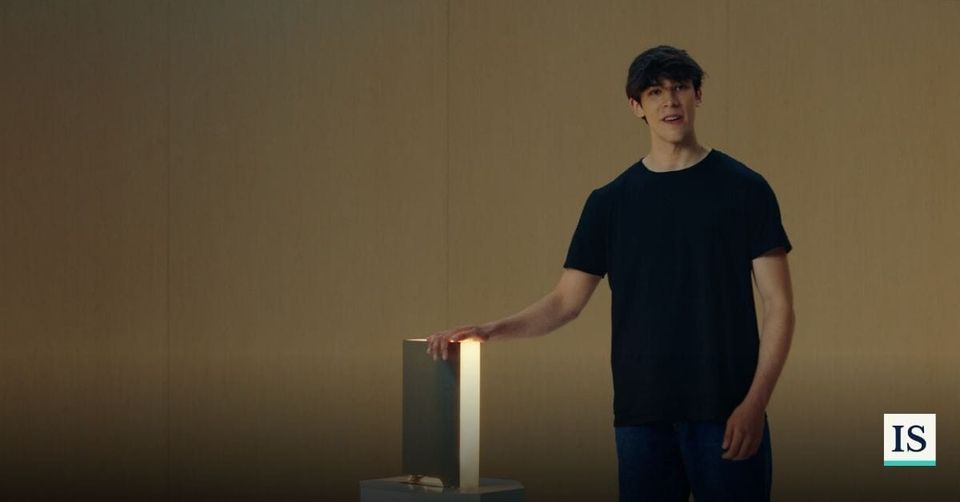
Ghost, a San Francisco hardware startup, emerged from stealth on October 5, 2026, with an US$11 million seed round led by Andreessen Horowitz (a16z). Abstract Ventures, Audacious Ventures, SV Angel and Nova also invested, along with angels including Cory Levy, Max Mullen and Zach Sims. Ghost was founded by CEO Zain Javaid, 19, a former quantitative trader, together with Nicholas Chua, 19, Yifei Chen, 24, and Gautam Sharda, 23. The team designed both the hardware and software in house.
The company's first product, Core, is a screenless US$3,499 computer built only to run AI agents, the assistants that can take actions such as sorting email or managing tasks. It ships with an Nvidia RTX Pro 4000 Blackwell graphics chip, 64GB of memory and three open models preinstalled (Qwen-3.8-Next, Qwen-3.8-27B and Gemma-4-31B), and users control it from a phone app or by voice. Ghost says models, memory and data stay on the device and are encrypted, so neither the company nor third parties can read them, and that Core keeps working even if Ghost shuts down. Preorders opened on launch day and first units are scheduled to ship on October 31.
Market Context
Running AI at home has become a real consumer trend in 2026. The rise of open-source agent tools pushed many enthusiasts to buy Apple's Mac Mini as an always-on AI server, and Nvidia sells its own desktop AI system, DGX Spark, which trade reports say now lists at US$4,699 after memory prices climbed. Ghost is betting that a purpose-built device with software tuned for agents will beat general computers that, in Javaid's words, give users "a terrible experience" when running models.
Investors are also returning to AI hardware after high-profile flops such as Humane's AI Pin, which was shut down in 2025. The difference in Ghost's approach is that it does not try to replace the phone. It acts as a private engine in the background, closer to a home server than a gadget.
Key Signal
"The user owns all of it. Everything is stored, run, and processed on the device." Zain Javaid, Founder and CEO, Ghost
Regional Relevance
For the United States, Ghost reflects a growing push for personal control over AI. Most consumer AI today runs in data centers owned by a handful of companies such as OpenAI, Google and Microsoft. A local device that keeps data at home speaks to rising privacy concerns and gives a16z a bet on a different model of AI ownership, one where the user, not the platform, holds the data and the model.
For San Francisco, the deal shows the city's AI boom is reaching hardware, not only software. A team with an average age near 21 is designing and assembling devices locally, which is rare in an industry that usually outsources manufacturing to Asia. It also confirms that top investors are writing large seed checks to very young founders when the product addresses a clear trend.
The Other Side
Does "nothing leaves your home" hold up? Ghost's own support page says Core needs internet for web search, email and software updates, and its privacy policy notes that online features can send task information to outside services. Local processing is real for the AI models themselves, but the full experience still touches the internet.
Is US$3,499 a mass market price? At that cost, Core targets early adopters and privacy-focused professionals. Open models running locally are still less capable than the top cloud models, so buyers trade some performance for control. Wider adoption likely depends on lower prices or clearly better results.
Can a startup compete with Apple and Nvidia on hardware? Hardware means supply chains, warranties and support at scale, all costly for a seed-stage company. Apple and Nvidia already sell machines that run the same models. Ghost's edge rests on its software, which has not yet been tested by independent reviewers.
Sources & Transparency
- At 19, Ghost founder raises $11 million to build a $3,499 computer for your personal AI
- Ghost emerges from stealth with $11M seed round for a personal AI computer
- Ghost Says $3,499 Core Runs AI On Device; Web Search Needs Internet
- 19-Year-Old Raises $11M to Build a $3,499 Personal AI Computer
- Ghost AI Raises $11M for $3,499 Personal AI Computer