
Kaszek Makes Its First Aviation Investment, Taking TravelX to US$45M Raised
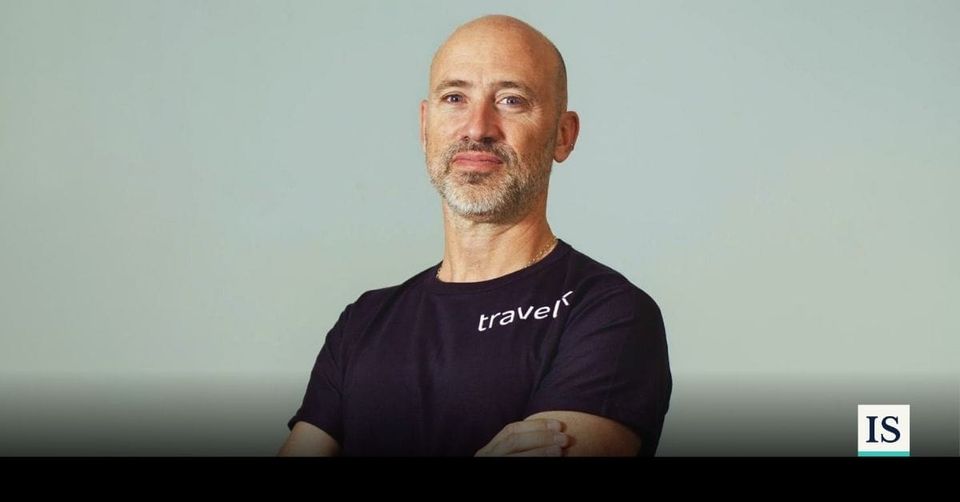
TravelX, a Miami-based company that sells airlines software to squeeze extra revenue out of tickets already sold, announced on August 19, 2026 that Kaszek — Latin America's largest venture capital firm — has made what the company called a substantial investment, bringing TravelX's total funding to US$45 million. The investment completes a Series A round that also included participation from Thayer Ventures, the most active U.S. venture firm in travel technology. Neither the size of the round nor Kaszek's individual check was disclosed, and no valuation was given.
TravelX was founded in 2021 and is led by co-founder and Chief Executive Officer Juan Pablo Lafosse, with co-founders Pablo Santillan as Chief Technology Officer and Francisco Vigo as Chief Operating Officer. Kaszek was founded in 2011 by Hernán Kazah, a MercadoLibre co-founder, and Nicolás Szekasy, MercadoLibre's former chief financial officer; the deal was led by partner Nicolás Berman, who spent 13 years at MercadoLibre as VP of marketing and advertising before joining the firm in 2012. Kaszek has raised more than US$3 billion across nine funds and backed over 130 companies including Nubank, Kavak, Creditas and Bitso. This is its first investment in aviation technology.
The company's publicly reported funding history accounts for only part of the US$45 million cumulative figure. TravelX raised a US$10 million seed round led by Borderless Capital, closed in November 2021 and announced in March 2022, with participation from Algorand, Draper Cygnus, Myelin Capital and Monday Capital; legal counsel Bruchou, Fernández Madero & Lombardi also listed AIC Capital and Primary Ventures among participants. Forbes Argentina reported a further US$5 million pre-Series A in January 2023 at a valuation of roughly US$100 million, a round that added former NBA player Emanuel Ginóbili as an investor. Private-market databases including PitchBook and Tracxn still show only the US$10 million seed on file. TravelX's product, a platform branded RmX, uses machine learning to predict which flights will sell out, then identifies lower-yield passengers on those flights and offers them incentives to move to a different flight or sell their seat back — freeing inventory the airline can resell to late-booking travelers at a higher fare. Current airline partners named by the company are Viva, Volaris, AirAsia, WestJet, GOL, Scoot and Cebu Pacific.
Market Context
The pitch lands in an industry with enormous revenue and almost no margin. IATA's June 2026 outlook put global airline revenue at US$1.165 trillion for 2026, up 9.4% from US$1.065 trillion in 2025, while cutting the industry's expected net profit from US$45 billion in 2025 to US$23 billion this year — a margin of 2.0%, down from 4.2%, driven by a roughly 70% rise in jet fuel prices and Middle East conflict disruptions. That combination is the commercial argument for TravelX: on those margins, a low-single-digit revenue uplift is meaningful, and IATA expects Latin America to be one of the strongest markets in 2026 with about 5% passenger demand growth, against 0.8% in North America. It also complicates the framing of the announcement itself. TravelX describes a "trillion-dollar" revenue threshold as something its technology will help the industry cross; on IATA's own numbers, the industry crossed it in 2025.
The competitive field is not empty. Atlanta-based Volantio, founded in 2014, has described itself as the global leader in post-booking revenue management and counts Southwest, Alaska Airlines, Air Canada, Qantas, Iberia, Emirates and Philippine Airlines among its customers, with backing from International Airlines Group, Qantas Ventures and the former JetBlue Technology Ventures, plus a distribution partnership with Amadeus — all on roughly US$11.6 million raised. In the adjacent category of AI-driven fare pricing, Israel's Fetcherr has raised about US$152 million, including a US$42 million Series C led by Salesforce Ventures in September 2025, and works with Delta, Virgin Atlantic, Azul and WestJet. TravelX has hired against that field, recruiting Brent Overbeek, formerly chief revenue officer at Hawaiian Airlines, as chief commercial officer, and Attila Prikler, previously head of IT, data and analytics at Wizz Air, to run data and AI.
Key Signal
"We have proven there are huge, untapped revenue opportunities that begin after the booking."
— Juan Pablo Lafosse, Chief Executive Officer, TravelX
The claim describes the thesis Kaszek is buying: that decades of airline revenue management have optimized only the moment of sale, leaving the window between booking and departure commercially inert. Whether it has been "proven" rests on performance figures that, so far, come from TravelX and its airline partners rather than from independent measurement.
Regional Relevance
For the United States, the significance is both corporate and regulatory. TravelX is headquartered in Miami, Florida, part of a cluster of Latin America–linked technology companies that use South Florida as their U.S. base while keeping engineering and commercial teams in Buenos Aires, Madrid and Melbourne. Its American commercial record is thin and marked by an unusual setback: Spirit Airlines, announced in October 2025 as TravelX's first U.S. airline partner, ceased all flight operations on May 2, 2026 and moved into a court-supervised wind-down and asset auction after its second Chapter 11 filing in under a year. WestJet is now the company's North American anchor.
The regulatory environment is the sharper U.S. issue. Congress is actively examining how airlines use artificial intelligence and consumer data in pricing. The Senate Judiciary Subcommittee on Crime and Counterterrorism held a hearing on AI surveillance pricing on August 4, 2026, at which Senator Josh Hawley announced plans for bipartisan legislation; House Energy and Commerce Ranking Member Frank Pallone sent inquiry letters on August 11–12, 2026 to eight major carriers with an August 25 response deadline; the House Oversight Committee opened its own investigation in March 2026; and Maryland, New York, Connecticut and New Jersey have enacted restrictions. Regulators have so far drawn a line between market-based dynamic pricing and pricing personalized to an individual consumer. TravelX's product sits near that line: it targets specific named passengers with individualized offers based on a prediction of their willingness to move.
For Latin America, the deal is a signal about where regional capital is going. Kaszek built its reputation on fintech, marketplaces and consumer platforms; an aviation software bet is a move into vertical enterprise AI and a wager that a company founded and largely staffed in Argentina can sell globally to carriers in Asia, North America and Europe. Latin American carriers have been the early adopters — Volaris and Viva in Mexico, GOL in Brazil, Flybondi in Argentina — which makes the region a live testbed rather than a secondary market, at a moment when IATA expects it to outgrow the rest of the world.
The Other Side
Have any of the performance numbers been verified by anyone other than TravelX? The figures circulating in trade press are striking: airlines reselling more than 90% of released seats at nearly three times the original fare, a system-wide revenue uplift above 1%, four to six transactions per managed flight, and one unnamed partner reporting up to ten times the incremental revenue of competing post-booking tools. Every one of those numbers originates with TravelX, and several appear in FlightGlobal and Aviation Week placements marked as sponsored or paid content. No airline has published audited results, and the "ten times" comparison is attributed to an anonymous customer. That does not make the claims false — the customer roster is verifiable and the company has kept adding carriers — but an investor's diligence and a reader's confidence are different things.
Why is US$35 million of the US$45 million unaccounted for, and what does a two-stage pivot say about the company? Publicly reported rounds total US$15 million: the US$10 million seed and the US$5 million pre-Series A that Forbes Argentina reported at a US$100 million valuation in January 2023. The new announcement gives a cumulative figure and no round size, no valuation and no post-money disclosure, leaving roughly US$30 million spread across this Series A and any undisclosed raises. It is also worth stating plainly that TravelX raised its seed as a blockchain company issuing tokenized "NFTickets," a business it launched with Flybondi in 2023 and no longer leads with. The pivot from Web3 to AI-native has been accompanied by real airline contracts, which is more than most crypto-era pivots can show — but it means the current company is roughly three years old in its present form, and the seed investors underwrote a different thesis.
Is the post-booking category defensible, or is it a feature several vendors already sell to the same airlines? Volaris and Scoot appear on both TravelX's and Volantio's public customer lists, which suggests carriers are running more than one vendor rather than standardizing on one. Volantio reached that position on roughly a quarter of TravelX's capital, and carries strategic investment from IAG and Qantas Ventures plus an Amadeus distribution channel — advantages capital alone does not buy. Meanwhile the customer base itself is fragile: the segment most receptive to squeezing incremental revenue from existing bookings is the low-cost and ultra-low-cost carriers, and Spirit's liquidation is a reminder that those customers can disappear. Against that, TravelX's stated six-to-eight-week integration and revenue-share model lowers the barrier to a first deployment, which is precisely how a vendor builds share in a market where nobody wants a long IT project.