
Meta Acquires AI Coding Startup Conductor to Strengthen Its Developer Push
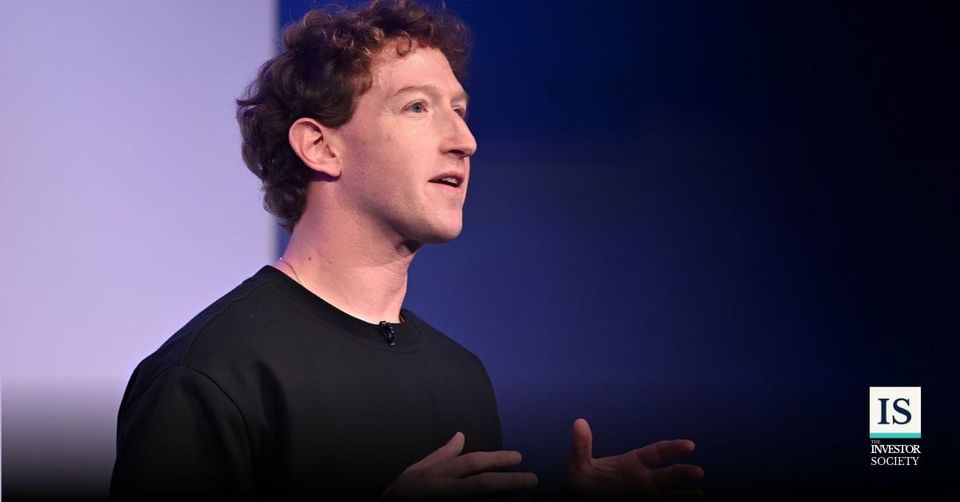
Meta has acquired Conductor, an AI coding startup that lets users build software projects by deploying multiple agents into parallel workspaces. Meta confirmed the deal on November 4 but did not disclose terms. CEO Charlie Holtz and CTO Jackson de Campos founded the company, formally Melty Inc., in 2024, and it raised a US$22M Series A in March from Spark Capital and Matrix. Both founders are joining Meta Superintelligence Labs, the AI division led by Alexandr Wang, where they will work with Nat Friedman. Meta is led by CEO Mark Zuckerberg.
Conductor does not build its own AI models. Its orchestration environment lets engineers run multiple AI tools in parallel, including Claude Code, Codex, Cursor and OpenCode, with each task getting its own workspace, branch, terminal and review path. The product will be wound down. Conductor has stopped accepting new sign-ups and app downloads, and its cloud service will shut down on November 20, after which user cloud data will be deleted. Holtz said the core features would keep working as before until early next year.
Market Context
AI coding has become one of the most contested segments in tech. Coding has emerged as a key channel for AI companies to capture corporate spending, and buyers are paying heavily for position. In June, SpaceX announced a deal to acquire Cursor for US$60B, days after its Nasdaq debut. Cursor brought roughly US$3B in revenue from 3,000 enterprise clients. Consolidation is ongoing: on the same day as the Conductor deal, OpenAI also announced plans to acquire a developer-tools startup.
Meta has been working to close the gap. It launched its own coding agent, Muse Code, in August, and on October 15 released Muse Spark Open, an open-weights model aimed at coding and long-running agent work. The company has the budget to keep buying: Meta expects 2026 capital expenditures of US$135B to US$145B, after reporting third-quarter revenue of US$64.6B.
What Stands Out
“If you liked Conductor, you’re gonna love what’s coming.” — Charlie Holtz, Co-founder and CEO, Conductor
Holtz said he was excited to build the next product with Nat Friedman and Meta Chief AI Officer Alexandr Wang at Meta Superintelligence Labs. He described the lab as having the highest talent density among AI labs.
Regional Relevance
For the United States, the deal reflects a shift in AI coding from single assistants to teams of agents managed by one engineer. Conductor sat at the layer above individual models, and analysts see that position as its main asset. One analyst said Conductor’s key differentiator is that it sits above individual coding agents, and that he expects Meta to keep a model-agnostic approach. For U.S. investors, the deal also shows how Meta is turning its large AI budget into products that can compete for developer spending, a market dominated by Microsoft, OpenAI and Anthropic.
This news impact in the San Francisco startup ecosystem since Conductor is a typical outcome for a fast-moving Bay Area developer tools company. It came out of Y Combinator’s Summer 2024 batch and sold to a Big Tech buyer about 16 months after launching its product. That pattern rewards early investors and talent, but it also removes independent tools from the market. Developers who relied on Conductor now have to migrate on a short timeline, which may push some toward competing orchestration tools.
The Other Side
Will Meta’s version stay open to rival models? Unclear. It remains to be seen whether Meta’s future tool will stay open to competing agents, as Conductor was, or be limited to Muse Code, with an answer expected in early 2027. A closed product would serve Meta’s model strategy but could lose the developers who valued Conductor’s neutrality.
Does buying a small startup change Meta’s position? Not right away. The acquisition may not immediately put Meta on equal footing with Microsoft, which owns GitHub, or with OpenAI and Anthropic. The deal looks more like a talent and product acquisition than a market-share purchase, and Meta still needs developers to adopt its models.
Is Meta’s AI spending paying off? Investors are watching. Meta’s capital spending has grown sharply, and shares fell 10% after its Q2 2026 earnings came in below estimates and third-quarter guidance disappointed. Acquisitions like Conductor are small in dollar terms, but they add to the pressure to show that AI investment turns into revenue.
8. Sources & Transparency
- Axios — Meta acquires AI coding startup Conductor
- TechCrunch — Meta acquires AI coding startup Conductor
- PYMNTS — Meta Acquires AI Coding Startup Conductor
- InfoWorld — Meta acquires Conductor as AI coding shifts toward multi-agent development
- Tech Monitor — Meta buys AI coding startup Conductor
- Implicator — Meta Acquires Conductor, the App That Runs Parallel Coding Agents
- The Decoder — SpaceX bets $60 billion on Cursor to catch OpenAI and Anthropic
- AOL / Benzinga — Mark Zuckerberg Says Meta Will ‘Build Superintelligence Through Scaling’ After $64.6 Billion Q3 Beat