
Starcloud Raises US$250M to Scale Orbital Data Centers Amid Tightening Launch Capacity
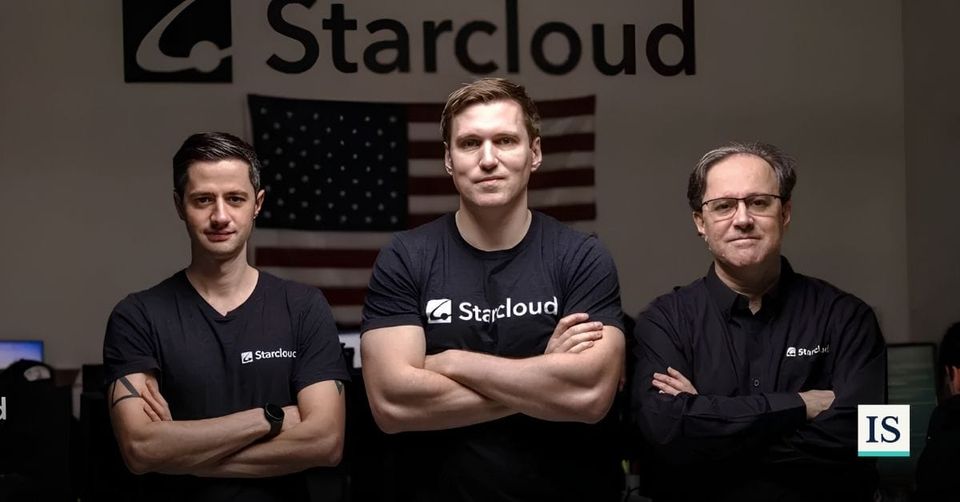
Starcloud, a Redmond, Washington-based startup building orbital data centers and space-based GPU infrastructure, raised a US$250 million Series A extension, the company confirmed on August 21, 2026, valuing it at US$2.3 billion — more than double the US$1.1 billion valuation it reached in its original US$170 million Series A round in March 2026, when it became the fastest startup in Y Combinator history to hit unicorn status. Manhattan West led the extension, with Ken Abdalla and Lauren Selig leading the investment for the firm and Selig joining Starcloud's board as an observer; existing backers Benchmark, EQT, Soma, NFX and 776 participated, alongside new investors NVIDIA, Cisco Investments, Cedar Capital, Goanna Capital and Standard Capital. NVIDIA contributed approximately US$25 million, according to a person familiar with the deal cited by TechCrunch. The round brings Starcloud's total funding since its January 2024 founding to US$450 million. CEO Philip Johnston co-founded the company, originally named Lumen Orbit, alongside Chief Technology Officer Ezra Feilden, previously of Airbus Defence and Space, and Chief Engineer Adi Oltean, who worked on SpaceX's Starlink program after two decades at Microsoft. Johnston is a second-time founder; he previously co-founded Opontia, a digital brand aggregator that was acquired in 2023.
Starcloud will use the new capital to expand manufacturing capacity, continue joint engineering work with NVIDIA, and secure future launch slots as competition for rocket capacity intensifies. The company launched its first satellite, Starcloud-1, in November 2025 carrying an NVIDIA H100 chip — which it says was the first data center-grade GPU deployed in orbit — and has since used it to train an AI model and run a version of Google's Gemini in space. Starcloud plans to launch a second generation of satellites, Starcloud-2, in 2027 to perform orbital inference for customers including U.S. government agencies, and is developing a larger spacecraft, Starcloud-3, intended to fly aboard SpaceX's still-unproven Starship rocket. The company has applied to the Federal Communications Commission for permission to operate as many as 88,000 satellites as part of a planned orbital data center constellation; that request has not yet been approved.
Market Context
Starcloud's raise lands amid a broader race to move AI computing off the terrestrial power grid, as data centers strain regional electricity supplies and face growing local opposition across the U.S. Rivals are pursuing similar bets at even larger scale: SpaceX and xAI have filed to operate as many as 1 million satellites for orbital computing under a joint venture, and Google's Project Suncatcher envisions solar-powered AI satellite constellations, with a demonstration mission planned for 2027. But rocket capacity, not compute design, is becoming the industry's central constraint: SpaceX's workhorse Falcon 9 is scheduled to be phased out by 2028 in favor of the still-unproven Starship, while competing vehicles from Blue Origin and United Launch Alliance are not yet flying regularly — a squeeze severe enough that rival startup Cowboy Space raised US$275 million in May 2026 specifically to build its own rockets rather than depend on outside launch providers. The economics of orbital compute also remain contested: Starcloud and its backers point to solar power costs as low as US$0.005 per kilowatt-hour and no cooling-water requirements, while competitor Varda Space Industries has estimated that orbital compute currently costs roughly three times more per watt than a terrestrial equivalent.
Signal
"This technology is dumb." — Brian McManus, aeronautical engineer, in a critique produced with IEEE Spectrum
McManus's broader argument, laid out in a video examining Starcloud's technical claims, is that the physics and economics of large-scale orbital compute remain far less settled than the funding pace suggests — a tension that sits alongside the roughly US$2 billion in venture capital now chasing the sector.
Regional Relevance
For the United States, Starcloud's growth reinforces Washington state's emerging role as a hub for orbital-compute manufacturing: the company's new production facility in Woodinville sits near where SpaceX and Amazon already build satellites for their own networks. The raise also plugs into the country's broader AI-energy debate — as data center electricity demand strains grids and draws local resistance, NVIDIA's direct investment signals that a leading chipmaker sees off-grid orbital compute as a hedge worth funding, even though the approach is unproven at commercial scale. Starcloud's stated 2027 customers include U.S. government agencies, tying its early revenue to federal space and AI priorities.
Globally, Starcloud's FCC filing for up to 88,000 satellites places it in the middle of a rapidly escalating megaconstellation race — dwarfed in scale by SpaceX and xAI's filing for as many as 1 million satellites — that international spectrum and orbital-debris regulators will need to sort through as more companies compete to fill low Earth orbit with computing hardware.
The Other Side
Are Starcloud's cost claims independent, or company projections? The solar-power and zero-cooling-water advantages Starcloud cites come from the company and its backers, not an independent audit. The sharpest rebuttal comes from a competitor working the same problem: Varda Space Industries, which estimates orbital compute currently costs roughly three times more per watt than a terrestrial data center — a gap that raises the question of whether investor enthusiasm is outpacing proven unit economics.
Does the investor list reveal a related-party dynamic the headline doesn't? NVIDIA, which contributed roughly US$25 million of the round, is also Starcloud's primary hardware supplier and co-development partner on the next-generation Vera Rubin Space-1 space GPU — meaning a key investor is simultaneously the vendor whose chips Starcloud depends on and whose product roadmap benefits from Starcloud's orbital test data. No independent governance safeguard specific to that relationship was disclosed in company materials.
Who bears the risk that the funding announcement doesn't emphasize? Starcloud's roadmap for its largest planned spacecraft depends on SpaceX successfully scaling the still-unproven Starship rocket after Falcon 9 is retired in 2028; CEO Philip Johnston has acknowledged that launch capacity is "pretty constrained right now." If Starship's reusability timeline slips further, Starcloud could face the same bottleneck that already pushed rival Cowboy Space to raise US$275 million to build its own rockets instead of relying on outside launch providers.
Sources & Transparency
- Starcloud Raises $250M in Series A Extension Funding
- Starcloud raises $250 million for orbital data centers as launch options dry up
- Starcloud raises $250M to support the creation of data center satellite network in league with Nvidia
- Starcloud Raises $250M at $2.3B Valuation to Expand Orbital Data Centers