
Velaura AI Raises $110M Series A, Crosses $1B Valuation for Ultra-Low-Power AI Chips
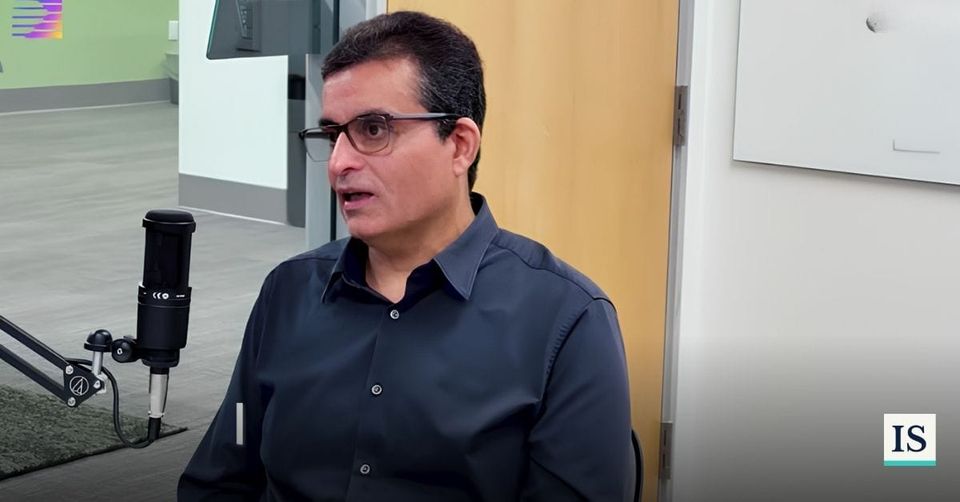
Velaura AI, a Santa Clara, California-based semiconductor company led by co-founder and CEO Rajiv Khemani, announced on August 18, 2026, that it raised $110 million in Series A financing at a valuation exceeding $1 billion. The round was led by Seligman Ventures, with new investors Capricorn Investment Group and Prosperity7 Ventures joining existing backers Mayfield, Maverick Silicon, MARA, Premji Invest, Samsung Catalyst Fund and StepStone Group. Velaura develops ultra-low-power silicon and software designed to increase the amount of AI computing performed per watt of electricity, targeting both hyperscale data centers and "Physical AI" applications such as robots, drones and autonomous systems.
The company's core product, called Titan Core, is a proprietary digital chip design platform that Velaura says delivers a two- to four-fold improvement in performance per watt for mathematical operations in AI accelerators while maintaining performance, with the underlying technology already deployed in more than 30 million application-specific integrated circuits across leading semiconductor process nodes. Velaura's leadership team, which also includes co-founder and Chief Development Officer Manu Gulati, draws on veterans of Apple, Nvidia, Google, Qualcomm and Marvell; Khemani previously co-founded networking-chip maker Innovium, acquired by Marvell in 2021 in a deal initially valued at roughly $1.1 billion, and co-founded Auradine in 2022, the blockchain-infrastructure company that restructured into Velaura AI in March 2026.
Market Context
Velaura's raise lands in a moment when multiple well-capitalized players are targeting the same bottleneck — electrical power — from different angles, whether through grid-flexible software, low-power silicon, or new compute architectures. Hyperscalers are investing hundreds of billions of dollars in AI data centers that face long lead times for power availability, and greater performance per watt could allow operators to deploy more AI compute within existing electrical and cooling capacity, without waiting for new infrastructure to come online.
The deal is notable for its structure as much as its size: this financing is labeled a Series A even though the same legal entity, under its prior Auradine name, had already raised a $153 million Series C in April 2025, and Auradine reportedly generated an annualized revenue run rate exceeding $150 million from mining hardware around that round. A $1 billion-plus valuation at what is nominally an early funding stage places Velaura alongside a wave of AI-infrastructure startups — including grid-software company Emerald AI, which crossed a similar valuation threshold the same week — reaching unicorn status in quick succession.
The Signal
"The next era of AI will be defined not only by better models, but also by fundamentally better compute economics."
— Rajiv Khemani, Co-founder and CEO, Velaura AI
Regional Relevance
For the United States: Velaura's bet reinforces a theme running through this week's AI-infrastructure financing: the country's AI buildout is increasingly gated by power and compute efficiency rather than by chip supply alone. If Titan Core's efficiency claims hold up under real hyperscaler workloads rather than lab conditions, it could ease some of the electrical and cooling constraints straining U.S. data center expansion, complementing software-based approaches like grid-flexibility platforms rather than competing directly with them.
For the semiconductor and venture sector: The deal also illustrates how quickly capital is being redeployed within the same corporate entity toward AI infrastructure — Velaura's predecessor, Auradine, built its business on blockchain-mining silicon before pivoting fully toward AI and Physical AI in March 2026. For investors, that history raises a due-diligence question: how much of the technology and revenue base transfers cleanly to the new AI-compute mission, and how much represents a relabeling of existing infrastructure investment around today's most fundable narrative.
The Other Side
Is this really a "Series A," or is the label doing marketing work that obscures the company's actual funding history? The same legal entity previously raised a $153 million Series C as Auradine in April 2025; presenting the current $110 million raise as a first-round financing, even amid a corporate rebrand, is a naming choice worth scrutinizing rather than taking at face value.
Can Velaura's efficiency claims — a two- to four-fold improvement in performance per watt — be verified on live customer workloads rather than internal or lab benchmarks? As one industry analysis noted, the commercial hurdle for any low-power silicon company is proving repeatable, measurable power savings under real deployment conditions, since that is the metric data center operators actually underwrite before committing to a new chip architecture at scale.
How much of Velaura's revenue and commercial traction still comes from its former blockchain-mining business rather than the AI and Physical AI markets it is now pitching to investors? Auradine generated meaningful revenue from mining hardware before the March 2026 restructuring; investors and readers should watch upcoming disclosures to see how quickly that revenue mix shifts toward the AI compute and robotics customers central to Velaura's new pitch.
Sources & Transparency
- Velaura AI Raises $110 Million Series A to Advance the Next Generation of Ultra-Low-Power AI Compute Infrastructure
- Velaura AI (formerly Auradine) raises $110M Series A at $1B+ valuation to cut AI's power bill
- Velaura AI Raises $110M to Scale Ultra-Low-Power AI Compute
- Velaura AI raises $110M series A at $1B+ valuation to tackle AI's growing power problem
- Velaura AI Raises $110 Million Series A for Low-Power AI Compute
- Velaura AI Raises $110 Million In Series A Funding Round