
Wall Street Sells AI, VCs Buy Robots

Hi, and welcome to a new edition of The Daily Dealflow — the 5-minute briefing that gives you clear context on capital flows and market-moving trends across the Americas, from Silicon Valley to Buenos Aires. Let's dive in.
🏆 Deal of the Day
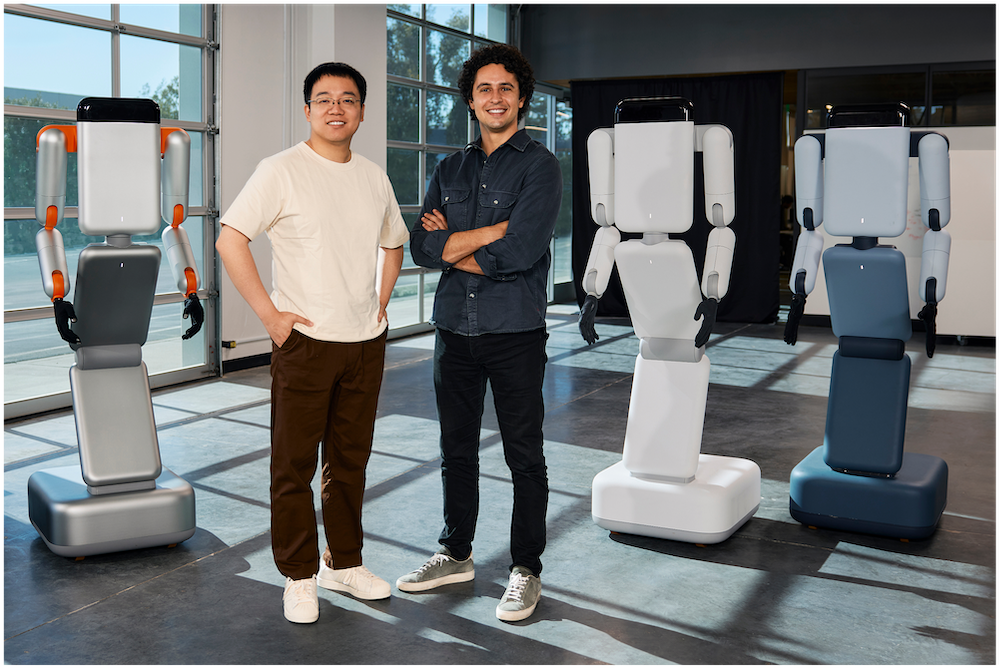
Genesis AI, a robotics startup based in San Carlos, California, raised a $500M Series A on Tuesday, co-led by Khosla Ventures, Premji Invest and Eclipse. The round values the company at $3.5B, and Nvidia, Bpifrance, former Google CEO Eric Schmidt and Iliad founder Xavier Niel also joined. Genesis builds its own training data, its own AI model and its own humanoid robot, Eno.
Why This?: Public AI stocks fell for a second straight day, and on that same Tuesday investors put half a billion dollars into robots that pack, tape and label boxes. Genesis plans to build its supply chain, manufacturing and customer base in the U.S. first, and its first job is factory-floor work like packing, which puts it on the radar of manufacturers and logistics operators from the Midwest to Mexico.
Positive Context:
- Co-founders Zhou Xian (CEO) and Théophile Gervet met as graduate students in a Carnegie Mellon lab, founded the company in 2024 and raised a $105M seed in July 2025. Genesis has built 30 to 40 Eno robots, has picked a U.S. contract manufacturer for mass production starting next year, and is piloting with a few customers.
- More than 100 workers around the world wear sensor gloves and headset cameras to feed the robot force data, and the robots use similar gloves on hands sized like a person's. LG CNS in South Korea is one of the test customers.
Yes, but:
- The robot's hands last only a few weeks of regular work before they need replacing, which the CEO calls a key bottleneck. In a rerun of a live demo, the robot fumbled a box and struggled with a label; the company files that under "hiccup data" for training .
Zoom in: Genesis argues that dexterity is the whole game: a robot that is 99% accurate at each step has only about an 82% chance of finishing a 20-step task without a mistake. It also says dexterous manipulation makes up more than 80% of physical work.
💰 Venture Capital
Submit a deal for The Daily Dealflow newsletter via DM here on LinkedIn.
Science Corp (US) – $400M, Series D, a neurotech company developing PRIMA, a retinal implant meant to restore vision. Khosla Ventures, the Ackman Oxman Institute, Tenet Healthcare, 885 Capital, Y Combinator and PLC Neurotech invested, and the company has now raised more than $900M since its 2021 founding. Co-founders Alan Mardinly and Yifan Kong lead its biohybrid neural-interface research, which puts stem-cell-derived neurons inside electronics. PRIMA launched in Europe on July 22 with authorization in 30 countries, and patients in the 36-month trial gained an average of 29 letters on the eye chart. The U.S. launch still needs the FDA – Securities.io.
Avenia (Brazil) – $42M raised in 2026, Series A extension led by Lightspeed Faction, a cross-border payments company that issues BRLA, which Bloomberg Línea calls the largest stablecoin backed by the Brazilian real. Flourish Ventures joined, alongside Quona Capital, Headline, Big Bets, Fluent Ventures, Tomorrow Capital and Pátria High Growth. Co-founders include Hector Fardin, Matheus Moura, Luiz Castelo Branco, Leandro Noel and Lucas Giorgio. The extension wasn't in the 2026 plan; investors asked for it, and volume went from R$1B in all of 2024 to about R$7B a month. Avenia has set aside R$150M to buy FX brokers, securities distributors and small banks squeezed by tighter capital rules – Bloomberg Línea.
Voyage Labs (US) – $12M, Seed, maker of Atlas, an AI travel assistant in private beta that researches trips, tracks prices in real time and books flights and hotels. Kleiner Perkins led, with SignalFire and SV Angel. CEO Manik Gupta used to run product management for Google Maps and then spent four years as Uber's chief product officer; CTO Yogesh Jain co-founded the company. Their bet is that a multi-week trip works well for a long-running agent. The obvious challenge is the general-purpose assistants from the big AI labs – TechCrunch.
GrabrFi (US/Argentina) – $6M, first publicly announced round, a dollar wallet that gives freelancers U.S. bank details, a global card and a stablecoin wallet using only an ID and a phone. Bling Capital led, with BDev Ventures (the fund from BairesDev's founders), GC1 Ventures, Firebolt, Cambrian and TA Ventures, plus angels Ben Silbermann (Pinterest), Gokul Rajaram and Aarthi Ramamurthy. Founders Artem Fedyaev and Daria Rebenok also created the Grabr marketplace. GrabrFi has processed more than $1B since 2023 and opened 100,000+ accounts, mostly in Argentina and Nigeria. Its own team gets paid through the app – iProUP.
🏛️ Private Equity
Clearwave and Ting (US) – undisclosed amount, carve-out of Tucows subsidiary Ting's owned fiber networks by Clearwave, an independent fiber provider backed by GTCR and Berkshire Partners. The deal adds about 170,000 homes and businesses in seven markets across Virginia, Colorado, North Carolina, California and Idaho, bringing Clearwave close to 900,000 locations in 20 states. Ting Mobile and Ting's open-access partners stay out of the deal and keep the Ting name. This is Clearwave's third combination in 2026, after Point Broadband and Visionary Broadband – GlobeNewswire.
Newsan and Reckitt's Argentine units (Argentina) – undisclosed price, acquisition of 100% of VEH Argentina and VEH MFG Argentina, which sell Procenex, Woolite, Vanish, Finish, Air Wick, Espadol, Durex and Strepsils. Advent International owns 70% of the units through Vestacy and Reckitt holds 30%. Rubén Cherñajovsky's group, best known for electronics, keeps moving into consumer staples after buying Procter & Gamble's Argentine operations in July 2024. The filing doesn't say whether every brand license comes with the companies, and closing is expected in Q1 2027 – Provincia 23.
UL Solutions and Worldly (US) – about $350M enterprise value, acquisition of a San Francisco supply-chain intelligence software company paid with cash, a credit line and about $127M in Class A stock. Worldly's network covers about 40,000 factories serving more than 300 brands and retailers, and it holds exclusive rights to market the Higg Index, a sustainability scorecard common in consumer products. Alongside the deal, UL Solutions will buy back about $130M of stock from its majority shareholder, UL Standards & Engagement – Business Wire.
Haulmer and Fraccional (Chile) – undisclosed price, acquisition of a fractional real estate investing platform by the Chilean fintech behind the TUU payment terminals. Fraccional founders Tomás Charles and Patricio López keep running the platform, which has financed 63 projects worth about $17M across five countries and has 38,000 registered users. Haulmer, led by CEO San Feng Díaz, expects about $70M in revenue this year and has never raised outside capital. The deal started when an accountant suggested the founders give Haulmer's CEO a call – Startups Latam.
📈 Public & Capital Markets
Anthropic (Nasdaq: ANT) – IPO, AI models, pricing expected Wednesday and trading Thursday. The company is offering 825M Class A shares at $70 to $78, with about $84.6B in net proceeds at the midpoint, including a separate $26B sale of non-voting shares to seven tech companies. That would top SpaceX's $75B raise in June. Goldman Sachs and Morgan Stanley lead a syndicate of 22 banks, up to 20% of shares may go to retail investors, and Q3 revenue was $17.0B with a $567M operating loss – StockTitan.
Home Depot (NYSE) – Q3 fiscal 2026 earnings, home improvement retail. Sales rose 4.9% to $43.4B, comparable sales grew 2.2% and adjusted EPS came in at $3.86. The company now expects full-year sales growth of about 4.5%. CFO Richard McPhail, who becomes CEO on Nov. 23, said results "exceeded our expectations," and Ann-Marie Campbell will be president and COO – PR Newswire.
Disney (NYSE) – fiscal Q4 earnings, media and parks. Revenue rose 16% to $25.9B and adjusted EPS of $1.77 beat the $1.67 consensus. Parks and cruises posted record revenue of $10.1B, and ESPN operating income jumped 53% on record NFL and college football audiences. CEO Josh D'Amaro, in the job since March, will raise content spending to $26B next year and cut about $3B in operating costs by fiscal 2029. The board raised the dividend 33% to $2 a share – BNN Bloomberg.
Nvidia (Nasdaq) – Q3 fiscal 2027 earnings after the close, AI chips. Wall Street expects about $108.7B in revenue, up roughly 91%, and EPS of about $2.47. On Monday the stock closed at $156.10, its lowest settlement since June 2025 and nearly 35% below its early-October peak. UBS's Timothy Arcuri thinks Q4 guidance will land near $130B. Interim CEO Colette Kress hosts the call; Jensen Huang, who resigned last week, said he'd be "honored" to return if the board asked – Yahoo Finance.
📅 ICYMI
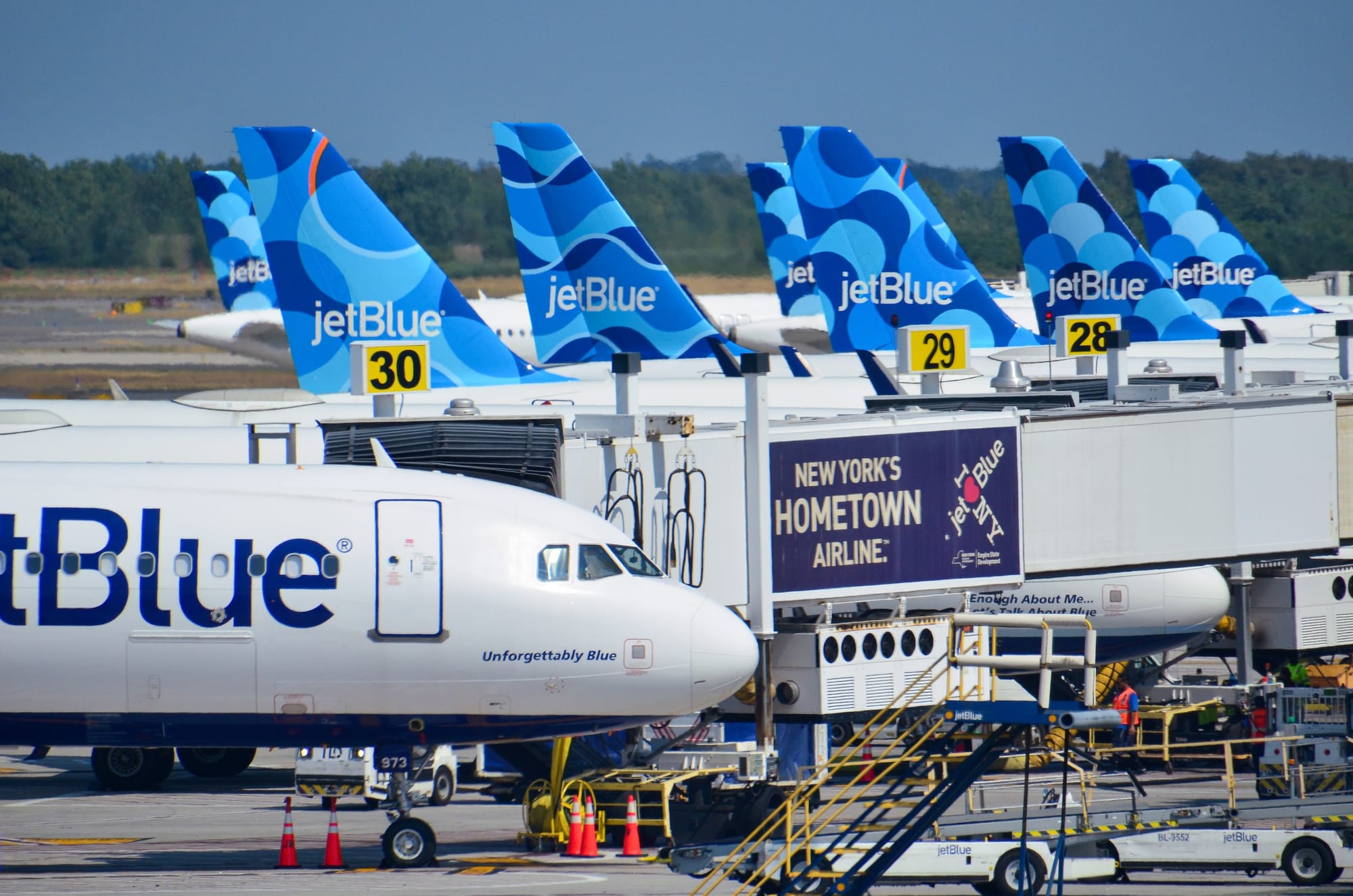
U.S. airlines canceled more than 18,500 flights between Friday and Monday morning, and Bernstein estimates American, Delta, United and Southwest could lose $345M. JetBlue had the worst Sunday, canceling 28% of its flights.
California startup Circularity Fuels just raised $7m to turn cow manure into jet fuel after a six-month trial at a 5k-cow dairy farm proved it could meet aviation standards for blending with conventional fuel. The process captures methane and CO2 from manure as it breaks down, converts it into synthetic kerosene, and, because it prevents more global warming than burning the fuel causes, the company says the end result will be carbon-negative.
Ampere Analysis found that 57% of people think they spend too much time on their phones. Among those trying to cut back, 35% say their social media use went up anyway, and 30% of people who quit an app blamed too much AI-generated content – Broadband TV News.
See you tomorrow,
Katherine Castelán & Jose Kont
The humans behind The Investor Society