
Your ETF Could Close Tomorrow: More Than 200 Funds Have Shut Down in 2026
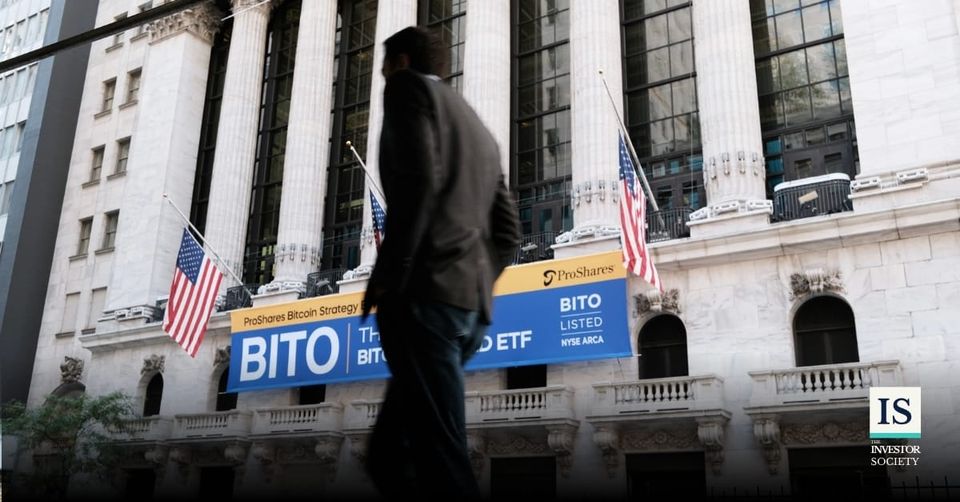
For years, ETFs appeared to have only one direction: up. More launches, more assets flowing in, and more strategies designed to capture everything from artificial intelligence and bitcoin prices to dividends, defense stocks, and even single-company exposures. But the boom has created a less visible consequence: a growing number of funds are not surviving.
In the United States, 217 ETFs had already closed in 2026 through mid-August, compared with 119 during the same period a year earlier. The pace has nearly doubled. For investors active in public markets, that raises an uncomfortable question: what happens if one of those funds is in your portfolio?
The short answer is that your money does not simply disappear. The more useful answer is that a closure can force decisions earlier than expected, turn a long-term investment into cash, and, in a taxable account, trigger unexpected tax consequences.
ETF Closures Have Nearly Doubled as New Funds Flood the Market https://t.co/yGImwc2s3q
— Barron's (@barronsonline) August 24, 2026
The ETF Didn’t Fail. But It Can Still Disappear
An ETF can close for many reasons: insufficient assets, low trading volume, high operating costs, an investment thesis that failed to gain traction, or an asset manager’s decision to focus on products with greater commercial potential. A closure is not necessarily a sign of fraud or of financial trouble at the companies held inside the fund.
In fact, most closures occur among smaller products. Since 2021, more than 85% of ETFs that closed had less than $50 million in assets under management; that share reached 92% in 2025. For a large asset manager, keeping a fund with limited scale alive rarely justifies the operational, regulatory, and distribution costs.
According to Jose Kont, director and partner at The Investor Society, “It is easier than ever to turn an investment idea into a tradable ticker. The difficult part is convincing advisors, platforms, and millions of investors to allocate capital to it consistently.”
Leveraged and inverse ETFs demonstrate how intense that competition has become. As of July 23, 73 such products had already closed in 2026, compared with 22 during all of 2025. These funds often depend on highly specific investor interest, elevated volatility, and a steady flow of traders. When those conditions fade, a ticker’s lifespan can be shorter than investors expect.
The Email Nobody Wants to Receive
The process typically begins with an email or formal notice from the fund manager. The issuer announces that it will stop accepting new creation units, sets a final trading date, and establishes a liquidation date. Investors generally receive several weeks of notice; the fund does not simply vanish overnight.
From there, an investor has two main options.
The first is to sell shares before the fund stops trading. This gives the investor control over the timing of the sale and allows for an immediate reinvestment into a replacement ETF. But there is a catch: a fund approaching closure may trade with lower liquidity and a wider bid-ask spread. Selling quickly can mean receiving a price slightly below the value of the fund’s underlying holdings.
The second option is to wait for liquidation. In that case, the manager sells the ETF’s holdings and distributes cash to shareholders. The final payment per share will generally approximate the fund’s net asset value at the time of liquidation. Final distributions are often made within three to five business days after the ETF stops trading, although the timeline can sometimes be longer.
There is no universal answer. An investor who has already identified a replacement and wants to restore market exposure may prefer to sell. Someone who wants to avoid the secondary-market spread may prefer to wait for the cash distribution. The right choice depends on the ETF’s liquidity, the bid-ask spread, the type of account in which it is held, and the urgency of reinvesting.
More than 200 ETFs have shut down this year as fund providers launch new products at a record pace. https://t.co/g0UoIFYS1v pic.twitter.com/2WdBwm7m9Z
— Thrift Financial, Inc (@ThriftInvesting) August 26, 2026
The Hidden Cost: Losing Momentum
The principal risk is not necessarily losing economic value. It is losing optionality.
Consider an ETF offering exposure to semiconductors, nuclear energy, or a covered-call dividend strategy. If the fund liquidates, the investor receives cash but loses that exposure at the exact moment they may want to maintain it. They then need to identify an alternative, compare fees, examine portfolio composition, and re-enter the market.
A liquidation is also effectively treated as a sale. In a taxable investment account, that can crystallize capital gains before the investor would otherwise have chosen to realize them. Schwab warns that ETF closures can create unexpected tax consequences for investors holding positions in taxable accounts.
That is materially different from owning a broad, established ETF for decades. With newer or highly specialized funds, an investor’s market thesis may be correct while the product itself still fails commercially. Being right about a trend does not guarantee that the ticker chosen to express that view will still be available next year.
Five Signals to Check Before Buying
Investors cannot predict every closure. But they can reduce the odds of being caught by surprise by evaluating five key factors.
1. Assets: The Threshold That Matters
The first number to check is always AUM, or assets under management. It does not measure the quality of a strategy, nor does it predict returns on its own. But it answers a practical question: does this ETF have enough scale to matter economically to its issuer?
Hashdex to Close and Liquidate DEFI, the First Spot Bitcoin ETF to Shut Down, with $14.7M in Assets
— Wu Blockchain (@WuBlockchain) August 5, 2026
Hashdex announced that it will close and liquidate the Hashdex Bitcoin ETF (NYSE Arca: DEFI), making it the first spot Bitcoin ETF to shut down. The fund had approximately $14.7… pic.twitter.com/H5ZT4rm1cC
As an initial screen, $50 million is a reasonable threshold that should prompt deeper due diligence. Research firm Cerulli classifies products below that level as “subscale,” noting that they often lack sufficient traction among advisors and end investors, as well as a clear catalyst for future growth.
That does not mean every ETF with $49 million in assets is destined to close. It could be a relatively new strategy attracting accelerating inflows, an institutional category, or a fund with a high enough expense ratio to sustain its operating costs. Still, it does mean investors should stop assuming the ETF will be available indefinitely.
The contrast is clearest with a large, core-market ETF. The iShares Core S&P 500 ETF (IVV) held more than $850 billion in net assets as of August 2026. That scale does not make IVV risk-free—its value remains tied to the performance of S&P 500 stocks—but it makes the risk of a commercially motivated shutdown extraordinarily low.
The practical question is not, “Does this ETF have assets?” Every ETF does. The better question is: Does it have enough assets, and is that asset base growing?
Before investing, consider reviewing:
- Current AUM: Below $50 million warrants more rigorous review.
- Asset trend: Is the fund attracting assets organically, or steadily losing them?
- Net flows: An ETF can grow in size simply because markets are rising, even while investors are withdrawing money.
- Time since launch: $30 million after three months tells a very different story from $30 million after three years.
- Expense ratio: A strategy charging 0.75% may survive at a smaller scale than an index ETF charging 0.03%, although that does not necessarily make it a better investment.
A recent example illustrates the business logic. In July, Themes ETFs and Leverage Shares announced the closure of 13 ETFs, explicitly citing their inability to attract sufficient investment assets. The list included thematic ETFs such as the Themes Natural Monopoly ETF (CZAR), Themes U.S. Infrastructure ETF (HWAY), and Themes U.S. R&D Champions ETF (USRD), as well as single-stock leveraged funds including CMGG, which tracked Chipotle; ABNG, tied to Airbnb; AXPG, tied to American Express; and SBU, tied to Starbucks.
The takeaway is not that infrastructure, innovation, or Starbucks are poor investment themes. It is simpler—and more important—than that: an investment idea can be compelling while the specific vehicle packaging that idea fails to reach commercial scale.
2. Volume and Spreads: The Cost of Trading
An ETF’s annual expense ratio is easy to see. Its spread is not always as visible. Yet for investors who buy and sell, the spread can be a more immediate cost.
Every ETF has two prices at the same time:
- Bid: The highest price a buyer is willing to pay.
- Ask: The lowest price a seller is willing to accept.
The difference is known as the bid-ask spread. The SEC offers a simple example: if an ETF has a bid of $59.50 and an ask of $60.00, the spread is $0.50 per share.
That means an investor who buys at $60 and immediately sells could receive $59.50, even if the value of the underlying portfolio has not changed. In this example, the implied round-trip cost is approximately 0.83% of the purchase price.
For liquid ETFs, the cost is typically minimal. The SPDR S&P 500 ETF Trust (SPY), for example, recently showed a spread of just 0.01%, according to Morningstar, alongside average daily volume of 50.4 million shares in the reported period. The fund also held more than $816 billion in assets under management and traded 6.28 million shares on its primary exchange during a recent session; total trading volume is spread across multiple venues.
That does not mean daily volume is the only measure of liquidity. In fact, it is one of the most common misconceptions among ETF investors. An ETF’s true liquidity also depends on the liquidity of the stocks, bonds, options, or futures it holds. A fund may have modest on-screen volume yet still trade efficiently if its underlying securities are highly liquid and authorized participants can create or redeem shares efficiently.
Still, trading volume matters as a sign of usage and as a safeguard when an investor needs to exit quickly.
What to Check on Your Screen
- Percentage spread, not just dollar spread: A $0.05 spread may be negligible for a $500 ETF, but meaningful for a $5 ETF.
- Average daily volume: There is no universal minimum, but a few thousand shares a day require more caution than hundreds of thousands or millions—especially if the position will be meaningful relative to the size of the portfolio.
- Order-book depth: Look at the number of shares available at the bid and ask, not only the first quoted price.
- Premium or discount to NAV: Check whether the ETF generally trades close to its net asset value or whether it tends to deviate from NAV during stressed market conditions.
- Trading hours: Trading an ETF focused on foreign markets, bonds, or less liquid assets when its underlying markets are closed can widen spreads.
For larger purchases, limit orders are usually more prudent than market orders, particularly for niche ETFs or during volatile periods. Asset manager AllianceBernstein has also warned that spreads tend to widen in volatile markets and that limit orders may be preferable in those conditions.
The practical rule is simple: If you do not know the spread, you do not yet know the full price of the ETF.
3. Age: A Thesis Needs to Survive Its Trial Period
Age matters because many ETFs close within their first few years. Launching a fund is only the beginning of a commercial test. The manager must secure distribution through platforms, gain acceptance from financial advisors, earn analyst coverage, and attract enough persistent inflows to justify keeping the product open.
According to data cited by Schwab, as of March 2026, the average lifespan of ETFs that were closing was one year and nine months—less than half the average lifespan of three and a half years for funds that closed in 2025.
This is not an indictment of new ETFs. Every successful fund was once new. But it does change how investors should assess them. A six-month-old ETF with a compelling narrative around AI, defense, robotics, cryptocurrencies, nuclear energy, or covered calls should be treated as a product still undergoing market validation—not as an established market institution.
Investors can ask three questions:
- When was it launched? Funds less than two years old should be monitored more closely for asset growth and flows.
- Has it experienced multiple market environments? A fund that has existed only during a rising market has not yet demonstrated how it responds to drawdowns, redemptions, or volatility.
- Has it built a recurring investor base? A popular theme may generate headlines and early interest; durable flows determine whether the ETF survives.
IVV provides a useful contrast. The iShares ETF launched in 2000 and now combines more than two decades of operating history with nearly $850 billion in assets and more than 5.19 million shares traded daily in recent sessions. That is not a guarantee of future returns. It is evidence of operational permanence, market depth, and strategic relevance.
For a short-term tactical position, a young ETF may be entirely appropriate. For the core of a long-term portfolio, however, buying a product still trying to prove it can survive requires a much stronger justification.
4. Strategy Clarity: Understand Exactly What You Own
An ETF name can describe an investment thesis. It can also be a marketing campaign compressed into four letters.
“AI,” “Income,” “Innovation,” “Disruptive,” “Defensive,” and “Premium Yield” may sound self-explanatory until an investor examines the portfolio, index methodology, rebalancing rules, derivative exposure, and fee structure. The most useful test is simple: Can you explain in two sentences what the fund owns, how it seeks to generate returns, and under what circumstances it could disappoint?
If the answer is no, the next step should not be buying. It should be reading the prospectus and methodology.
Complexity is not inherently bad. A short-duration bond ETF, a covered-call strategy, or a defined-outcome product can all be useful in the right portfolio. However, defined-outcome, leveraged, and option-income strategies appear disproportionately among ETFs with insufficient scale. Cerulli estimates that defined-outcome, leveraged, and option-income products account for nearly one-third of all subscale ETFs.
Leveraged and inverse ETFs require an additional warning. Their objective is generally to deliver a multiple—or the inverse—of the daily performance of an index or stock. They are not designed to mechanically replicate that result over weeks, months, or years. Daily rebalancing and compounding can produce returns that differ sharply from what a casual reading of the fund’s name may imply.
Schwab notes that these products are among those more likely to close and that, by design, some versions can lose a substantial share of their value over time. The firm also cautions that investors may need to monitor such positions daily.
As Jose Kont puts it: “An ETF with $40M in assets is not destined to close, and one with $500M is not invulnerable. But when a product combines limited assets, only a few months of operating history, low trading volume, a difficult-to-explain strategy, and an issuer with an unproven product lineup, the risk of liquidation rises materially.”
A fund should not be dismissed merely because it is specialized. But the narrower the theme, the higher the standard of due diligence should be: concentration risk, correlation with other portfolio holdings, volatility, survivability, and more established alternatives all deserve scrutiny.
5. Issuer Support: Who Stands Behind the Fund Matters
An ETF is legally separate from its manager, and if the product liquidates, its assets are sold and the corresponding cash is distributed to shareholders. That is why a closure does not automatically mean investors lose their entire investment.
Still, the issuer matters. Not because a large firm cannot close an ETF—it can—but because the scale of its platform, distribution relationships, market-making capacity, and the role a product plays within its broader business can influence the odds that it will remain available.
BlackRock/iShares, Vanguard, State Street/SPDR, Fidelity, Schwab, Invesco, and JPMorgan operate large ETF platforms with advisor networks, inclusion in model portfolios, and substantial asset bases. That is not a contractual guarantee that every ticker will exist forever. But it does indicate that a core ETF may be embedded in a broader commercial and operational ecosystem with greater resources.
IVV again provides a useful reference point. It is managed by iShares, BlackRock’s ETF platform, holds more than $850 billion in assets, and traded more than 5.19 million shares in a recent day. At the other end of the spectrum, the multiple closures announced by Themes ETFs and Leverage Shares demonstrate how a newer manager, operating highly specialized products with insufficient assets, can move quickly to reorganize its lineup. The firms announced that the 13 ETFs would stop trading on July 28 and that they would subsequently liquidate the portfolios and distribute cash proportionally to remaining shareholders.
Before buying, investors should investigate:
- How many ETFs the issuer manages and the total assets across its ETF platform.
- Whether it has closed, merged, or materially changed similar funds in the past.
- Whether the ETF is a core strategic product or a peripheral thematic experiment.
- Whether comparable exposure is available through the same issuer or more established providers.
- Who provides market making, custody, and fund administration.
- Whether the issuer has genuine distribution among advisors, brokerages, and investment platforms.
The key question is not, “Is this a recognizable brand?” It is: Is this ETF important enough for its issuer to support through a full market cycle?
A Five-Minute Filter
Before investing in a new or niche ETF, any investor can apply this quick checklist:
- Check assets and flows: If the fund manages less than $50 million, identify a concrete reason it can grow.
- Review the spread and trading volume: Compare the implied trading cost with one or two ETFs offering similar exposure.
- Confirm the launch date: If it is less than two years old, treat it as a product still in its validation phase.
- Read the holdings, methodology, and prospectus: Identify what the ETF owns, how it seeks to generate returns, what it charges, and what risks it carries.
- Assess the issuer: Review its scale, closure history, and demonstrated commitment to that category.
None of these factors replaces an assessment of an investor’s complete portfolio, liquidity needs, investment horizon, or tax situation. But together, they help distinguish an ETF that serves a genuine investment purpose from one that merely reflects a passing marketing opportunity.
The right ETF will not always be the newest, the most eye-catching, or the one promising the highest yield. For a long-term investor, it may simply be the one most likely to still be there when it is time to sell.