
Accel Raises $3.5 Billion to Invest in Emerging Global AI Startups
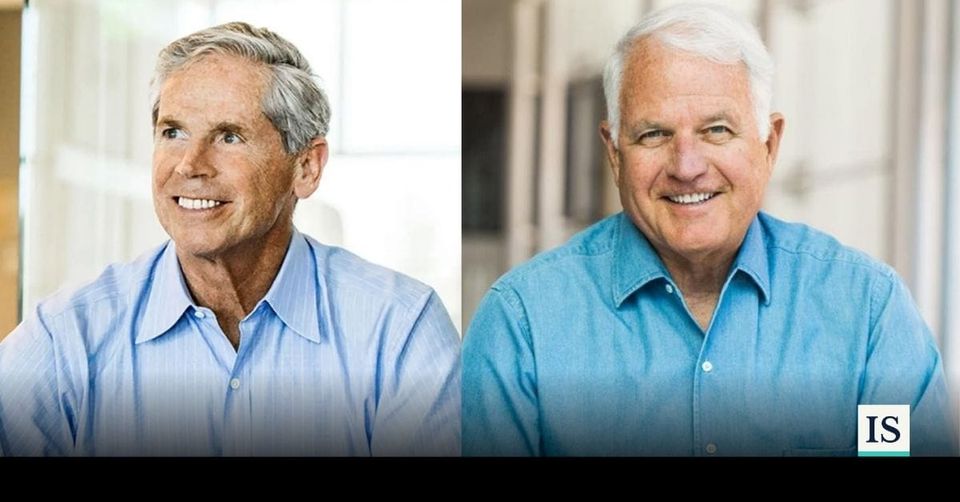
Accel has closed US$3.5 billion across four funds aimed at early-stage artificial intelligence companies worldwide. The capital is divided into a US$1.35 billion global expansion vehicle, a US$800 million US fund, a US$800 million fund for Europe and Israel, and a US$550 million India fund, the firm's ninth for that market. The US and Europe-Israel funds each grew from US$650 million in their prior vintages, while the India fund came in roughly US$100 million smaller than its predecessor. It is the first time in Accel's 43-year history that the firm has closed its global funds simultaneously.
The raise follows a separate US$5 billion late-stage vehicle closed in April 2026, bringing new capital gathered since the spring to roughly US$8.5 billion. Harry Nelis, the London-based partner who has led Accel's European practice since 2004, described the shift driving the structure: "Companies raise more money, more quickly, earlier in their company life than ever before," while noting that the underlying risk of backing unproven companies has not changed. San Francisco Bay Area partner Steve Loughlin said the firm prioritizes investments where it can obtain significant ownership in exchange for its capital, and pointed to a broadening over the past two years from AI-native software into materials science and manufacturing. Accel's recent portfolio includes Anthropic, first backed at a US$183 billion valuation and now valued near US$800 billion, Cursor at US$29.3 billion, Vercel at US$9.3 billion, Perplexity, Periodic Labs, and Thinking Machines Lab.
Market Context
The fund structure is a response to a specific distortion in early-stage investing. Seed and Series A rounds have grown substantially as AI companies raise sums once reserved for growth stages, which compresses the window in which a firm like Accel can establish meaningful ownership. The US$1.35 billion global expansion vehicle exists to let the firm participate in those larger early rounds without abandoning its ownership discipline, and Loughlin has been explicit that Accel avoids concentrating solely on unusually well-capitalized startups.
Valuation velocity in the portfolio illustrates the pressure. Anthropic moved from US$183 billion to roughly US$800 billion during Accel's holding period, and Thinking Machines Lab reached near US$50 billion following a US$2 billion seed round. Those figures make ownership percentage at entry far more consequential than in previous cycles, since later rounds at these levels dilute early positions quickly and offer few opportunities to build them back at reasonable prices. The India allocation moving down while US and European allocations moved up is the clearest signal in the structure about where Accel expects the next set of opportunities to concentrate.
The Signal
"Companies raise more money, more quickly, earlier in their company life than ever before." — Harry Nelis, partner, Accel
Regional Relevance
For the United States: The US fund grew from US$650 million to US$800 million, and Accel's stated expansion beyond software into materials science and manufacturing aligns with a broader redirection of American venture capital toward physical industry. For US founders, more capital chasing early-stage AI companies means better terms in the near term, though the same dynamic is what pushed round sizes and valuations to levels that now make ownership harder for investors to secure. Accel is one of several established firms that raised substantially in 2026, which concentrates decision-making about which companies get funded among a smaller number of very large managers.
For India: The US$550 million India fund is Accel's ninth for the country, and it is smaller than its predecessor by roughly US$100 million at a moment when the firm increased its US and European commitments. Accel has been among the most consistent foreign investors in Indian technology, and a reduced allocation is a meaningful signal for a market where startup funding has been uneven since 2022. The firm continues to cite access to Indian engineering talent as strategic, which suggests the reduction reflects a view about local company formation rather than about India's role in global technology development.
The Other Side
Does more capital at the earliest stage improve outcomes or inflate them? Nelis identifies the trend accurately, that companies raise more money earlier than before, and then Accel responds by raising a dedicated vehicle to participate in exactly those larger rounds. That is a rational competitive response, and it also adds to the pressure it describes; the firm's own caution that the risk of backing unproven companies has not changed sits somewhat uneasily beside a US$1.35 billion vehicle built to write bigger early checks.
What does the smaller India fund indicate? The reduction is modest but it is the only allocation that fell, and Accel has not publicly explained it. For a firm that has raised nine India funds and holds one of the deepest track records among foreign investors there, a smaller commitment invites the question of whether returns from prior vintages met expectations or whether the AI opportunity is simply concentrating elsewhere.
Can valuations like these produce returns? Accel's marks look excellent on paper, with Anthropic moving from US$183 billion to near US$800 billion, but those are unrealized. Exits at these levels require acquisitions or public listings of a size the market has rarely absorbed, and a fund raising US$8.5 billion in four months is committing to deploy into an environment where entry prices assume that outcome arrives.
Sources & Transparency
- Bloomberg — Accel Raises $3.5 Billion to Invest in Emerging Global AI Startups
- Tech Funding News — Accel raises $3.5B across four funds as AI reshapes early-stage VC
- Private Equity Wire — Accel raises $3.5bn across four funds to target early-stage global AI opportunities
- Dealroom News — Accel raises $3.5B across four new funds for early-stage startups
- Pulse2 — Accel Raises $3.5 Billion To Invest In Emerging Global AI Startups
- CryptoRank — Accel closes $3.5B in new funds to back early-stage AI startups globally