
Alfred Lin and Pat Grady Commit $10B to AI in Sequoia's Largest Bet in 54 Years
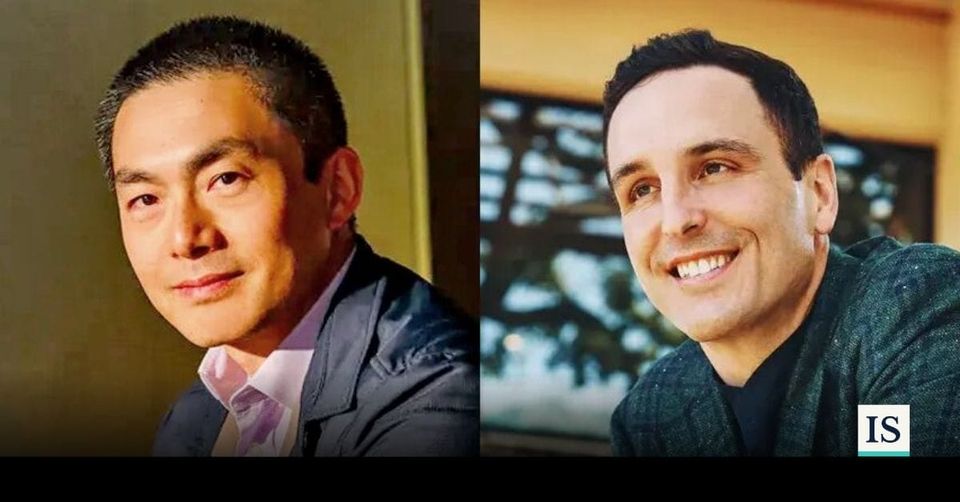
Sequoia Capital is committing US$10 billion to artificial intelligence and what it calls reindustrialization, the largest capital commitment in the firm's 54-year history. The decision was made under Alfred Lin and Pat Grady, who became co-stewards of the firm in November 2025 after Roelof Botha stepped down. Lin joined Sequoia in 2010 and led investments in Airbnb, DoorDash, and Kalshi; Grady has invested at the growth stage since 2015 and backed ServiceNow, Harvey, and OpenEvidence, and co-led Sequoia's early investment in OpenAI alongside Lin and Sonya Huang.
The commitment reportedly began with a smaller proposal. Lin initially suggested investing US$1 billion in Anthropic, and partners argued for a far larger figure; after debate in May 2026, the firm settled on US$10 billion. The thesis extends beyond software: Sequoia argues that AI's economic value depends on reaching factory floors, power grids, and defense systems, which puts robotics, semiconductors, nuclear energy, and domestic manufacturing inside the fund's scope alongside the model developers themselves. Named areas of interest include Physical Intelligence in robotics, Factory in AI engineering agents, and Valar Atomics in nuclear reactors, with chip supply described as the chokepoint constraining every major model developer. The pace has accelerated sharply under the new leadership, following a US$7 billion expansion fund raised in April 2026, four months before this vehicle. Sequoia manages more than US$80 billion in assets.
Market Context
The fund formalizes a departure from a rule the industry treated as fundamental. Sequoia now backs OpenAI, Anthropic, and xAI simultaneously, three direct competitors, abandoning the conflict-of-interest convention that governed venture capital for decades. Its recent Anthropic exposure alone illustrates the scale involved: the firm joined a round exceeding US$20 billion at a US$350 billion valuation in January 2026, then co-led a US$65 billion Series H at a US$965 billion valuation in June.
That escalation is the context for the reindustrialization framing. With model developers valued near a trillion dollars, the marginal return on further investment there is harder to justify than exposure to the physical bottlenecks those models depend on: chips, electricity, and manufacturing capacity. Sequoia is not alone in reaching that conclusion, as capital across the sector has moved toward energy and compute infrastructure, but committing 12% of assets under management to a single thesis is an unusually concentrated expression of it.
The Number
$10 billion. Sequoia's largest commitment in 54 years, and roughly one-eighth of the firm's total assets under management, directed at a single thesis by two stewards who took over nine months earlier.
Regional Relevance
For the United States: The reindustrialization label is explicit about geography. Sequoia is directing capital toward domestic semiconductor production, nuclear energy, defense manufacturing, and supply chain reshoring, priorities that align closely with current US industrial policy and with federal spending already committed to those sectors. For a firm whose returns have come overwhelmingly from software over three decades, redirecting toward capital-intensive physical assets is a substantial change in risk profile, and one that ties venture returns more tightly to permitting timelines, construction schedules, and energy policy than to product cycles.
For global venture markets: Sequoia's willingness to fund competing AI labs simultaneously sets a precedent other firms will be pressured to follow or explicitly reject, and the conflict rules that governed venture capital internationally were largely inherited from Silicon Valley practice. The concentration also matters for founders outside the United States: when the largest funds direct this much capital toward American infrastructure and domestic supply chains, the capital available for companies in other markets is shaped by that allocation.
The Other Side
Can a firm serve three competing AI labs at once? Sequoia holds positions in OpenAI, Anthropic, and xAI, companies competing directly for customers, talent, and compute. The conventional objection is that no investor can advise all three honestly, and the firm has not published how it manages information barriers between them or how portfolio companies in adjacent categories are meant to interpret that arrangement.
Is US$10 billion a conviction or a valuation problem? Sequoia entered Anthropic at a US$350 billion valuation in January and co-led a round at US$965 billion five months later, nearly tripling in under half a year. Deploying at those levels requires exits at multiples that have no precedent in venture history, and the reindustrialization thesis, whatever its merits, also happens to offer somewhere to put capital that model developers can no longer absorb at attractive prices.
Does venture capital work for physical infrastructure? Nuclear reactors, semiconductor fabrication, and factories operate on decade-long timelines with regulatory dependencies and capital requirements that fund structures built around ten-year horizons and software margins have historically handled poorly. Lin and Grady have moved quickly since taking over, raising US$17 billion across two funds in four months, and the discipline of that pace will be tested against assets that cannot be scaled by shipping code.
Sources & Transparency
- Tech Funding News — Sequoia doubles down on AI with $10B fund under new leadership
- Bloomberg — Sequoia Aims $10 Billion at AI, Reindustrialization
- Tech Times — Sequoia's New Leaders Bet $10B That AI Needs Factories, Not Just Software
- The Next Web — Sequoia Capital is putting $10bn behind AI and 'reindustrialization'
- Crypto Briefing — Sequoia pursues AI investments more aggressively under Lin and Grady
- The Cryptonomist — Sequoia Capital AI Investment: $10B Strategic Pivot