
Atera Energy Enters Mexico With a US$350 Million Investment to Bring Solar Power to Manufacturers
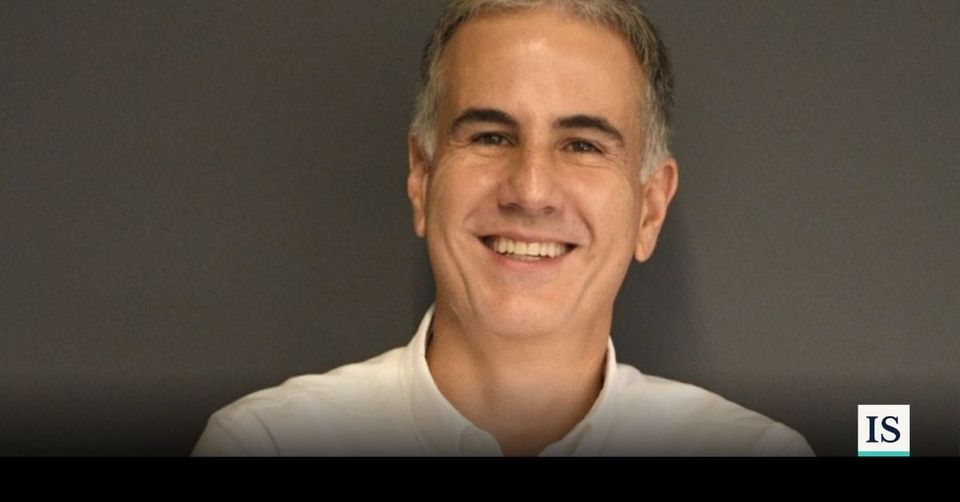
Atera Energy, a Colombian energy services company led by chief executive Luis Felipe Vélez Restrepo and backed by Celsia, the utility arm of Grupo Argos, and Canadian asset manager Brookfield, is entering the Mexican market with a commitment reported at between US$350 million and US$500 million. Startups Latam and Bloomberg Línea report US$350 million allocated to Mexico through 2030 as part of a regional plan exceeding US$500 million, while most Mexican outlets including El Cronista, El Financiero, and Alto Nivel report US$500 million for Mexico alone over five years. The company will concentrate on Nuevo León, Coahuila, Guanajuato, and Querétaro, the states absorbing most nearshoring-driven manufacturing investment.
Atera sells energy as a service, a model in which it diagnoses a factory's energy needs, designs and finances the installation, then builds, operates, and maintains it while the client pays a service fee instead of capital expenditure. Its offering spans rooftop solar generation, HVAC, compressed air systems, and electrical infrastructure. Across Colombia, Panama, Honduras, and Peru, the company reports more than 290 active projects, 174 MW under long-term contract, 40.6 MW in backup generation, roughly 200 MW of installed distributed capacity, and more than 500 industrial clients, having generated over US$47 million in accumulated savings for customers. In Mexico it estimates a distributed generation market of about 10,000 MW and is targeting roughly 400 MW, or 4% of that capacity.
Market Context
The opening comes from a regulatory change. Mexico's reformed electricity framework under President Claudia Sheinbaum reserves 54% of grid generation for the state while allowing 46% private participation, and secondary rules to the energy services law explicitly permit private investment in self-consumption and distributed generation. That is the specific category Atera operates in, and the reform converted it from a contested space into a defined one.
Demand is the other half. Plan México, the government's industrial strategy, estimates the country needs roughly MXN$740 billion (about US$43 billion) in energy investment through 2030 and targets 32 gigawatts of new generation capacity. Manufacturers relocating supply chains to northern and central Mexico have encountered grid constraints that delay or block expansion, which makes on-site generation less an environmental choice than an operational necessity. Atera's proposition, that a factory can add capacity without spending capital or waiting for a grid connection, is aimed precisely at that bottleneck.
The Signal
"Our commitment is to support companies so that energy stops being a factor that limits their growth." — Luis Felipe Vélez Restrepo, chief executive, Atera Energy
Regional Relevance
For the United States: The factories Atera intends to power are largely the ones serving American supply chains. Nearshoring has concentrated manufacturing investment in Nuevo León, Coahuila, Guanajuato, and Querétaro precisely because of proximity to the US market, and electricity availability has emerged as one of the harder constraints on how fast that relocation can proceed. For American companies moving production to Mexico, distributed generation determines whether a plant can scale on schedule. Canadian and Colombian capital financing that infrastructure also illustrates that the physical buildout supporting US supply chain realignment is not primarily American-funded.
For Mexico and Latin America: Mexico gains private capital directed at a bottleneck the state grid has not resolved, without the political friction of private companies selling power into the public system, since self-consumption sits inside what the reform permits. For Colombia, Atera represents an outbound expansion by Grupo Argos, one of the country's largest industrial conglomerates, into a market several times the size of its own. The energy-as-a-service model itself is well suited to Latin American industry, where the capital cost of on-site generation has historically been the barrier rather than the technology.
The Other Side
How large is the commitment, exactly? The figure differs across sources by US$150 million, with the original announcement reported as US$350 million for Mexico within a regional plan above US$500 million, and much of the Mexican press reporting US$500 million for Mexico alone. Investment pledges of this type are also typically framed as intentions over five years rather than committed capital, and are contingent on demand that has not yet materialized.
Does the regulatory opening hold? Mexico's energy policy has reversed direction more than once in the past decade, and the current framework reserves majority generation for the state while permitting private distributed generation through secondary rules. Companies financing 20-year assets under those rules are exposed to the possibility that a future administration narrows the space again, a risk that has already cost foreign energy investors in Mexico before.
Whose returns are these? Under the energy-as-a-service model, Atera finances the equipment and retains ownership while the client pays a recurring fee. That removes capital cost for the manufacturer and transfers the asset's long-term value to Atera and its backers, Brookfield and Celsia. It is a reasonable trade for a factory that cannot afford the upfront outlay, though it means the savings the company cites, more than US$47 million to date, are net of a margin that has not been disclosed.
Sources & Transparency
- Startups Latam — Atera Energy desembarca en México con una inversión de US$350 millones para llevar energía solar a la industria manufacturera
- Bloomberg Línea — Empresa energética respaldada por Brookfield y Celsia invertirá US$350 millones en México
- El Cronista — Con el Plan México de fondo, Atera Energy invierte 500 MDD para acelerar la autogeneración eléctrica
- Alto Nivel — Atera Energy invertirá 500 mdd en México para llevar energía como servicio a la industria
- El Financiero — Nueva inversión de 500 mdd en México: ¿qué empresa la hará y en qué estados se enfocará?
- Fast Company México — Atera Energy en México: 500 mdd para autogeneración