Brazilian Startup Runflow Raises R$7M to Manage Corporate AI Agents

Runflow, a Brazilian startup that builds a management platform for corporate AI agents, has raised R$7 million (roughly US$1.4 million) in a pre-seed round led by Honey Island by 4UM, with participation from Airborne Ventures, STAMINA Ventures, and strategic investors. Honey Island is the venture firm created by EBANX founders Wagner Ruiz, João Del Valle, and Alphonse Voigt, operating a R$100 million fund in partnership with asset manager 4UM Investimentos that writes checks between R$1 million and R$5 million into seed and pre-seed rounds.
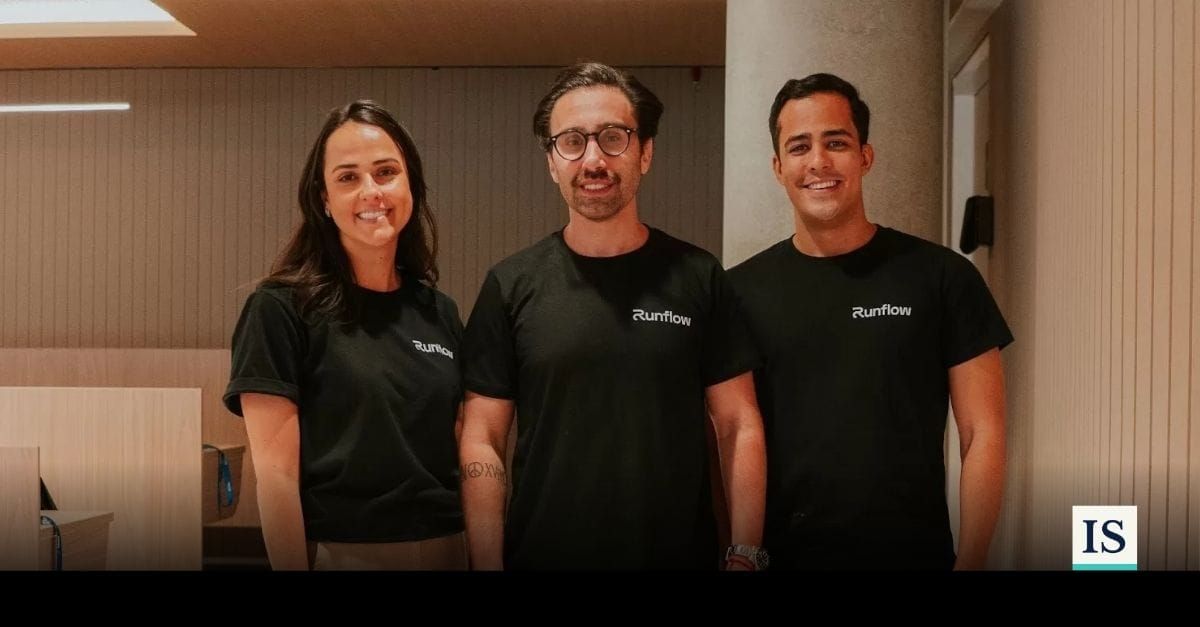
Founded in 2025 as a spin-off from the AI education community IFTL, Runflow was created by CEO Edmee Moreira along with co-founders Danrley Morais and Mariana Pastorelli. Moreira and Morais previously built LinkAPI, an API integration platform acquired by Semantix in 2021 for approximately R$100 million. Runflow's platform functions as a governance and operations layer for AI agents deployed inside companies, handling permissions, cost tracking, performance monitoring, and human oversight, with more than 150 connectors to enterprise systems including ERPs, CRMs, APIs, and databases. The company currently manages more than 500 AI agents executing roughly 250 million tasks per month for clients including Vero Internet, Brasal, Grupo Osten, PX Ativos Judiciais, CTRC, and Demarest. The new capital will fund an expansion of its forward-deployed engineering team, infrastructure, and enterprise growth.
Market Context
Runflow's positioning reflects a shift underway in enterprise AI: as companies move past pilot projects, the constraint is less about building agents than about controlling them once they run in production. Moreira has argued that once AI touches a company's core business, low-code automation tools are insufficient and firms need "something more high-code, with control and security." The company reports annual recurring revenue of about R$4.5 million as of July 2026, targeting R$12 million by December and R$100 million by 2027, and says monthly recurring revenue has grown tenfold since founding, with projects delivering payback in roughly three months on average.
The raise arrives during a record period for AI investment globally, with venture capital reaching US$510 billion in the first half of 2026 and AI startups capturing 43% of that total, or about US$217 billion. Runflow's bet is that domestic relationships and Brazil-specific integrations will hold against better-funded international entrants: Israeli competitor Wonderful, valued at US$2 billion, recently entered the Brazilian market. Runflow targets large enterprises, with reported client thresholds ranging from R$50 million to R$500 million in annual revenue, and its founders point to enterprise sales relationships built since their LinkAPI days in 2017 as the company's principal defense.
The Signal
"We're creating a kind of HR for AI agents. Each agent needs functions, correct access, targets, cost, and performance tracking." — Edmee Moreira, co-founder and CEO, Runflow
Regional Relevance
For Brazil: Runflow is a test of whether Brazilian enterprise software can hold its domestic market as global AI vendors expand into Latin America, an outcome that shapes where value from AI adoption accumulates. The reported operational results carry weight beyond the balance sheet: at PX Ativos Judiciais, automation reduced a team from 15 people to three, and at Grupo Osten, a support team went from seven to one while lead-to-visit conversion rose 35%. Those figures make Runflow's growth a concrete data point in Brazil's debate over how quickly AI displaces administrative and customer service roles, categories that employ millions across the country.
For the United States and global enterprise software: The round illustrates how quickly the AI agent governance category is forming outside Silicon Valley, and how founders with prior exits can build credible enterprise businesses on modest capital in markets US vendors treat as secondary. For American software companies, Brazil is a large but relationship-driven market where local incumbents with existing enterprise ties can be difficult to displace, and Runflow's trajectory offers a signal on whether the agent-management layer consolidates globally or fragments along regional lines.
The Other Side
Is R$7 million enough to defend a market a US$2 billion competitor is entering? Wonderful arrived in Brazil with a valuation more than a thousand times Runflow's round, and while local relationships and integrations offer real protection, enterprise buyers frequently favor better-capitalized vendors on questions of long-term viability, particularly for infrastructure sitting at the center of core business processes.
Can the company deliver a twenty-fold revenue increase in eighteen months? Runflow reports R$4.5 million in ARR and targets R$100 million by 2027, a leap that assumes both rapid client acquisition and substantial expansion within existing accounts; the founders describe their sales as highly relationship-driven, which builds durable contracts but rarely scales at the pace those targets require.
What happens to the trust equation when the ROI story is a headcount story? The case studies Runflow cites center on cutting teams from 15 to three and from seven to one, which is a persuasive pitch to a CFO but a complicated one for the employees and managers who must adopt and supervise these agents day to day, and adoption resistance inside client organizations is a well-documented reason enterprise automation projects stall.
Sources & Transparency
- Startupi — Runflow capta R$ 7 milhões em rodada pré-seed para ampliar plataforma de gestão de agentes de IA
- Brazil Journal — A Runflow cria agentes de AI – e atraiu os fundadores do EBANX
- Startups.com.br — Com Runflow, fundadores da LinkAPI lançam ERP para agentes de IA
- Update Diário — Runflow capta R$ 7 mi para criar agentes de IA e mira mercado enterprise
- NeoFeed — Fundadores do Ebanx apostam R$ 100 milhões em fintechs com novo fundo
- Startups.com.br — IA impulsiona recorde de investimentos de venture capital em 2026