Cyclic Materials Raises $75 Million to Scale U.S. Rare Earth Recycling

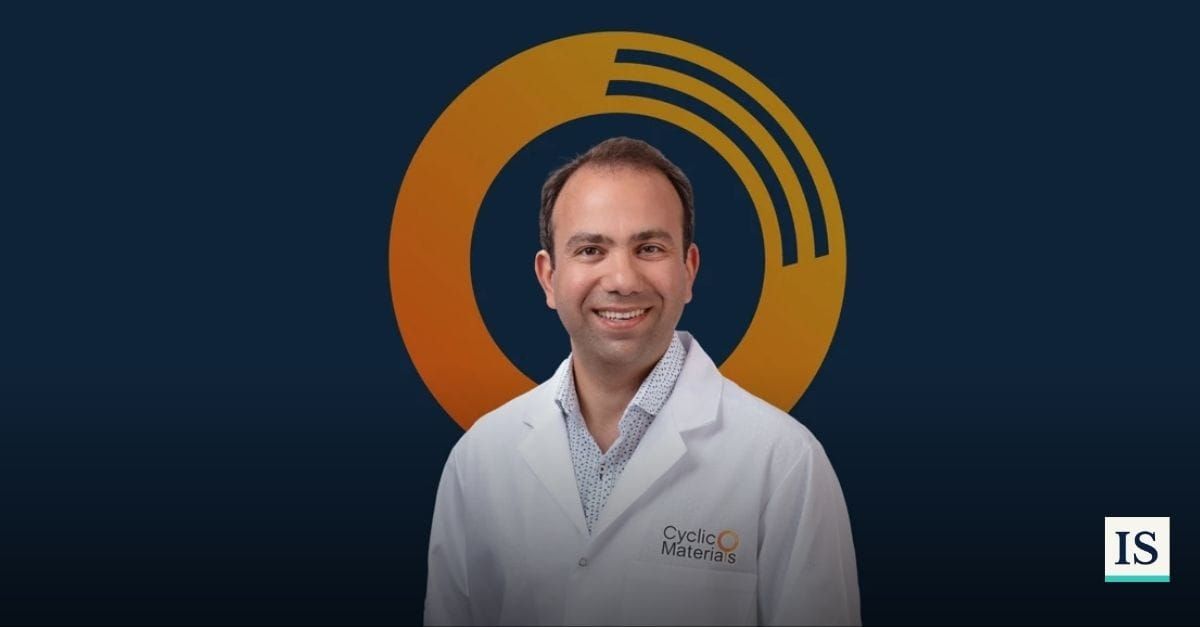
Cyclic Materials, a Toronto-based rare earth recycling company, announced on August 27, 2026, a $75 million strategic growth financing round led by accounts advised by T. Rowe Price Associates, which first backed the company in 2025. New strategic investor ERI joined the round alongside existing backers Energy Impact Partners, Microsoft, Amazon, BMW i Ventures, Jaguar Land Rover, and Hitachi Ventures. The raise brings Cyclic Materials' total equity funding to $237 million and is aimed at accelerating the company's U.S. production footprint, including its rare earth recycling campus in McBee, South Carolina, and its magnet-separation facility in Mesa, Arizona.
Founded and led by CEO Ahmad Ghahreman, Cyclic Materials recovers rare earth elements and other critical minerals from end-of-life magnets, electronics, and industrial scrap using a proprietary separation and refining platform, feeding materials used in electric vehicles, defense systems, robotics, semiconductors, and consumer electronics. The company's Arizona facility is expected to begin operations in the third quarter of 2026, while groundbreaking on the South Carolina campus, designed to process roughly 2,000 tonnes of magnet material annually, is slated for the fourth quarter. Cyclic Materials shipped its first commercial rare earth output in 2024 and operates a "Hub-and-Spoke" model designed to collect scrap regionally and refine it at centralized processing sites across North America.
Market Context
The financing lands as Washington treats domestic rare earth capacity as a national security priority. In July 2026, a Presidential Determination designated recovery of critical materials essential to defense and supply security, following a string of Chinese export controls that in 2025 and 2026 restricted shipments of rare earth elements and, more disruptively, asserted extraterritorial licensing requirements on products made anywhere in the world using Chinese-origin materials or technology, even in trace amounts. China still controls roughly 90% of global rare earth processing capacity, which has pushed automakers, tech companies, and defense contractors to fund alternative supply, whether through new mining, recycling, or magnet production; several inside investors, including Microsoft, Amazon, BMW i Ventures, and Jaguar Land Rover, are also Cyclic Materials' corporate customers.
Cyclic Materials' fundraising history illustrates how quickly capital has flowed into the sector: the company raised $53 million in a Series B round in September 2024, and has now more than quadrupled its total equity raised in under two years. Comparable recycling and magnet-production plays, including MP Materials' U.S. government-backed expansion and Redwood Materials' battery-recycling buildout, point to a broader pattern of state and private capital converging on domestic critical-mineral processing as a hedge against Chinese supply leverage.
Signal
"This additional capital will enable us to move faster in South Carolina and across the U.S., accelerate the expansion of our Hub-and-Spoke network... building this vital domestic infrastructure is a national priority." — Ahmad Ghahreman, Founder and CEO, Cyclic Materials
Regional Relevance
For the United States, the deal reinforces a national push to break dependence on Chinese-processed rare earths, materials essential to everything from fighter jets to electric motors to smartphone components. With Beijing's extraterritorial export rules now making offshore workarounds largely unworkable, domestic recycling capacity like Cyclic Materials' South Carolina and Arizona sites becomes one of the few near-term levers the U.S. has to secure magnet-grade rare earth supply without new mining permits or years-long refinery buildouts. The involvement of strategic corporate investors, including Microsoft, Amazon, and two automakers, signals that large buyers are underwriting supply security directly rather than waiting for the market to solve it.
For Canada, where Cyclic Materials is headquartered and where its technology was developed, the raise underscores both an opportunity and a risk: a homegrown critical-minerals technology company is scaling primarily through U.S. infrastructure investment, reflecting how U.S. policy incentives and proximity to American manufacturers and defense buyers are pulling capital and capacity southward. It also reflects Canada's broader positioning as a source of critical-minerals innovation and capital within an increasingly security-driven, U.S.-centered supply chain, a dynamic likely to shape how future Canadian cleantech and mining-tech startups structure their growth-stage expansion.
The Other Side
Can recycling realistically dent China's 90% share of rare earth processing on a relevant timeline? Recycling depends on a steady flow of end-of-life magnets and scrap, a feedstock base that is still small relative to the mining-and-refining volumes China controls; skeptics note that even successful buildouts like Cyclic Materials' South Carolina campus, with roughly 2,000 tonnes of annual capacity, represent a fraction of the tens of thousands of tonnes the U.S. would need to meaningfully de-risk defense and EV supply chains.
Does a $237 million cumulative raise signal durable unit economics, or reliance on strategic and policy tailwinds? Several of Cyclic Materials' investors, including Microsoft, Amazon, and two automakers, are also potential offtake customers, which can align incentives but also raises the question of whether the business would attract capital at this pace absent the current China-tariff and national-security narrative; investors will be watching whether recovery costs fall enough to compete with virgin rare earth pricing once geopolitical tensions ease.
What happens if Beijing's suspended October 2025 export controls are reinstated, or eased instead? A reinstated extraterritorial licensing regime would likely accelerate demand for Western recyclers like Cyclic Materials, but a genuine détente or eased restrictions could soften the urgency now driving corporate and government capital into domestic rare earth infrastructure, testing whether the current wave of investment holds up without geopolitical pressure behind it.
Sources & Transparency
- Cyclic Materials Announces USD $75 Million Strategic Growth Financing to Scale U.S. Rare Earth Production
- Cyclic Materials lands $75M to expand US rare earth recycling
- Cyclic Materials Raises $75 Million Led By T. Rowe Price As Total Equity Funding Reaches $237 Million
- Toronto's Cyclic Materials Raises US$75M To Scale Rare Earth Recycling