
Deel Acquires Israeli Deepfake Security Startup Clarity in $40-50 Million Deal
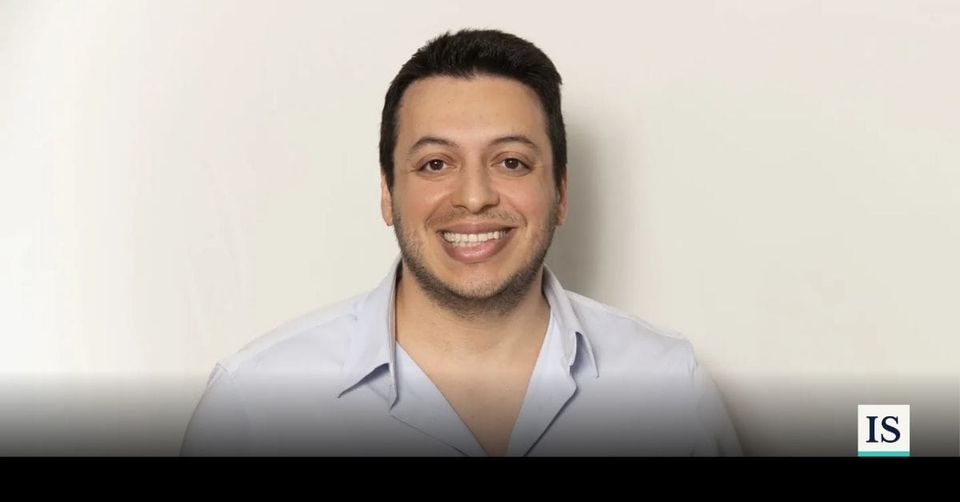
Deel, the global workforce and payroll platform co-founded and led by CEO Alex Bouaziz, announced on August 3 that it is acquiring Clarity, a Tel Aviv cybersecurity startup specializing in identity verification and deepfake detection. Terms were not officially disclosed; Israeli outlet Calcalist reported the deal at US$40 million to US$50 million in cash and shares, with other coverage placing it at US$45 million to US$50 million. It is Deel's 15th acquisition and its first in Israel. The announcement coincided with Deel reporting annual recurring revenue above US$1.5 billion for the first half of 2026, at a valuation exceeding US$17 billion, serving more than 40,000 organizations across 150-plus countries.
Clarity was founded in late 2022 by CEO Michael Matias, a Stanford computer science graduate and former officer in the Israel Defense Forces' Unit 8200, alongside CTO Natalie Fridman and CSO Gil Avriel. The company originally built software to detect deepfakes used in disinformation and to authenticate war footage before pivoting to enterprise identity verification, and had raised US$16 million in seed funding in 2024 from Walden Catalyst Ventures, Bessemer Venture Partners, Fusion, Secret Chord Ventures, Ascend Ventures, and Flying Fish Partners. Its technology screens candidates from the sourcing stage onward, detecting AI-generated faces, forged documents, and live deepfake video during interviews, then continues verifying identity through onboarding, device provisioning, and ongoing access. Deel was already a Clarity customer before the acquisition and will fold the engineering team into a dedicated cybersecurity division. "Trust shouldn't end after a background check on day one," Matias said.
Market Context
The threat the deal targets has moved from theoretical to documented. On July 31, 2026, eleven countries including the United States, Japan, South Korea, France, Germany, Italy, and the Netherlands issued a coordinated advisory warning that North Korean operatives are using real-time video inference, deepfake models running live during interviews, to pass hiring checks, the first such alert European governments formally joined. The group tracked as FAMOUS CHOLLIMA accounted for 47% of all state-sponsored direct-access intrusions against US technology companies in the twelve months ending March 2026. Roughly US$800 million flowed to Pyongyang's weapons programs in 2024, and North Korean actors stole US$2.02 billion in cryptocurrency during 2025. Once hired, operatives typically use remote access hardware to control company laptops from abroad, with facilitators in Western countries maintaining the equipment; eight US-based facilitators were sentenced in 2026.
The commercial problem is broader than state actors. Deepfake identities can be purchased on dark web marketplaces for around US$50, and Gartner projects that one in four job candidate profiles globally will be fraudulent by 2028. For Deel, the acquisition also fits a platform consolidation strategy spanning payroll, immigration, compliance, and IT management, intensifying its competition with Rippling, which raised US$450 million earlier in 2026. Deel frames the specific gap Clarity fills as the seam between systems: verification typically stops when recruitment ends, leaving the handoff to IT provisioning unguarded.
The Signal
"Trust shouldn't end after a background check on day one." — Michael Matias, co-founder and CEO, Clarity
Regional Relevance
For the United States: American technology companies are the primary target of the fraudulent-hire schemes driving this market, and the compliance exposure extends beyond security into sanctions law, since paying a North Korean operative through payroll can constitute a violation regardless of intent. Deel processes payroll across 150 countries for more than 40,000 organizations, which places it at a chokepoint in exactly the workflow these schemes exploit, and gives US employers a commercial reason to want verification embedded in the platform rather than bolted on. The deal also signals where HR technology competition is heading, with security becoming a differentiator alongside payroll and compliance.
For Israel: Clarity is Deel's first Israeli acquisition and a further data point in the pipeline running from Unit 8200 to commercial cybersecurity, with Matias following the well-established route from military intelligence service into a venture-backed startup. The exit is modest by Israeli cyber standards but notable for its speed, roughly four years from founding and two from its seed round, and for the pivot behind it, from detecting disinformation and authenticating conflict footage to enterprise hiring security. Deel's ties to Israel run through Bouaziz, who studied at the Technion in Haifa.
The Other Side
Should the platform that profits from frictionless global hiring also be the one policing it? Deel's business depends on making cross-border employment fast and administratively simple, and embedding identity verification into that same platform creates an incentive structure worth examining, particularly since customers now depend on a single vendor for both onboarding speed and the controls meant to slow bad actors down.
Is Deel a credible buyer of insider-threat technology given its own legal position? Rippling sued Deel in March 2025 alleging it cultivated an employee inside Rippling as a corporate spy, with an amended complaint claiming Bouaziz personally directed the scheme; the US attorney for the Northern District of California issued grand jury subpoenas, and the criminal probe became public in January 2026. Deel countersued in Delaware, alleges Rippling personnel accessed its own platform 58 times, and has moved to strike the witness at the center of the case. None of these allegations has been proven, but a company acquiring identity and insider-risk technology while contesting exactly those claims invites the question.
Can deepfake detection stay ahead of deepfake generation? Detection is an arms race in which defensive models degrade as generative capability improves, and the eleven-nation advisory itself recommends human countermeasures such as unscheduled video calls and spontaneous physical actions alongside AI detection tools, an implicit acknowledgment that software alone is not currently sufficient. Continuous verification across the employment lifecycle also raises privacy questions about persistent biometric monitoring of workers that neither company addressed in the announcement.
Sources & Transparency
- Calcalist — Deel acquires Israeli deepfake security startup Clarity in $40-50 million deal
- Deel — Deel acquires continuous AI security company, Clarity
- The Times of Israel — US-Israeli payroll unicorn buys Tel Aviv AI cyber startup to combat fake hires
- The Next Web — Deel acquires deepfake-detection startup Clarity as fake hire problem grows
- Tech Times — North Korean IT Workers Use Real-Time Deepfakes to Beat Hiring Checks, Eleven Nations Warn
- PYMNTS — Justice Department Investigates Allegations That Deel Recruited Spy at Rival Firm Rippling