Diameter Pay Raises $10M to Expand Global Access to the US Dollar

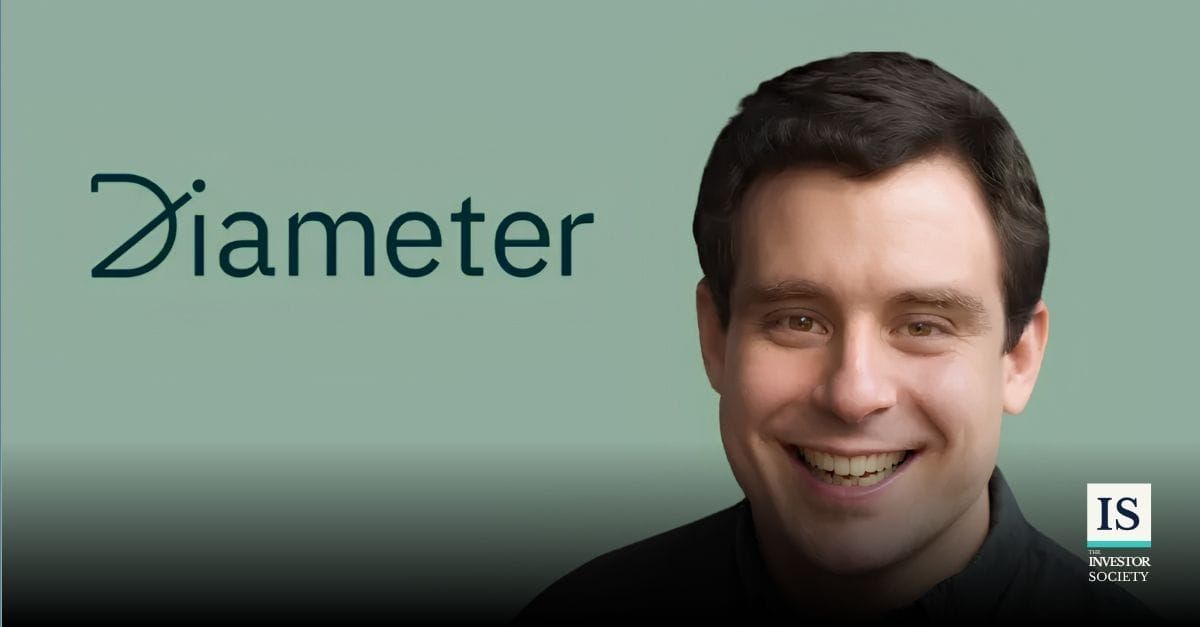
Diameter Pay, a New York company that sells access to the US dollar payment system through an API, raised a US$10 million Series A announced on September 3, 2026. CMT Digital and Lightspeed Faction co-led, with SixThirty Ventures, the Stellar Development Foundation, Tech Council Ventures, Onigiri Capital and BitRock Capital participating. The round closed in July 2026 and is the company's first outside financing; it had been bootstrapped until now. CMT Digital takes a board seat, and Lightspeed Faction and SixThirty Ventures take observer seats. Robert Pozen, the former president of Fidelity Investments, serves as senior board advisor.
The platform gives banks, fintechs and digital asset exchanges outside the United States virtual US dollar accounts, domestic and international payments, stablecoin on- and off-ramps and embedded compliance controls, routed across several US banking partners including Portage Bank and SSB Bank plus one publicly traded bank the company has not named. Founder and chief executive David Lighton started the business at MIT as SendFriend, a remittance service built for the US-to-Haiti corridor after the earthquake, drawing on work he had done at the World Bank. It rebranded to Diameter Pay in April 2023 and moved to serving institutions instead of consumers, helped by a €2.9 million European Union research grant. The company reports more than US$10 billion in payment volume so far in 2026, over 10,000 live end users and a team of 20 across the United States, Argentina, Poland and Nigeria, with clients including banks and fintechs in Switzerland and Singapore.
Market Context
Stablecoins stopped being a crypto product somewhere in the last eighteen months. Fiat-backed stablecoin supply passed US$273 billion in March 2026, roughly forty times the level of March 2020. Adjusted transaction volumes grew 91% in 2025 to US$10.9 trillion, which sits within range of Visa's US$14.2 trillion in annual payments volume, and real-world payments volume, stripping out trading and arbitrage, doubled during 2025 to about US$400 billion. An estimated 60% of that is business-to-business. The GENIUS Act, signed in the summer of 2025, gave the United States its first federal framework for payment stablecoins, following the European Union's MiCA regime.
That regulatory clarity is what turned the segment into a land grab. Stripe bought Bridge, Zerohash and BVNK are selling similar infrastructure, and Visa and Mastercard are building their own stablecoin capabilities. Diameter Pay's positioning inside that crowd is narrower than most: it is not selling a token or a wallet, it is selling the compliance and data layer that lets a US sponsor bank accept a foreign fintech as a customer without taking on unmanageable risk. Sponsor banking has been the choke point in cross-border dollar access since correspondent banking relationships started shrinking a decade ago, and it is the part of the stack that regulation, not technology, decides.
What Stands Out
"The world is becoming more global, but the financial system is becoming more fragmented. Rather than asking banks to accept more risk, we provide the technology, data, and compliance infrastructure to understand and manage that risk with greater precision." — David Lighton, founder and CEO, Diameter Pay
Regional Relevance
For the United States, the deal is about who gets to use the dollar and through what door. American banks have spent fifteen years cutting correspondent relationships with institutions in smaller and higher-risk markets, because the compliance cost of each relationship outweighed the revenue. Companies like Diameter Pay reverse that arithmetic by making one bank's compliance apparatus serve many foreign counterparties at once. The result extends dollar reach without extending US bank balance sheets, which is the outcome US policy has broadly wanted and US bank risk committees have broadly refused to fund. The US$10 million raise is small; the US$10 billion in volume moved while bootstrapped is the number that explains the investor interest.
For Latin America and other emerging markets, this is plumbing that determines whether local fintechs can offer dollar products at all. A neobank in Colombia, a payments company in Argentina or an exchange in Brazil generally cannot open a US bank account directly, and the workaround has been layers of intermediaries that add cost and fragility. Diameter Pay's own team sits partly in Argentina and Nigeria, two markets that understand the problem from the inside.
The connection to the rest of the regional fintech story is direct. The same dollar-access demand is what drives stablecoin savings apps in Colombia, remittance startups in Mexico and Central America, and treasury products for exporters across the region. Those companies all need an institutional on-ramp to the US banking system, and the ones that cannot build it themselves will rent it.
The Other Side
Does a US$10 million round survive a market where Stripe is a competitor? Stripe acquired Bridge for a reported US$1.1 billion, Visa and Mastercard are building in-house, and Zerohash and BVNK are better capitalized. Diameter Pay's answer is depth in compliance for regulated institutions rather than breadth, which is a defensible niche until a larger player decides the niche is worth buying or copying.
What happens to the volume if a banking partner exits? The platform routes through a small number of US sponsor banks. Sponsor banking has been under sustained regulatory scrutiny since the Synapse collapse, and a single partner withdrawing or being ordered to reduce fintech exposure would hit a meaningful share of a US$10 billion annual flow. Concentration on the banking side is the mirror image of the diversification the product sells to clients.
Is compliance infrastructure a product or a service that scales poorly? Selling risk management as software works only if the underwriting genuinely generalizes across jurisdictions. Twenty employees supporting institutional clients in Switzerland, Singapore and elsewhere suggests high leverage today, but every new market brings its own regulator, and the cost of being wrong in this business is the loss of the banking relationship the whole platform depends on.
Sources & Transparency
- Diameter Pay Raises $10M in Series A Funding
- Diameter Pay Raises $10 Million to Expand Global Access to the US Dollar
- Stablecoin payments infrastructure startup Diameter Pay raises $10 million
- Diameter Pay Raises $10 Million to Expand Stablecoin Payments Infrastructure
- SendFriend Rebrands to Diameter Pay; Already Processed over $60M in 2023
- Diameter Pay Secures $10 Million Series A to Expand Global Dollar Payments Platform