
Enveda Raises US$311M to Push Plant-Derived AI Drugs Into Late-Stage Trials
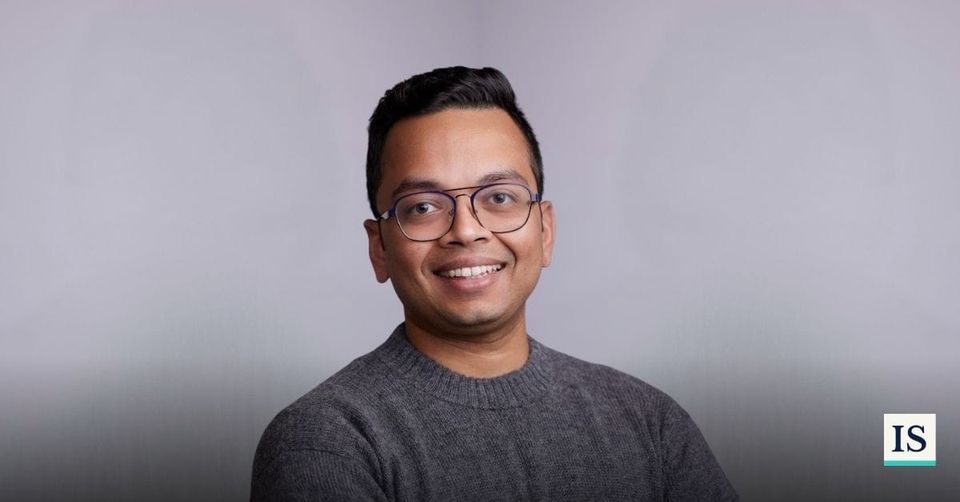
Enveda Biosciences, a Boulder, Colorado-based biotech that uses AI to find drug candidates in the chemistry of plants and microbes, raised a US$311 million Series E led by Catalio Capital Management, the company announced on September 23. New investors include Durable Capital Partners, ICONIQ, Lightspeed, Surveyor Capital (a Citadel company), accounts advised by T. Rowe Price, Digitalis Ventures, Alderline Group and an unnamed sovereign wealth fund, joined by existing backers such as Baillie Gifford, Premji Invest, Kinnevik and Lux Capital. The round brings total funding to more than US$845 million and values the company at about US$2 billion, roughly double its valuation from a year earlier, according to TechCrunch. It follows a US$150 million Series D in September 2025 and a US$130 million Series C in November 2024.
Enveda was founded in 2019 by Chief Executive Officer Viswa Colluru, an early employee at AI drug developer Recursion. Its platform, called PRISM, maps and predicts the structure and function of natural molecules, then ranks them by drug potential before chemists refine them into candidates. Three of its 17 programs are in human testing: ENV-294, an oral drug for atopic dermatitis and asthma now in Phase 2, which showed an 85% average improvement in eczema severity by day 42 in a Phase 1b study; ENV-308, a pill modeled on a molecule the body releases after exercise, being studied to help patients keep weight off after stopping GLP-1 drugs; and ENV-6946, aimed at inflammatory bowel disease. The new capital will move ENV-294 and ENV-308 into later-stage trials, advance ENV-6946 into mid-stage development, start trials for more inflammatory and metabolic candidates and scale the company's automated lab.
Market Context
Enveda's round lands during a heavy year for AI drug discovery funding. Isomorphic Labs, the Alphabet spinout, raised US$2.1 billion in May, and large pharma companies have signed multibillion-dollar partnerships with AI-native developers such as Insilico Medicine. Yet no AI-discovered drug has won FDA approval so far. Insilico's rentosertib, for a lung-scarring disease, only entered Phase 3 in July, and industry analyses show AI-derived molecules clear early safety trials far more often than average, while their success rate in Phase 2, where efficacy is tested, looks about the same as conventional drugs.
That puts Enveda's strategy in focus. Rather than licensing out molecules early, as many AI biotechs do, the company is funding its own path through late-stage development, a costlier route that keeps more of the upside if the drugs work. Its focus on natural chemistry is also a distinct bet: roughly half of today's approved small-molecule drugs trace back to natural products, but the field faded in the 1990s because identifying and producing those molecules was slow and expensive, the bottleneck Enveda says AI now removes.
The Signal
"The most reliable source of new medicines is the chemistry that living things have been refining for billions of years, and AI finally lets us read it." — Viswa Colluru, Founder and Chief Executive Officer, Enveda
Regional Relevance
For the United States, the round is a test of whether AI can shorten the country's costly drug development cycle, where a single approved medicine often takes a decade and billions of dollars to reach patients. A deep bench of public-market and crossover investors, including T. Rowe Price and a Citadel affiliate, suggests Enveda is being positioned for an eventual IPO. Its weight-maintenance pill also targets one of the biggest open questions in U.S. obesity care: what happens when patients stop taking GLP-1 drugs like Wegovy and Zepbound and the weight comes back.
For Colorado, Enveda has become a flagship for the Boulder-Denver life sciences cluster, which has long lived in the shadow of Boston and the San Francisco Bay Area. A US$2 billion company scaling its labs and clinical operations from Boulder strengthens the case that the Front Range can anchor late-stage biotech, not just early research spun out of the University of Colorado.
The Other Side
Can AI beat biology's hardest test, Phase 2? AI-designed molecules have a strong record in early safety trials but no clear edge yet when efficacy is measured in patients. ENV-294's eczema data came from a small early study; larger, placebo-controlled trials will show whether the results hold.
Is going it alone the right call? Carrying drugs through late-stage trials independently can cost hundreds of millions of dollars per program. Colluru has said Enveda will partner "at the right value inflection point," but the balance between keeping upside and sharing risk will shape how far US$311 million actually goes.
How crowded is the post-GLP-1 lane? Eli Lilly, Novo Nordisk and dozens of startups are chasing weight maintenance, muscle preservation and oral alternatives. ENV-308 is still in Phase 1, and it will have to show a clear benefit against rivals with far larger budgets and faster timelines.
Sources & Transparency
- Enveda secures $311M to bring more nature-derived AI drugs into clinical trials
- Enveda Raises $311 Million From Leading AI and Biotech Investors to Bring Pharma Into the 21st Century
- Enveda reaps $311M series E to feed ambition to become a 'household name'
- Enveda, an AI drugmaker, banks $311M in venture funding
- AI drug hunter Enveda raises $311M for late-stage obesity, inflammatory disease push
- AI Drug Discovery FDA Approvals: The 2026 Reality Check