Fireworks Raises $1.5 Billion at $17.5 Billion Valuation
Nvidia‑backed Fireworks AI has raised US$1.5B at a US$17.5B valuation to build a cloud platform for open‑source AI models, signaling how cost pressure and model diversity are reshaping the economics of enterprise AI infrastructure.

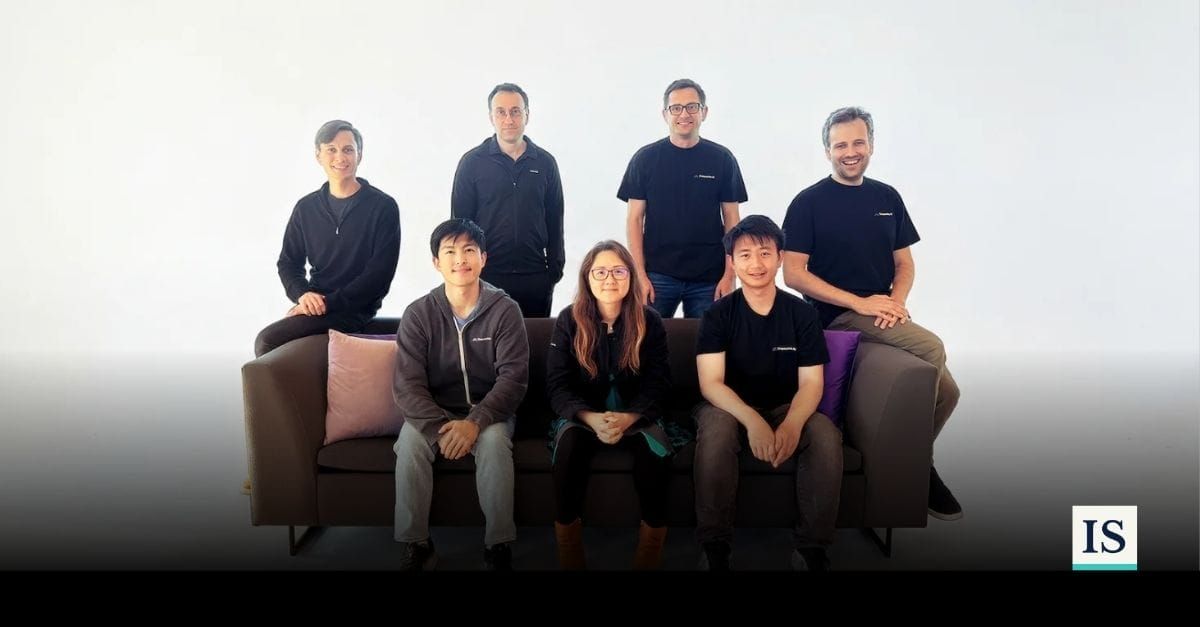
Fireworks AI, a cloud startup focused on serving open‑source AI models to software developers, has secured US$1.5B in new funding at a US$17.5B valuation, with Nvidia among its strategic backers. The company positions itself as a lower‑cost alternative to proprietary model APIs, targeting enterprises that want flexible model choice without building their own infrastructure, a proposition that goes directly to the heart of AI unit economics for both investors and technology buyers.
This round crystallizes a key data point in the current AI cycle: investors are willing to assign near‑decacorn valuations to infrastructure plays that promise cheaper inference at scale and alignment with the open‑source ecosystem. Fireworks AI’s bet is that a cloud optimized for running many open models will capture demand from companies looking to reduce dependence on single‑vendor proprietary models, and that this positioning will matter more as AI spending shifts from experimentation to production workloads.
Market context
The deal lands in a 2025–2026 AI market defined by two tensions: the desire for cutting‑edge model performance and the need to control costs as AI moves into large‑scale production deployments. Proprietary model providers have captured early mindshare, but open‑source model quality has improved fast, and CIOs are increasingly comparing cost per 1,000 tokens, latency, and data control between closed APIs and open‑model clouds.
Regulators in the US and Europe have pushed for more transparency around AI training data and model behavior, which often aligns better with open‑source ecosystems than with fully closed models. At the same time, the capital cycle has shifted from early‑stage model labs toward infrastructure that can absorb growing inference demand more efficiently, such as GPU clouds, specialized networking, and platforms like Fireworks AI that promise cheaper AI models at scale for enterprises under margin pressure.
What this means for investors and business owners
- Cost per token is now a strategic moat.
Fireworks AI’s funding at a US$17.5B valuation tells investors that the market is starting to price AI platforms on unit economics, not just on model quality narratives. For business owners, this reinforces that negotiating and optimizing cost per request or per 1,000 tokens across vendors is no longer back‑office detail, but a core part of preserving margins in AI‑enabled products. - Open‑source alignment is investable, not ideological.
The backing of a major chip supplier like Nvidia in an open‑model cloud signals that open‑source AI has matured into an investable infrastructure thesis, not only a community movement. Investors should read this as validation that platforms which orchestrate many open models and abstract away complexity can capture meaningful enterprise budgets, while enterprises gain leverage by avoiding lock‑in to one proprietary stack. - Infrastructure, not just models, captures value.
While much attention has gone to frontier model labs, Fireworks AI shows that the infrastructure layer which makes models usable at scale can command multi‑billion valuations when it solves performance and cost for production workloads. For founders and executives, this implies opportunities in orchestration, observability, security, and compliance layers around AI, rather than competing head‑on with frontier models. - Strategic capital is a signal of ecosystem bets.
Nvidia’s participation highlights how hardware vendors are using equity stakes to secure demand for their GPUs and to shape the software ecosystems that will sit on top of their chips. Investors should watch which infrastructure platforms attract similar strategic capital, because these bets often foreshadow future standards in AI deployment, and operators can use these signals to choose platforms that are likely to be long‑term supported. - Multi‑model strategies will become the norm.
By building a cloud that runs multiple open‑source models, Fireworks AI is betting that enterprises will not rely on a single general‑purpose model but on a portfolio tuned to different tasks and regulatory regimes. Business owners planning AI roadmaps should design architectures that can route traffic across several models, making vendor diversity and interoperability a design requirement rather than a future nice‑to‑have.
Fireworks AI’s valuation encapsulates how quickly capital is pivoting toward AI infrastructure that promises cheaper, more flexible model use for enterprises. For investors and operators, the core thesis is simple: the winners in this cycle will be those who treat AI cost, openness, and model diversity as strategic variables, not technical footnotes, and the question is whether your current stack reflects that reality.