
Flash Raises US$29 Million Series D Led by Battery Ventures to Fund AI and Acquisitions
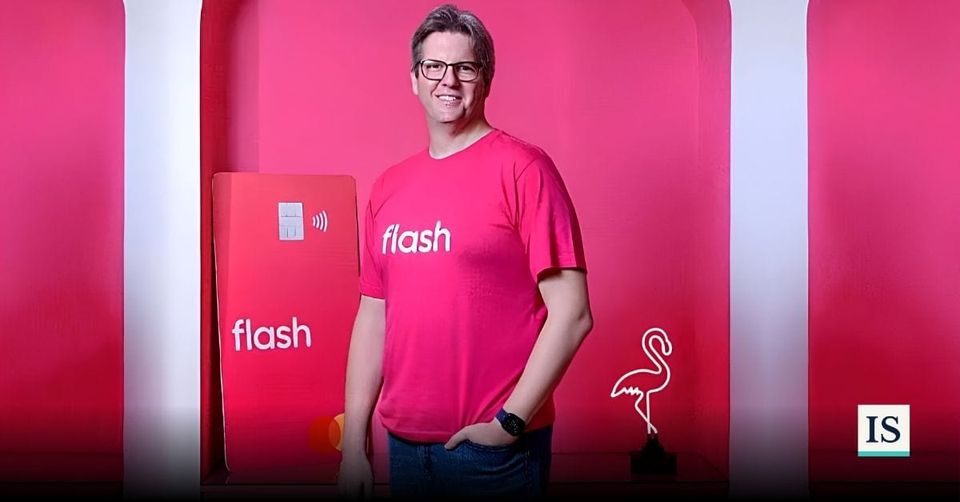
Flash, a Brazilian platform for managing corporate benefits, expenses, and human resources operations, has raised R$150 million, roughly US$29 million, in a Series D round led by Battery Ventures and investor Kevin Efrusy, with Endeavor Catalyst entering the cap table for the first time. The round follows a US$100 million Series C in March 2022 and brings total capital raised past R$800 million. No valuation was disclosed.
Founded in 2019 by chief executive Ricardo Salem and chief operating officer Pedro Lane, with Ademar Bandeira, Isadora Gabriel, and Guillermo Gomez completing the executive team, Flash operates three business lines covering benefits, people management, and corporate expenses. It serves roughly 60,000 client companies covering more than 2 million workers, ranking fifth among Brazilian benefits providers, and about 35% of its clients now use more than one module. New sales in the first half of 2026 grew 70% against the second half of 2025, with large accounts representing over a quarter of that volume. The unusual detail is that the company says it did not need the capital. "We're solid, doubling year over year and generating significant cash," Salem said, adding that Flash "didn't need money, but now we can be more flexible and aggressive." The company has been cash-flow positive for close to a year and had already committed R$400 million of its own capital to platform development in 2026. The new round funds an AI copilot for human resources teams, expansion of a 750-person commercial team into enterprise accounts, and a return to acquisitions after earlier purchases of FolhaCerta in 2023 and ExpenseOn.
Market Context
Brazil's corporate benefits market has been dominated for decades by a handful of incumbents: Alelo, Pluxee, formerly Sodexo, VR, and Edenred's Ticket. Flash entered as the fifth-largest player and is targeting leadership by 2030, an ambition that depends less on product than on displacing entrenched relationships in a category where switching costs have historically been high.
Regulation is moving in its favor. A recent review of the Worker Food Program, the PAT framework that governs meal and food benefits in Brazil, is aimed at increasing competition and restricting anticompetitive practices among established providers, which lowers barriers for challengers. The bundling strategy matters here as well: with 35% of clients using multiple modules, Flash is attempting to convert a benefits card relationship into a broader operating system for human resources, which is harder for a single-product incumbent to match. Lane frames the effort around software rather than payments, calling artificial intelligence "the engine" of the strategy, aimed at removing HR bureaucracy and generating decision data for clients.
The Signal
"We didn't need money, but now we can be more flexible and aggressive." — Ricardo Salem, co-founder and CEO, Flash
Regional Relevance
For Brazil: Flash is challenging an oligopoly that has controlled how tens of millions of Brazilian workers receive meal, food, and transportation benefits, a system built around card networks and long-standing corporate contracts rather than software. Regulatory pressure on the PAT framework and a well-capitalized challenger together represent the most serious competitive test that market has faced. For Brazilian startups more broadly, a company raising while cash-flow positive is a departure from the pattern of the past decade, and Endeavor Catalyst's participation signals the ecosystem's interest in demonstrating that a Brazilian technology company can scale without perpetual external funding.
For the United States and global HR technology: Battery Ventures and Kevin Efrusy are American investors placing capital in a Brazilian company competing against European incumbents, which reflects how internationalized the benefits and payroll software market has become. The consolidation logic Flash describes, bundling benefits, expenses, and people management into a single platform, mirrors what Rippling, Gusto, and Deel have pursued in the United States, and the outcome in Brazil offers a read on whether that model transfers to markets where benefits are more heavily regulated and card-based.
The Other Side
If the company did not need the money, what does the round actually buy? Salem describes Flash as cash-generative and already committing R$400 million of internal capital in 2026, so R$150 million adds meaningfully to firepower without transforming it. Raising from a position of strength is a defensible choice, and it also dilutes existing shareholders at an undisclosed valuation, which makes it impossible to tell whether the terms reflect the strength being described.
Can fifth place become first by 2030? Alelo, Pluxee, VR, and Edenred hold entrenched positions with corporate contracts, card acceptance networks, and decades of relationships. Flash's 70% growth in new sales is strong, but market leadership requires displacing incumbents in accounts where the benefits provider is embedded in payroll processes, and the regulatory review that helps Flash could equally prompt incumbents to compete more aggressively on price.
Does returning to acquisitions fit a company this size? Flash previously bought FolhaCerta and ExpenseOn and now plans to reactivate M&A while simultaneously building an AI product, expanding a 750-person sales team into enterprise, and pursuing market leadership. That is four demanding initiatives at once, and integration failures are the most common reason companies at this stage lose the operating discipline that made them cash-generative in the first place.
Sources & Transparency
- NeoFeed — A Flash "não precisava de dinheiro", mas acaba de levantar R$ 150 milhões
- Startups.com.br — Flash capta R$ 150 milhões em rodada série D para impulsionar IA e M&As
- InfoMoney — Plataforma de gestão do trabalho Flash capta R$150 mi
- Startupi — Flash capta R$ 150 milhões em Série D
- Dealroom.co — Flash raises R$150M Series D
- Let's Money — Flash capta R$ 150 milhões para acelerar produtos e IA