
Network Bio Launches With $50M to Train AI on Patient Tissue From Major US Hospitals
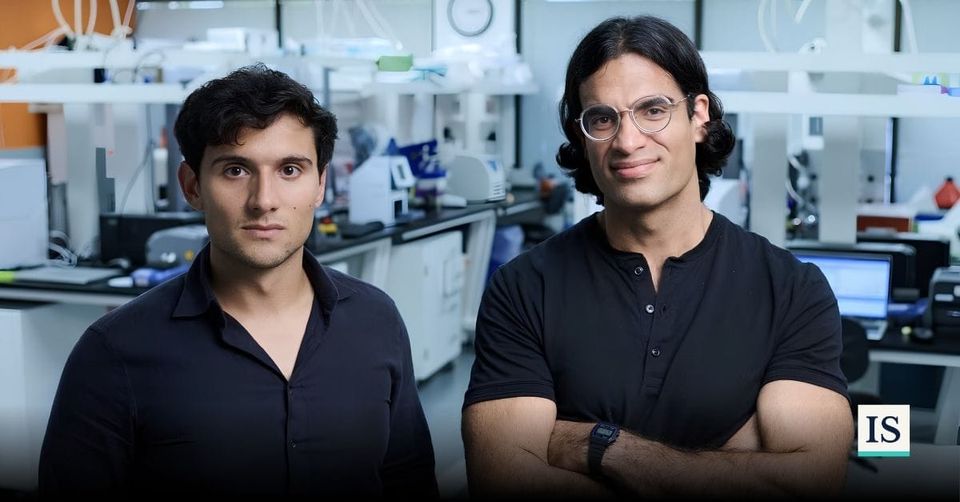
Network Bio, a Palo Alto biotechnology company building disease-specific artificial intelligence models trained on human biological data, launched on August 19 with US$50 million in financing. Section 32 led the round, joined by Thiel Bio, Founders Fund, Breyer Capital, Blue Venture Fund, JSL Health Capital, and other life science and AI investors. Mike Pellini, managing partner at Section 32, serves as chairman of the board.
The company was co-founded by chief executive Asad Ali Ahmad, alongside Raphael Potter and Hani Goodarzi. Its platform has two parts: a research network that sources and structures patient tissue and paired blood samples from academic biobanks including Mass General Brigham, the University of Pennsylvania, and the University of Colorado Anschutz, applying common selection criteria and data harmonization standards across institutions; and what the company calls bio-native AI architecture, designed to learn from multimodal biological data while managing technical confounders, with underlying research published in Nature Machine Intelligence. "Every patient leaves a barcode of their disease in their tissue, and until now no one has been able to read those barcodes at scale," Ahmad said. Network Bio is also collaborating with NVIDIA on Nexus, described as the first foundation model trained on cell-free RNA, a self-supervised transformer built on cfRNA expression profiles. Ahmad notes that cfRNA reflects active gene expression across tissues in real time, and that a single blood draw can generate hundreds of millions of transcript-level observations. The company has signed a co-development and licensing agreement worth more than US$30 million with an undisclosed Fortune 100 healthcare company, and targets applications across immunology, metabolic, cardiovascular, and autoimmune disease in diagnostics, biomarker discovery, and drug development.
Market Context
The company's argument is that medicine generates enormous quantities of biological information that no one systematically learns from. Morgan Cheatham of Breyer Capital framed it directly: "Clinical care is the largest biological experiment ever conducted, and we have no system for learning from it at scale." Network Bio's response is to treat access to structured patient tissue as the scarce input rather than model architecture, which is why the biobank partnerships sit at the center of the pitch. Pellini describes the differentiator as "the combination of academic biobank networks with AI architecture built for medicine."
That positioning matters because biological foundation models have become a crowded category, with well-funded efforts from large pharmaceutical companies, established AI labs, and startups all pursuing versions of the same idea. Pellini characterizes the ambition as building "General Medical Intelligence" that improves with each biological question it answers rather than training one model per disease. The US$30 million commercial agreement signed before launch is unusual for a company at this stage and functions as the strongest available evidence that a large healthcare buyer sees value in the dataset, though it is a commercial validation rather than a clinical one.
The Signal
"Every patient leaves a barcode of their disease in their tissue, and until now no one has been able to read those barcodes at scale." — Asad Ali Ahmad, co-founder and CEO, Network Bio
Regional Relevance
For the United States: Network Bio operates from Palo Alto but its actual asset is distributed across American academic medical centers in Boston, Philadelphia, and Denver, institutions holding tissue archives accumulated over decades of federally funded research and clinical care. Converting those archives into training data raises questions the country has not settled about who benefits when patient samples collected in academic settings become the input to commercial AI systems. The investor roster, spanning Section 32, Founders Fund, Thiel Bio, and Breyer Capital, also reflects how far Silicon Valley capital has moved into biology, and the NVIDIA collaboration ties the effort to the same compute infrastructure driving the broader AI buildout.
For global health research: Biobank networks exist across Europe, Asia, and increasingly Latin America, and the model Network Bio is testing, harmonizing sample quality and selection criteria across institutions to make data trainable, is more transferable than the underlying science. If the approach works, the competitive advantage shifts toward whoever can assemble the largest harmonized tissue archive, which favors countries with centralized health systems and long-running population cohorts. It also raises the prospect that populations underrepresented in these datasets will be underrepresented in the diagnostics and therapies that result.
The Other Side
Does a model trained on these biobanks generalize beyond them? Mass General Brigham, Penn, and Colorado Anschutz serve specific patient populations, and a model that performs well on their archives has not demonstrated that it works on different populations with different genetic backgrounds, environmental exposures, and care patterns. As one analysis of the launch put it, generalization "must survive independent populations and clinical scrutiny before it earns the name."
Is a US$30 million commercial agreement evidence the science works? The deal signals that a large healthcare company finds the dataset commercially valuable, which is meaningful for a company launching from stealth. It is not clinical validation, and the partner has not been named, the milestones have not been disclosed, and no diagnostic or therapeutic developed on the platform has entered trials.
Who consented to this, and to what? The platform depends on patient tissue and blood collected through academic medical centers, and neither the launch materials nor the coverage addresses how consent obtained for clinical care or academic research extends to training commercial AI models, how patients share in value created, or what governance the biobanks retain. These questions have surfaced repeatedly as health data becomes an AI training input, and they typically arrive later, through regulators or litigation, rather than at launch.
Sources & Transparency
- BusinessWire — Network Bio Launches with $50 Million Financing and World's Largest Patient Tissue Training Dataset
- Bioxconomy — Network Bio emerges with $50m, inks NVIDIA collaboration
- Longevity.Technology — Network Bio launches with $50m for biological AI
- citybiz — Network Bio Launches With $50M to Scale AI-Driven Biomedical Platform
- The Pharma Letter — Network Bio launches with $50 million financing, unveils NVIDIA collab
- Ventureburn — Network Bio Raises $50M to Expand Disease-Specific AI Platform