
Halluminate: US$30M Series A for Wall Street Simulations That Train AI Agents
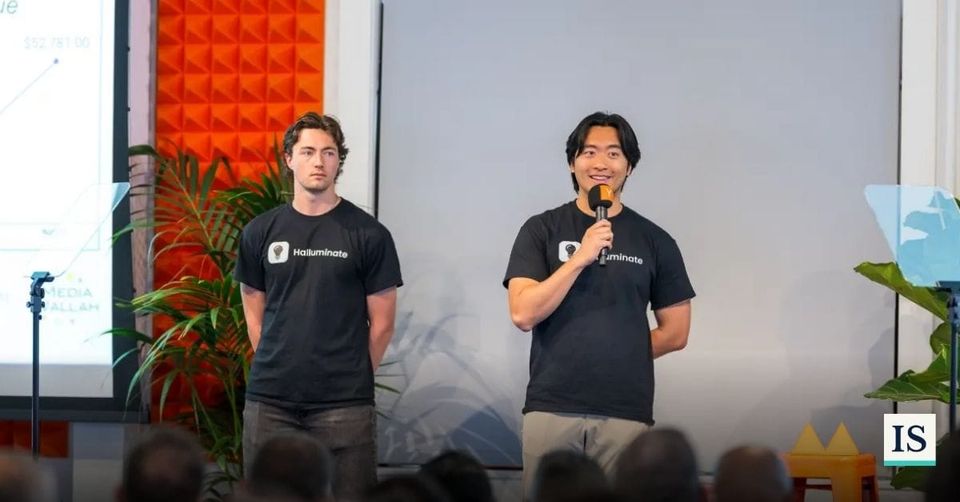
San Francisco-based Halluminate has raised US$30 million in a Series A round led by Oak HC/FT, with general partner Matt Streisfeld leading the deal. Existing investors Y Combinator, Orange Collective and Heavybit also took part, along with individual machine learning researchers from Anthropic, OpenAI and Meta. The round was first reported by Fortune on October 1, 2026, and brings total funding to US$38.5 million. The company did not disclose its valuation. Halluminate was founded in 2024 by CEO Jerry Wu, a former product and research lead at Capital One Labs, and CTO Wyatt Marshall, both Cornell alumni, and went through Y Combinator's Summer 2025 batch.
Halluminate describes itself as a data research lab. It builds simulated versions of the software and files that finance professionals use, so that AI agents can practice tasks like investment banking analysis, private equity due diligence, consulting and accounting, and get graded on the results. In AI research these are called reinforcement learning (RL) environments: a controlled workspace where a model tries a task and receives a score. The company says its customers are four of the five leading closed-source U.S. AI labs, which it did not name. According to Fortune, the nine-person team went from zero revenue to a mid-eight-figure annualized run rate in about 10 months and is profitable. The funds will go to engineering and AI research hires, computing infrastructure and new financial simulations.
Market Context
AI labs are now paying heavily for this kind of training material. As public internet text runs short, models improve by practicing realistic work instead of reading more of it. TechCrunch reported in 2025, citing The Information, that Anthropic leaders had discussed spending more than US$1 billion on RL environments over a year. Larger suppliers have grown fast: Mercor was valued at US$10 billion in late 2025 and was in talks at about US$20 billion in July 2026 with a US$2 billion annualized run rate, according to Bloomberg. Meta paid about US$14.3 billion for 49% of Scale AI in 2025.
Halluminate's bet is depth in one field rather than scale across many. Its own test, built on 88 tasks drawn from anonymized private equity deals, found that the best of seven frontier AI models averaged a score of 51%, as reported by Fortune. That gap is the product: if top models still miss half of real due diligence work, labs will keep paying for better practice material in finance.
Key Signal
"Simulating an investment banker's work is fundamentally different from simulating a software engineer's work." Jerry Wu, CEO and Co-Founder, Halluminate (via Fortune)
Regional Relevance
For the United States, the deal points to the next target of AI automation: high-paid knowledge work in finance. The labs buying Halluminate's environments are training agents meant to handle tasks that today belong to junior bankers, analysts and accountants. Oak HC/FT, a growth firm focused on financial services and healthcare with more than US$7 billion under management, leading the round suggests finance specialists see this as an extension of fintech, not just an AI infrastructure play.
For San Francisco, Halluminate is a small example of a big pattern. The city's AI labs now support an ecosystem of tiny, specialized vendors that sell directly to them. A nine-person company reaching tens of millions in annualized revenue shows how much money is moving from the labs to outside suppliers, and how quickly a narrow niche can become a business.
The Other Side
What if the labs build this themselves? Halluminate's revenue depends on a handful of unnamed AI labs, all of which also build environments in-house. a16z's Jennifer Li told TechCrunch in 2025 that labs want third-party vendors, but losing even one customer would hit a company this concentrated hard.
How solid is the revenue figure? The mid-eight-figure run rate is self-reported and unaudited. Oak HC/FT describes it as a "contracted" run rate, which can differ from revenue the company has actually earned. Its expectation of a nine-figure run rate by year-end is a projection.
Does a 51% score signal a ceiling or a countdown? Today's results suggest AI agents are far from replacing finance professionals. But Wu argues the complexity of these simulations must roughly double every six to eight months to stay useful. If models keep catching up at that pace, the jobs these simulations copy could change faster than the industry expects.
Sources & Transparency
- Halluminate Raises USD30M in Series A Funding
- Exclusive: Nine-person Halluminate raises $30 million, counts four top U.S. AI labs as customers
- Halluminate raises $30M to train AI agents for Wall Street work
- Halluminate Raises $30 Million Series A, Bringing Total Funding To $38.5 Million
- Halluminate recauda USD 30 millones para entrenar IA en tareas financieras
- Nine-person Halluminate raises $30M to train AI for finance work