Innovation Endeavors and Xora lead Elio's US$21M round to build AI-era sensors
Elio has raised US$21M to build sensors designed for machines rather than human eyes, and it matters because it treats hardware like software, an asset class investors price very differently.

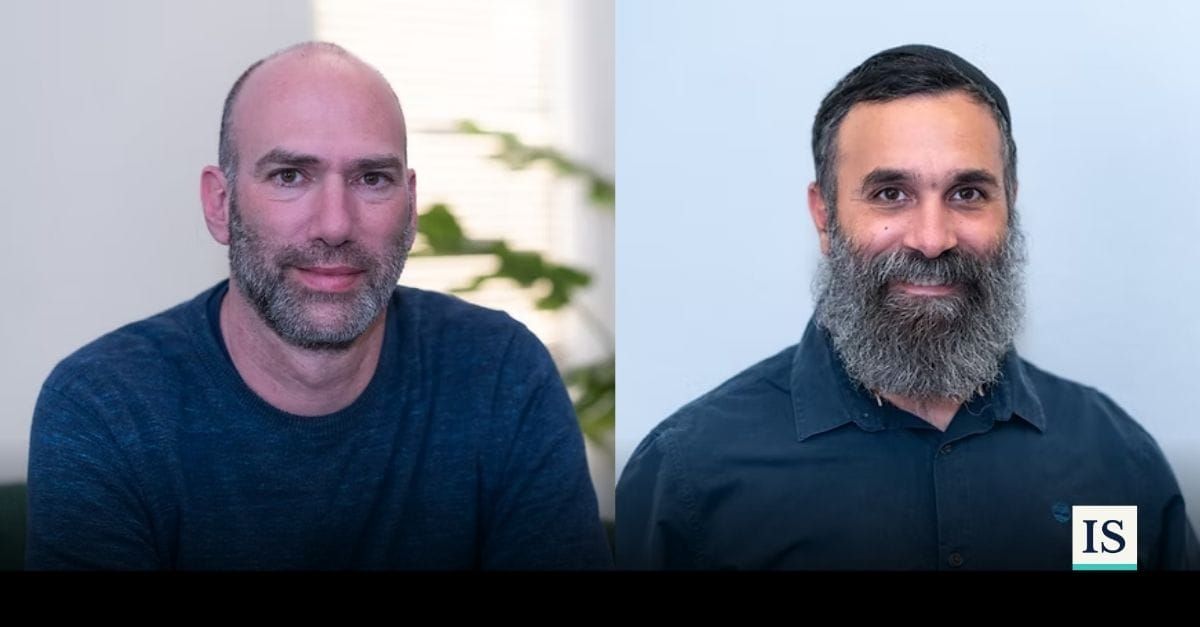
Elio, a Silicon Valley company building sensors designed for artificial intelligence rather than the human eye, announced a US$21M funding round led by Innovation Endeavors and Xora, with participation from Kevin Weil and Scribble VC. Existing investors UpWest and Resolute Ventures, who led the company's previous round, are continuing their support. The company is headquartered in San Mateo, California, and led by Founder and CEO Nadav Grossinger alongside CTO Nitay Romano. For investors and operators, the hook is what the round is funding: an attempt to change the economics of hardware itself, by making a physical sensor gain capability after it ships rather than depreciate.
The founding team is the strongest signal in the deal. Grossinger and Romano have worked at the intersection of optics and AI for more than 20 years, previously co-building Pebbles Interfaces, which was acquired by Meta, and then spending seven years leading the physical-sensing stack behind Meta's AR and VR headsets. Grossinger's earlier ventures include ColoRight, acquired by L'Oréal, and Romano previously served as Chief Optical Scientist at Holo/Or, the diffractive-optics science underpinning Elio's core technology. That combination, deep-tech founders with two prior exits and direct experience shipping sensing hardware at Meta scale, is what a US$21M round at this stage is actually pricing.
What Elio actually builds
Conventional sensors capture one fixed view of the world, decided in advance and shaped by what the human eye can see rather than what a machine needs. Elio inverts that: its sensors let AI decide what to capture, in real time, based on what it is trying to figure out, delivering the specific information needed at the moment it is needed instead of a fixed image to interpret afterward. The practical consequence is that a single Elio module can do the work of many conventional sensors, because the module reconfigures itself to the task rather than being purpose-built for one.
The mechanism behind the technology
The differentiation sits in putting computation inside the optics themselves. Before light reaches the sensor, dynamic optical layers of micromirrors process it directly, acting more like a neural network than a lens, extracting signals a conventional lens would flatten and lose. AI then learns how the optics behave and corrects them live, reading objects and materials by their physical signature rather than just their pixels. That architecture produces the business model's key property: sensing starts to behave like software, with the same shipped unit gaining new abilities over time instead of becoming obsolete. The applications the company names span four sectors: microscopy, where researchers could observe living cells responding to a drug over time without staining or destroying the sample; semiconductors, where engineers could see through a chip's stacked layers to catch buried defects without cutting the wafer; robotics, where machines get multiple senses in one self-calibrating module; and defense, where the sensors are pitched at detecting small, fast-moving threats like drones at long range in darkness or haze.
Market context
The round lands inside the 2025 to 2026 shift in venture capital toward the physical layer of AI. After several years in which capital concentrated on models and software, investors have moved toward the infrastructure and hardware that AI systems depend on, from data centers and chips to the sensing and robotics stack. Elio's positioning is deliberately upstream of that: if AI systems are increasingly the consumers of sensor data, then sensors optimized for human vision are a legacy constraint. The investor composition reinforces the thesis, with Innovation Endeavors and Xora both known for deep-tech and frontier-hardware bets rather than application-layer software. The defense angle also situates the company inside a sector where counter-drone detection has become a priority procurement category. The caveat worth holding for readers is that this is a company-issued announcement, and it does not disclose a valuation, revenue, customers, or commercial deployments, so the round should be read as capital backing a technical thesis and a proven team, not as validation of a scaled business.
What this means for investors and business owners
- Founder track record is the asset at early stage. With no disclosed revenue or customers, what this round prices is a team that has built and sold sensing companies twice and led hardware at Meta. Early-stage investing in deep tech is largely a judgment about whether a specific team can solve a specific physics problem. For founders, the corollary is that credibility compounds across ventures, and prior exits function as capital in themselves.
- Recurring capability beats one-time sale. Elio's core claim is that its sensor gains abilities after shipping rather than aging out. That converts a depreciating hardware asset into something closer to a software relationship with a customer. Any business selling physical products should ask what portion of its value could be delivered as ongoing capability rather than a single transaction, because that shift changes margins, retention, and how the market values the company.
- Design for the actual end user, even when it isn't a person. The company's founding insight is that sensors were built for human eyes while the real consumer of the data is now a machine. That reframing is transferable well beyond optics: as AI systems become the primary readers of documents, interfaces, and data, products optimized for human consumption may be solving for the wrong customer. Identifying that mismatch early is where new categories get created.
- Multi-sector applicability cuts both ways. Elio names microscopy, semiconductors, robotics, and defense as target markets, which signals a large addressable opportunity but also a focus risk. Platform technologies that can serve everyone often struggle to serve anyone first. For investors, the question to ask is which single market the company will win before expanding; for founders, the discipline is choosing a beachhead rather than pitching breadth.
- Read a press release as a claim, not a result. This announcement contains no valuation, revenue, or named customers, which is normal at this stage but important to register. The rigorous approach is to separate what has been verified, the capital raised and who invested, from what is asserted, the technical capabilities and use cases. Applying that filter consistently across the deal flow you see is one of the cheapest forms of risk management available.