Khosla Ventures Leads $310M Series B for Mining Startup Mariana Minerals at $1.5B Valuation

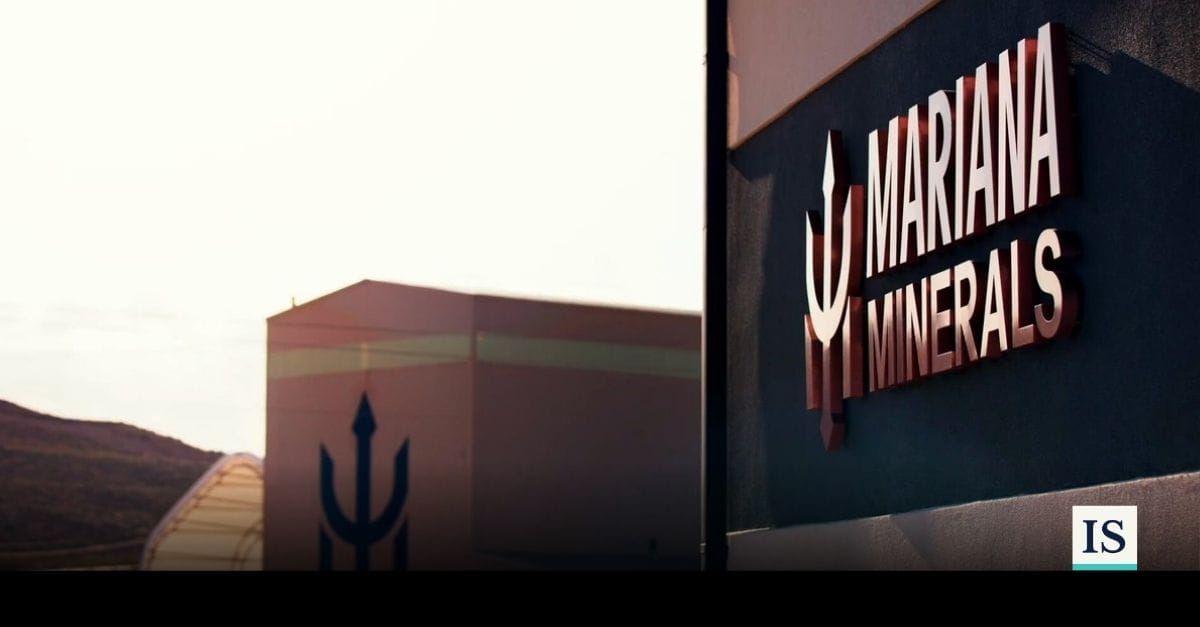
Mariana Minerals, a San Francisco startup applying autonomous software to mining and refining operations, has raised a US$310 million Series B led by Khosla Ventures at a US$1.5 billion valuation, bringing total capital raised to roughly US$400 million. Andreessen Horowitz, Breakthrough Energy Ventures, Greenoaks, StepStone Group, Greycroft, Halo Fund, Pax Ventures, Washington Harbour Partners, and corporate investors BHP Ventures and Mitsubishi Corporation also participated. Founded in 2024 by CEO Turner Caldwell along with Baker Tilney and Juan Lozano, the company was built by a team that spent roughly nine years designing factories at Tesla; Caldwell previously ran Tesla's battery minerals and metals group and designed the company's Texas lithium refinery.
Mariana operates two projects. Copper One, a roughly 10,000-acre site in San Juan County, Utah, was acquired from Lisbon Valley Mining Company in the fourth quarter of 2025 after mining there had been suspended, and Mariana restarted operations in April 2026, targeting 50,000 metric tons of refined copper cathode annually by 2030 from both new production and recycled scrap. Lithium One, in Texas, broke ground in 2025 with commercial production expected in 2027. The operations run on MarianaOS, an in-house platform spanning capital project management, autonomous fleet control, and refining optimization, paired with autonomous haul trucks from Pronto, Sandvik's AutoMine drilling systems, and Boston Dynamics' Spot robots for site inspection. The company employs roughly 220 people and has stated a goal of developing 10 minerals projects within 10 years.
Market Context
The investment thesis rests on a supply gap that AI infrastructure is widening. Each megawatt of AI data center capacity requires roughly 27 metric tons of copper, translating to average annual demand of about 400,000 tons over the next decade, peaking near 572,000 tons in 2028 and totaling more than 4.3 million tons through 2035, comparable to the combined yearly output of the world's five largest copper mines. Against that, global copper production is projected to reach only about 29 million tons by 2035, roughly 6 million tons short of forecast demand, a shortfall driven by years of underinvestment and long permitting timelines.
Supply concentration adds a geopolitical dimension: China controls approximately 90% of global critical minerals processing and 92% of rare earth magnet manufacturing. Caldwell has framed Mariana's approach as manufacturing rather than extraction, arguing that autonomy could deliver "a 30% reduction in refining costs and a 40% to 50% reduction in mining costs," and that the software is being built "to be as generalizable as possible for all the metals the modern economy depends on," including lithium, aluminum, nickel, cobalt, uranium, and rare earths. Mariana competes with established producers such as BHP Group and Standard Lithium, though notably BHP's venture arm is among its investors.
The Signal
"You cannot lead in the AI century without a domestic supply chain." — Travis Kalanick, founder of Atoms, whose autonomous haulage company Pronto supplies Mariana's mining fleet
Regional Relevance
For the United States: The round channels venture capital into domestic mineral production at a moment when Washington has made supply chain independence a policy priority and when AI data center construction is driving copper demand faster than new supply can be permitted and built. Mariana's projects sit in Utah and Texas, states with established extractive industries and comparatively fast permitting, and the involvement of Mitsubishi Corporation and BHP Ventures signals that established industrial players see domestic autonomous production as worth a position. If the cost reductions Mariana claims prove out, they would matter most for marginal American deposits that are uneconomic under conventional operating costs but viable under an automated model.
For rural Utah and San Juan County: Copper One had been idled before Mariana acquired it, a familiar pattern in remote mining communities where rising costs and difficulty recruiting workers have closed operations. The restart brings activity back to a site that had gone quiet, but the employment it creates differs from what the industry historically offered: Mariana expects to hire technical and maintenance staff rather than equipment operators and haul truck drivers. For a county with limited economic alternatives, that shift raises the question of whether local residents can access the jobs returning to their own backyard, or whether the roles get filled from outside.
The Other Side
Do venture capital timelines fit mining reality? Mariana is two years old and carries a US$1.5 billion valuation on one restarted copper mine and a lithium project that will not produce commercially until 2027; mining is famously capital-intensive with decade-long development cycles, permitting risk, and geological uncertainty that software cannot resolve, and investors accustomed to software growth curves may find the pace of physical resource development harder to underwrite than the pitch suggests.
Can automation address what actually constrains supply? The bottlenecks behind the projected copper shortfall are chiefly permitting delays, community and environmental opposition, water availability, and ore grade decline, none of which a fleet of autonomous haul trucks fixes; Mariana's efficiency gains, if realized, would improve unit economics at sites already permitted rather than unlock significant new production capacity.
Is 50,000 tons a year meaningful against the gap the company cites? Mariana's 2030 copper target represents under 1% of the roughly 6 million ton annual shortfall projected by 2035, and even sustained at full rate through 2035 would cover roughly 7% of cumulative AI data center copper demand alone; the strategic case for domestic production is real, but the scale being funded here is small relative to the problem the fundraising narrative invokes.
Sources & Transparency
- Dealroom.co — Khosla leads $310M Series B for mining startup Mariana at $1.5B valuation
- Fortune — Khosla leads $310 million raise for unicorn mining startup Mariana Minerals
- Forbes — This Tesla Veteran Is Running A Copper Mine With AI-Powered Robots
- PR Newswire — Mariana Minerals Restarts Utah Copper Mine as the World's Only Autonomous-First Mine and Refinery
- Mariana Minerals — Series A Announcement
- Canadian Mining Journal — The AI boom beneath our feet: How data centres are rewriting mineral demand