La Casa de Toño Explores US$400M Sale to Fund International Expansion
Grupo Gigante is evaluating the Mexican restaurant chain as its owners explore a sale that could exceed US$400M, testing how much buyers will pay for a locally proven brand with international potential.

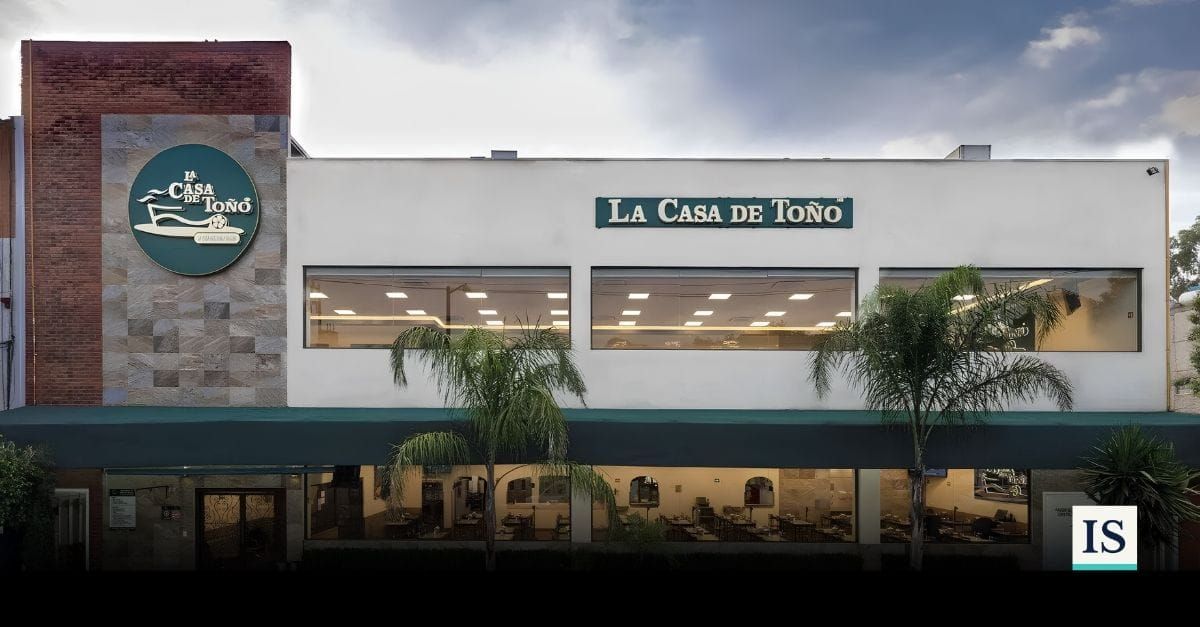
Grupo Gigante confirmed that it is evaluating the possible acquisition of La Casa de Toño, the family-managed Mexican food chain whose owners are reportedly seeking more than US$400M. BBVA México is acting as the seller’s exclusive financial adviser, while other Mexican conglomerates have also shown interest, according to investor materials cited by Bloomberg. For investors and business owners, the process shows how a concentrated regional restaurant network can command global-brand economics when its operating model is difficult to replicate.
The reported valuation exceeds eight times adjusted earnings, approximately twice the multiple attributed in the sale materials to regional operators such as Alsea and Arcos Dorados. However, Grupo Gigante told the Mexican Stock Exchange that it has not signed a binding agreement or negotiated a price, meaning the US$400M figure remains an asking valuation rather than an agreed transaction value. The premium therefore depends on whether a buyer believes La Casa de Toño can export its economics beyond Mexico City.
What exactly is being sold
La Casa de Toño operates a high-volume restaurant model built around affordable Mexican staples such as pozole, quesadillas, flautas, tacos, and sopes. Its differentiation is operational rather than culinary complexity: a limited, familiar menu, rapid table service, standardized kitchens, high customer turnover, and a brand associated with value. The company’s website says it has more than 60 locations, while sale materials reportedly identify 81 restaurants across Mexico City and its metropolitan area.
The proposed mechanism is a competitive sale process rather than a completed bilateral acquisition. BBVA México is reportedly presenting the chain to potential buyers using its dense store network, customer loyalty, and expansion potential in the United States and Latin America as the central investment case. Grupo Gigante has emerged as a prominent interested party, but its disclosure explicitly states that no definitive contracts, consideration, or price have been agreed.
The valuation implies that buyers are not merely paying for 81 restaurants. They are being asked to pay for a replicable operating system, a recognizable Mexican brand, and the possibility of converting a Mexico City success into a regional platform.
What this means for investors and business owners
- Geographic concentration can hide expansion upside: A network concentrated in Mexico City may appear less diversified, but it also gives a buyer a clear growth map. The critical question is whether demand comes from the brand itself or from local habits that may not transfer to Monterrey, Los Angeles, or Bogotá.
- Strategic buyers can pay more than financial buyers: Grupo Gigante already operates restaurant brands and has procurement, real estate, management, and expansion capabilities. Those synergies could allow it to extract more value than a standalone financial investor, but only if integration does not weaken La Casa de Toño’s price positioning.
- An asking price is not market validation: The US$400M figure comes from a sale process that has not produced a binding agreement. Investors should distinguish between seller expectations, indicative bids, and signed consideration before using the valuation as a benchmark for other restaurant businesses.
La Casa de Toño’s potential US$400M sale is ultimately a test of whether a highly efficient Mexico City restaurant chain can become an international consumer platform. The brand has proven local demand; the buyer must prove portability. If expansion is the principal source of the premium, how much execution risk should investors accept before the first restaurant opens outside its core market?