
Naïve Raises $28.5M Series A to Build Infrastructure for Autonomous Companies
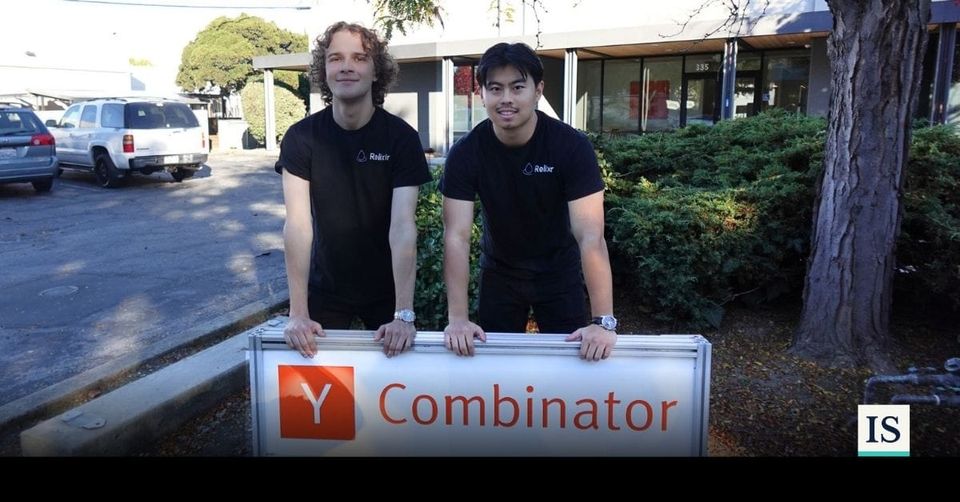
Naïve, a Palo Alto company building infrastructure that lets AI agents create and operate businesses, has raised a US$28.5 million Series A led by Nexus Venture Partners, with participation from Y Combinator, Zetta Venture Partners, and Liquid 2 Ventures. Angel investors include Gokul Rajaram, Apollo.io co-founder Tim Zheng, former HubSpot chief operating officer JD Sherman, Robert Chatwani of DocuSign, Gert Lanckriet of Amazon, and Codecademy co-founder Zach Sims. The round brings total funding to roughly US$32 million.
The company was founded by CEO Sean Dorje and Dennis Zax, both 20 years old and both University of California, Berkeley dropouts who have been building together since they were 14 and previously founded and sold the machine learning company ezML. Naïve's API lets developers working in tools such as Cursor or Claude provision the components a business needs: forming an LLC, issuing virtual payment cards, setting up email addresses and phone numbers, provisioning databases and cloud hosting, and connecting to services including Stripe, GitHub, and QuickBooks, with a governance layer that enforces budgets and human approval gates. Users must still complete know-your-customer and know-your-business verification themselves. The company reports more than 30,000 developer customers within months of launch, revenue up roughly tenfold over six months to an annual run rate in the low double-digit millions, and a team of 10 full-time employees. "Our vision at Naïve is to make each token do more, so autonomous companies can become a cost-efficient reality," Dorje said.
Market Context
The agentic AI market was valued near US$7.3 billion in 2025 and is projected between US$9.1 billion and US$10.9 billion in 2026, with forecasts running as high as US$139 billion to US$236 billion by 2034. Adoption is broad but shallow: research indicates 79% of organizations have deployed AI agents while only 23% successfully scale them to production, and roughly 74% lack a real governance strategy for them.
That gap explains where Naïve is directing its capital. Computational costs consume an estimated 60% to 80% of operating expenses for AI-driven companies, and the company is investing in serverless runtimes, inference optimization, shared memory, and multi-agent orchestration, claiming cold starts of 2.3 milliseconds, memory that uses 11 times fewer tokens per query than alternatives, and costs around one-hundredth of conventional configurations. Dorje has said the fastest-growing demand is for inference and serverless agents rather than the incorporation tooling the company started with. Nexus partner Abhishek Sharma framed the investment thesis directly: "The next decade is about autonomous companies."
The Signal
"Our vision at Naïve is to make each token do more, so autonomous companies can become a cost-efficient reality." — Sean Dorje, co-founder and CEO, Naïve
Regional Relevance
For the United States: Naïve automates company formation in a country where that process is already unusually fast and cheap by international standards, and where oversight has recently loosened rather than tightened. In March 2025, FinCEN issued an interim rule removing the requirement for US companies and US persons to report beneficial ownership information under the Corporate Transparency Act, eliminating more than 99% of previously required filers, and the Government Accountability Office has warned the exemption sustains the risk of shell companies being used for illicit finance. Infrastructure that makes entity creation programmatic arrives into that specific regulatory environment.
For the global startup ecosystem: The premise that a single developer, or an agent acting on their behalf, can spin up a fully operating business lowers the barrier to entrepreneurship anywhere with internet access and a US banking relationship, which is a meaningful shift for founders in markets without local access to the payment, cloud, and incorporation stack American startups take for granted. The same accessibility raises questions about jurisdiction and enforcement when a business is formed in Delaware, operated by software, and directed from somewhere else entirely.
The Other Side
Who is accountable when an agent runs the company? Naïve requires humans to complete KYC and KYB verification, an acknowledgment that full autonomy is not currently legal, but the governance model beyond that point, budgets and approval gates set by the developer, places responsibility on individuals who may not be monitoring what the software does in their name; liability, tax obligations, and contract enforceability all assume a human principal who is paying attention.
Do 30,000 developers translate into durable revenue? Developer signups are inexpensive to acquire, particularly for tools distributed through coding assistants, and an annual run rate in the low double-digit millions across that base implies most users are not generating meaningful spend; the more telling figures, retention and how many of those accounts still operate a real business after a year, have not been disclosed.
Are the use cases substantive? The examples cited in coverage lean toward automated content channels, including a TikTok account producing AI-generated pet videos, alongside AI automation agencies and a rental car operation. Infrastructure is neutral by design, but a platform that makes it trivial to spawn entities and monetize automated content sits close to the machinery that produces low-quality content at scale, and the company's technical performance claims, including the 11-times token efficiency and hundredfold cost reduction, are company-reported and unaudited.
Sources & Transparency
- FinSMEs — Naïve Raises $28.5M in Series A Funding
- TechCrunch — Naïve raises $28.5M to automate the grunt work of setting up and running a company
- SiliconANGLE — Naïve bags $28.5M in funding to automate the creation and day-to-day running of almost any business
- Pulse2 — Naïve Raises $28.5 Million Series A To Build Infrastructure For Autonomous Companies
- Holland & Knight — What Happened to FinCEN's Corporate Transparency Act?
- 0G — Agentic AI Market at $7.3B: Infrastructure Gaps Blocking Scale