Núclea acquires Data Rudder to strengthen Pix fraud prevention
Brazil's financial infrastructure operator is buying an antifraud startup to attack the seconds between detecting a scam and freezing the money, in a market where Pix and boleto fraud drained nearly R$29B in a single year.

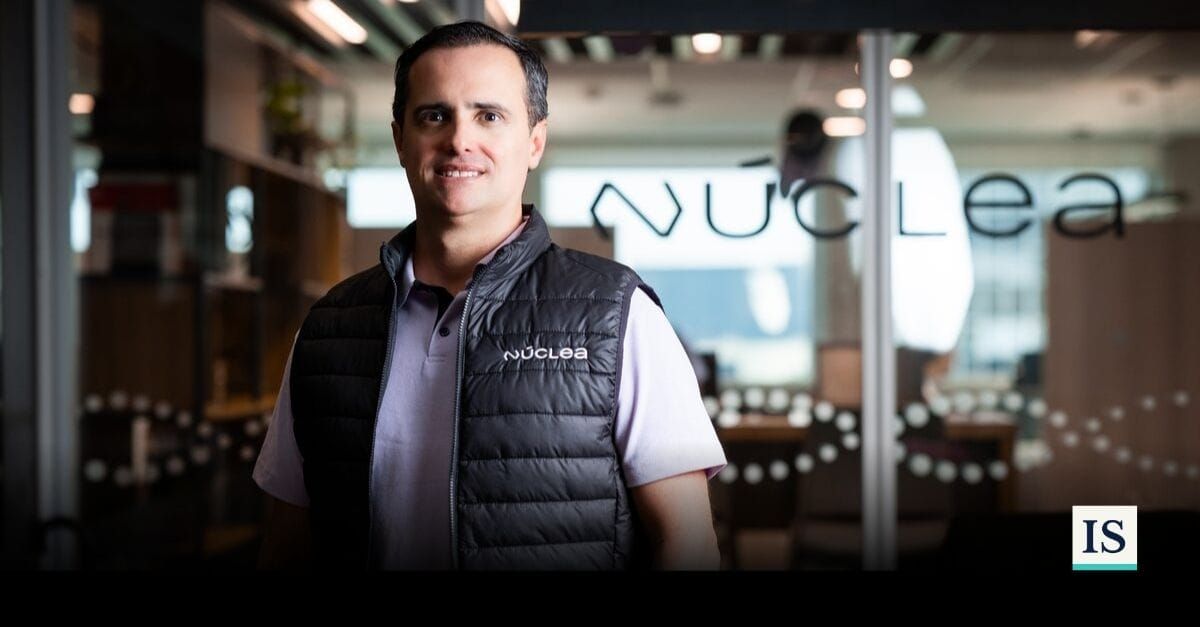
Núclea, the Brazilian company that provides technological infrastructure to the national financial system, has signed an agreement to acquire 100% of Data Rudder, a Florianópolis-based startup specializing in financial crime prevention. The transaction remains subject to approval by Brazil's Central Bank, and the value was not disclosed. Data Rudder was founded in 2020 by Rafaela Helbing and Thais Nolasco, monitors roughly R$40B in transactions per month, and serves more than 200 institutions directly. For investors and business owners, the strategic logic is unusually specific: this deal is not aimed at adding a product line, but at compressing a single variable, the interval between when fraud is detected and when the stolen funds are frozen.
The market context explains the urgency. Between July 2024 and June 2025, Pix and boleto scams hit 24 million people in Brazil and caused losses approaching R$29B, according to the Fórum Brasileiro de Segurança Pública, while deepfake fraud grew 126% in the country during 2025, per Sumsub. Data Rudder CEO Rafaela Helbling framed the structural problem behind those numbers: fraud, money laundering and mule accounts that receive millions in hours and disperse the money in minutes happen because each institution sees only a small part of the problem. Núclea processes trillions of reais monthly, and combining that scale with Data Rudder's antifraud models is the core rationale of the deal. Núclea CEO André Daré said the acquisition strengthens the company's strategy of expanding into solutions that generate more security, intelligence and efficiency for the financial market.
What Núclea is actually acquiring
Núclea is buying a full antifraud product stack, not a single tool. After closing, its portfolio absorbs DeLorean Antifraude Pix for real-time monitoring of instant transactions, DeLorean Antifraude Transacional for multichannel behavioral analysis across TED transfers, boletos and cards, Watchlist as a collaborative network consolidating fraud indicators in card operations, DataBusters as an interoperability tool that lets institutions exchange and cross-reference fraud signals, and Monitora PLD for detecting atypical movements and suspicious relationships in line with COAF requirements. Data Rudder is certified under ISO 27001 and operates in compliance with the Central Bank's Joint Resolution No. 6. Once approved, employees and systems will be integrated gradually, and both founders will remain in leadership roles guiding the business and the integration.
The mechanism behind the deal
The strategic insight is that fraud prevention fails on coordination, not detection. A single institution can flag a suspicious transaction, but if the money has already moved through three accounts at three other banks, detection is worthless. Núclea's position as shared infrastructure across the financial system is what makes Data Rudder's technology more valuable inside it than outside: the same models gain visibility across institutions rather than one at a time. That is why interoperability tools like DataBusters and the collaborative Watchlist network matter as much as the detection engines themselves. The commercial target attached to the logic is concrete, with Startupz reporting the deal aims to recover up to 46% of amounts contested by fraud, a figure that reframes antifraud from a cost center into a recovery business.
Market context
The acquisition sits inside a wave of consolidation driven by regulation and losses. Brazil's Central Bank has tightened rules substantially: Joint Resolution No. 6 of 2023 established requirements for sharing fraud indicators between financial institutions, Law No. 15,181 of 2025 targeted accounts used in scams and money laundering, and Law No. 15,397 of 2026 increased penalties for property crimes in digital environments. Financial companies have accelerated purchases of security startups in response to rising digital fraud and these new regulatory demands, and Núclea is not alone in that pattern. The deeper driver is that Pix, Brazil's instant payment system and one of the most successful public payment rails in the world, created a speed problem: money that moves in seconds can be laundered in minutes, and legacy fraud controls were designed for a settlement rhythm that no longer exists. This is also the second Brazilian deal in recent weeks structured around Central Bank rules rather than growth, following Nubank's acquisition of Banco Porto Real to secure a banking license, which suggests regulation is becoming a primary driver of M&A in Brazilian finance.
What this means for investors and business owners
- Regulation is now an M&A engine, not just a cost. Three new Central Bank rules and laws in three years created compliance obligations that are faster to buy than to build. When rules change materially in your sector, expect acquisition activity to follow, and evaluate whether your own business is better positioned as an acquirer of compliance capability or as a target that already has it.
- The bottleneck is often a time interval, not a capability. Núclea is not buying the ability to detect fraud, which the market largely has; it is buying the ability to act faster after detection. In many businesses the real constraint is latency between knowing and doing, not the knowing itself. Identifying that gap in your own operation is frequently where the largest available gain sits.
- Network position multiplies the value of a tool. Data Rudder's models become more effective inside shared infrastructure that sees across institutions than they were serving 200 clients individually. The generalizable lesson is that the same technology can be worth radically different amounts depending on where it sits in a network. For founders, that means the best acquirer is often the one whose distribution makes your product structurally better, not the one offering the highest multiple.
- Reframe a cost center as a recovery engine. Targeting recovery of up to 46% of contested amounts converts fraud prevention from pure expense into measurable value returned. That reframing changes how a service gets sold and priced. Any business running a compliance, security, or support function should ask whether it can be measured by value recovered rather than money spent.
- Founder retention signals what was actually bought. Both founders staying in leadership roles indicates the acquisition included operational expertise and relationships, not just code. When assessing an acquisition, whether as investor or potential seller, the treatment of the founding team is a reliable read on whether the buyer valued the technology alone or the team's ability to keep making it work.
Sources
- Núclea acquires Data Rudder to strengthen fraud prevention offering
- Núclea compra Data Rudder para ampliar combate a fraudes
- Núclea compra 100% da Data Rudder e mira recuperar até 46% dos valores contestados por fraude
- Núclea anuncia acordo para aquisição da empresa Data Rudder
- Núclea adquire catarinense Data Rudder para reforçar combate a fraudes no sistema financeiro