OrderEAT Raises US$2M to Turn School Cafeterias Into a Teen Wallet

OrderEAT, the Uruguayan startup that digitizes school cafeteria payments, has closed a US$2 million round led by Chile Ventures, the fund backed by Chile's development agency Corfo, with participation from Driven VC, Add Ventures and Seedstars. The angel list includes Sergio Fogel, co-founder of dLocal, and Avedis Boudakian. The term sheet was signed in December 2025 and the round closed roughly two months before the September 2026 announcement. It follows an initial raise of about US$300,000, and the company says 90% of the new capital goes to commercial expansion.
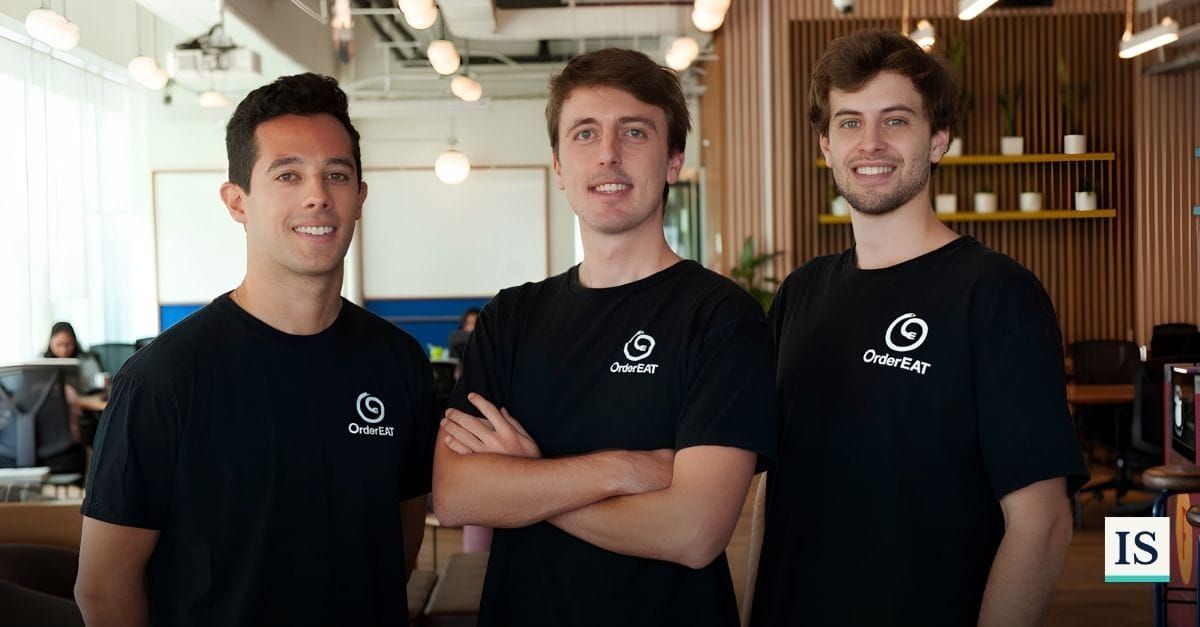
The company was founded in 2019 in Punta del Este by three former high school classmates, Chief Executive Officer Matías Craviotto, Luis Pedro Carrero and Juan Manuel Rodríguez, who built a closed-loop wallet that lets parents fund and control a student's cafeteria balance while giving concession operators a point of sale for menus, inventory and orders. OrderEAT now runs in more than 600 schools across Mexico, Argentina, Uruguay, Chile and Peru, serving over 250,000 active students, up from 400 schools at the end of 2025. Mexico is the largest market, followed by Argentina with more than 100 schools. The founders relocated there in 2023, the year they describe as the real start of the business. The target for the next 18 months is 2,000 schools and 1 million students, with headcount going from about 35 today to 50 by year end.
Market Context
The round lands in an unusually thin part of the Latin American venture market. Regional startups raised US$1.03 billion in the first quarter of 2026, up 12% year over year, but almost all of that growth sat at the top: late-stage and growth deals hit US$761 million, a 158% jump, while angel and seed fell to US$92 million and early stage to US$179 million, both sharply below the prior quarter. A US$2 million check into a school payments company is exactly the kind of deal that has been getting squeezed, which makes the participation of three Chilean funds plus Seedstars a signal about where regional capital is still willing to move.
The product economics help explain the pull. At Oak's Leadership School in Mexico, OrderEAT says cafeteria sales rose 70% and payment time per student dropped from about two minutes to 20 seconds, which matters when a recess lasts 10 minutes and every queue is lost revenue. The longer play is not cafeteria software at all. Craviotto has framed OrderEAT as a path toward becoming a teen-focused fintech in the region, the local answer to what Greenlight built in the United States, using the school as the acquisition channel and the parent as the funding source. That is the same logic that turned payroll and school-fee rails into consumer banks elsewhere in Latin America.
What Stands Out
"A cafeteria at a school in the provinces has exactly the same problem as one in the capital: recess lasts 10 minutes and cash leaves sales on the table." — Matías Craviotto, Co-Founder and CEO, OrderEAT (translated from Spanish)
Regional Relevance
For the United States, OrderEAT is a test of whether a proven American model travels. Greenlight, Step and Current built teen banking on the premise that parents will pay for visibility and control over a minor's spending, and US investors have already funded the school-payments layer through companies like MySchoolBucks and LINQ. What OrderEAT is attempting is the same stack in markets where cash still dominates cafeteria spending and where a large share of teenagers have no formal account at all. If the conversion from cafeteria wallet to full teen financial product works in Mexico, it becomes a template US growth investors will recognize and can underwrite.
For Mexico and the rest of the region, the relevance is distribution. Mexico surpassed Brazil in venture funding in the first quarter of 2026 for only the second time since 2012, and the country's fintech story has been dominated by credit and remittances. School cafeterias are a rare, recurring, high-frequency touchpoint with families that no incumbent bank has industrialized, and the private-school segment OrderEAT serves is concentrated enough to be reached without mass marketing.
The constraint is that this is a business measured in schools, not users. Each new campus requires an operator to change how it takes money, and administrators move on an academic calendar. Doubling to 2,000 schools in 18 months means signing roughly three schools a day, every day, across five countries.
The Other Side
Is US$2 million enough to triple the network? The company grew from 400 to 600 schools in under six months on far less capital, which suggests the model spreads partly by word of mouth inside school networks. But going from 600 to 2,000 while also opening a fintech product line usually requires a sales organization, and a team of 50 across five countries is thin for that. The likely outcome is another round before the 18-month target lands.
Does the teen fintech thesis survive regulation? Issuing a stored-value product to minors is not the same as running a closed-loop cafeteria balance. Mexico's fintech law, Argentina's central bank rules and Chile's new fintech framework each treat electronic money differently, and the compliance cost of five jurisdictions is a real drag on a company this size.
What stops a school from switching? The switching cost today is the parent's habit and the operator's point of sale, not proprietary technology. Payment processors and school-management platforms already sit in the same buildings, and any of them could bundle a cafeteria wallet as a feature rather than a product.
Sources & Transparency
- De la cafetería escolar a un imperio en Latam: la uruguaya OrderEAT levanta 2 MDD para conquistar México
- La plataforma uruguaya OrderEAT cerró una ronda de US$2 millones y buscará duplicar sus colegios en 18 meses con foco en México
- La "billetera de los colegios" llegó a 100 escuelas en Argentina y cerró una ronda de US$ 2 millones
- OrderEAT levanta US$2 millones liderado por fondos chilenos para digitalizar las cafeterías escolares de Latinoamérica
- Global Investors Help Boost Latin America's Late-Stage Funding Boom In Q1
- OrderEAT levanta US$2M y llega a 600 colegios en Latam