
Plantible Secures $35M to Quintuple Output of Its Egg-Replacing Rubi Protein
Plantible Foods has raised US$35 million to expand production of Rubi Protein, an ingredient it extracts from lemna, the aquatic plant commonly known as duckweed. The financing splits into US$25 million of debt from X-Caliber Rural Capital, guaranteed through the US Department of Agriculture's Business & Industry loan program, and US$10 million of equity from RA Capital alongside existing backers including Piva Capital. The round brings total funding to about US$92 million, following a US$30 million Series B in November 2024 led by Piva and Siddhi Capital with participation from Chipotle's venture arm Cultivate Next, Griffith Foods' Nourish Ventures, Betagro Ventures, and Astanor Ventures.
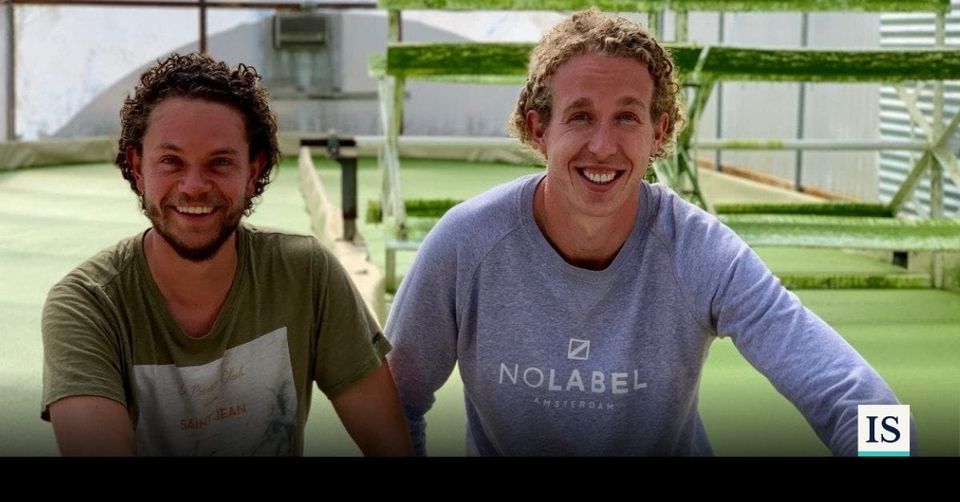
Founded in 2016 by CEO Tony Martens and Maurits van de Ven, the company operates from San Diego with a 100-acre enclosed aquafarm near Eldorado, Texas. It will build up to 50 new greenhouses to raise annual capacity roughly fivefold to more than 1,000 metric tons, with completion targeted for early 2027. The protein it extracts, RuBisCO, carries a digestibility score of 1.0, matching animal protein, contains all nine essential amino acids plus vitamin B12, and delivers emulsifying, gelling, and binding properties comparable to egg whites, with neutral taste, odor, and color. The FDA issued a "no questions" letter confirming GRAS status in February 2026, permitting use at up to 5% in food applications. "We have rolled out a new strain that has allowed us to increase our yield by more than 40%," Martens said. The company says unit economics are already profitable at current scale and that one customer recently doubled its 2027 order.
Market Context
Plantible is scaling into a category where capital has become scarce. Alternative protein startups raised US$881 million globally in 2025, down 20% year over year and below US$1 billion for the first time since 2018, against a 2021 peak of US$6.9 billion. Plant-based funding specifically totaled US$450 million, but roughly US$100 million of that came from a single Beyond Meat debt facility; excluding it, growth was about 2%. The Good Food Institute's lead economic analyst attributed the contraction partly to capital concentrating in artificial intelligence, and noted that investors are favoring later-stage companies with demonstrated revenue.
Demand conditions are similarly mixed. Global retail sales of plant-based meat, seafood, and dairy reached US$28.9 billion in 2025, up 3% including inflation, though US sales fell 2% and plant-based meat declined 10% in dollar terms domestically. Plantible's positioning sidesteps some of that exposure by selling a functional ingredient rather than a finished consumer product, targeting manufacturers dealing with egg and whey supply volatility across baked goods, confectionery, dairy, sauces, and coatings. Its current named customer is ICL Food Specialties, which uses Rubi Protein in a binding solution for meat and seafood alternatives. Competing RuBisCO efforts include New Zealand's Leaft Foods, working from alfalfa, along with Fudi Protein, ProLeafEra, Day 8, and Brevel.
The Signal
"Plantible has translated breakthrough science into consistent, scalable production." — Maria Buitron, principal, Piva Capital
Regional Relevance
For the United States: The structure of this round is as notable as its size. A federal loan guarantee through the USDA's Business & Industry program made US$25 million of debt available to a company that, in a healthier equity market, would likely have raised a larger venture round instead. That mechanism exists to channel capital into rural business development, and here it is underwriting food-ingredient manufacturing in Eldorado, a small West Texas town, at a moment when private investors have pulled back from the category. For US food manufacturers, the practical draw is supply security: egg prices have been volatile enough in recent years that a functionally equivalent, shelf-stable alternative has commercial appeal independent of any plant-based positioning.
For global protein supply: Lemna grows year-round without pesticides and requires substantially less land and water than conventional protein crops, with Plantible citing a nutritional yield near 70% against roughly 46% for soy, 28% for pea, and 27% for beef. If those figures hold at scale, the relevance extends to regions facing water constraints and import dependence for protein, including parts of the Middle East and Asia. The technology is also portable, since enclosed aquafarms are less tied to specific soil and climate conditions than field crops, though the economics have so far only been demonstrated in Texas.
The Other Side
What does a debt-heavy round say about the equity market for this category? More than 70% of this financing is debt, and it required a federal guarantee to secure; alternative protein equity funding fell below US$1 billion globally in 2025 for the first time in seven years, and the largest single deal in the sector that year was also a debt facility. Structuring capital this way lets a company avoid a difficult valuation conversation, but it also adds fixed obligations to a business still building out capacity.
Does a 5% inclusion limit constrain the opportunity? The FDA's GRAS determination permits Rubi Protein at up to 5% of a food application, which suits binding and functional uses but caps how much of a product's protein content it can supply; that positions the ingredient as a formulation tool rather than a primary protein source, and the total addressable volume depends on how many products can use it within that ceiling.
Is downstream demand strong enough to absorb fivefold capacity? US plant-based meat sales fell 10% in dollar terms in 2025 and global category growth was 3% including inflation, meaning Plantible is building capacity into a market that is flat to declining in its most visible segment. The company points to profitable unit economics and a customer doubling a 2027 order, but it has publicly named only one customer, and the value of its offtake agreements has not been disclosed.
Sources & Transparency
- AgFunderNews — Plantible raises $35m in debt, equity, to increase RuBisCO protein production fivefold
- Green Queen — USDA-Backed Loan Helps Plantible Foods Raise $35M to Scale Up Rubisco Protein Fivefold
- FoodBev Media — Plantible secures $35m to boost Rubi Protein production capacity
- AgFunderNews — Plantible Foods raises $30m Series B to scale duckweed protein
- Green Queen — Alternative Protein Funding Down by 20% in 2025, Falling Below $1B for First Time in 7 Years
- Green Queen — Global Plant-Based Food Sales Grew by 3% in 2025: GFI Report