Rent-to-Own Startup Duppla Raises $60M Led by Patria Investments


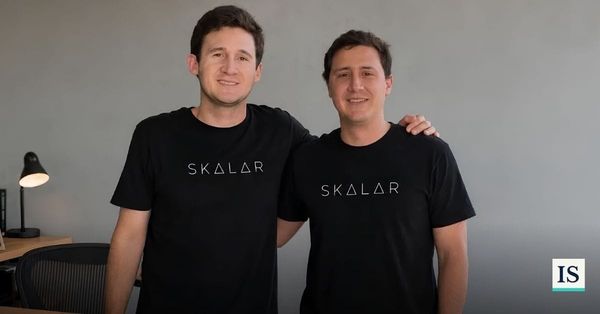
Duppla, a Bogotá-based startup that helps Colombians buy homes through a rent-to-own model, has closed a financing round of roughly $60M in combined debt and equity. The round was led by a fund managed by Patria Investments, the Brazilian alternative-asset manager, marking Patria's first-ever venture capital investment in Colombia. Cristian Villamizar and Felipe Fierro, who co-founded Duppla in 2022, said the capital will expand the company's home-financing capacity and its residential-income investment platform. Other participants included Skandia Planeación Financiera, Cometa, Grupo Pegasus, and Nazca, alongside additional local and international investors.
Under Duppla's model, the company buys the home a customer selects, rents it back to them, and signs a purchase agreement executable within five years; clients pay at least 15% of the property's value upfront and rent the home for an initial five-year period while Duppla finances the rest, building the credit history needed to eventually qualify for a traditional mortgage. Diego Chona, Patria's partner and head of private equity for Latin America ex-Brazil, said the firm was drawn to Duppla's scalability and the chance to address unmet housing-finance demand. He noted the deal reflects collaboration across Patria's real estate, private equity, and venture capital teams. The company currently serves roughly 300 families in Bogotá and nearby municipalities and plans to expand next into Medellín.
Market Context
Only about 3% of Colombian adults held a mortgage loan in 2024, reflecting the limited reach of traditional mortgage credit in a country where millions of people earn variable or informal incomes, lack solid credit histories, or carry negative marks that make financing difficult. Mortgage interest rates in Colombia are also among the highest in the region, averaging 16.1% in 2023 — a structural gap that rent-to-own models like Duppla's are designed to bridge.
For Patria, the Duppla deal is a small check relative to its scale but a strategic marker. The Brazilian manager entered the venture capital business after acquiring Igah Ventures in 2022 and has since pursued an aggressive acquisition strategy across Latin America, the U.S., and Europe, aiming to become one of the 30 largest asset managers in the world; it currently manages more than $59 billion in assets. Patria has more than $7 billion invested or under management in Colombia and expects to double its venture-capital exposure there to $1.4 billion over the next three to five years, focusing on health care, infrastructure, agriculture, and logistics, while also scouting data centers, food, and cybersecurity opportunities. The firm's broader Colombia push also includes a binding agreement signed in November 2025 to acquire UnitedHealth Group's Banmédica operations in Chile and Colombia, still pending regulatory approval.
The Signal
"We saw here a model that can help a lot in closing the gap for Colombians who can't access a mortgage." Diego Chona, Partner and Head of Private Equity LatAm ex-Brazil, Patria Investments
Regional Relevance
For the United States: Duppla's raise is a data point for U.S. institutional allocators tracking LatAm private credit and housing-finance fintech — a sector that has drawn growing interest as U.S.-based funds and family offices look for yield and diversification outside domestic real estate. It also signals continued appetite from global alternative-asset managers (many of which have U.S. investor bases and U.S.-listed shares, as Patria does) for early-stage bets in underserved housing markets, a thesis with echoes of U.S. rent-to-own and lease-to-own models that have attracted venture and private equity capital domestically.
For Colombia: The deal lands as a potentially positive signal for President-elect Abelardo de la Espriella, who takes office in August after promising during his campaign to revive economic growth and private investment; his June victory as a conservative lawyer fueled expectations of an investment rebound in the resource-rich country. That said, the expansion comes despite elevated financing costs and uncertainty over Colombia's regulatory and fiscal outlook — foreign direct investment fell to $11.5 billion last year, down from more than $17 billion in 2022. Patria's bet on housing finance also lands in one of the region's most politically and socially charged sectors, given the scale of Colombia's mortgage-access gap.
The Other Side
Is $60 million in combined debt and equity enough to move the needle on a national housing gap? Duppla currently serves around 300 families, with a target of 1,500 by the end of 2027 — meaningful growth, but still a small fraction of the millions of Colombians locked out of traditional mortgages. The company's expansion depends on continuing to raise both equity and debt facilities as its loan book scales.
Does a rent-to-own model transfer risk to the same families it aims to help? Because Duppla owns the property during the rental period, families who fall behind on payments or fail to qualify for a mortgage at the end of the term risk losing both the home and prior contributions — a structural tension common to rent-to-own housing models globally.
Sources & Transparency
- Duppla levanta US$60 millones para expandir su modelo de compra de vivienda mientras se arrienda — Portafolio
- Patria lidera ronda de US$60 millones para startup colombiana de vivienda Duppla — Bloomberg Línea (via Yahoo Finanzas)
- Patria realiza su primera inversión de venture capital en Colombia; lideró ronda por US$60 millones para Duppla — Valora Analitik