Synthetic-User Startup Simile Raises $200M at $2B Valuation Five Months After Series A

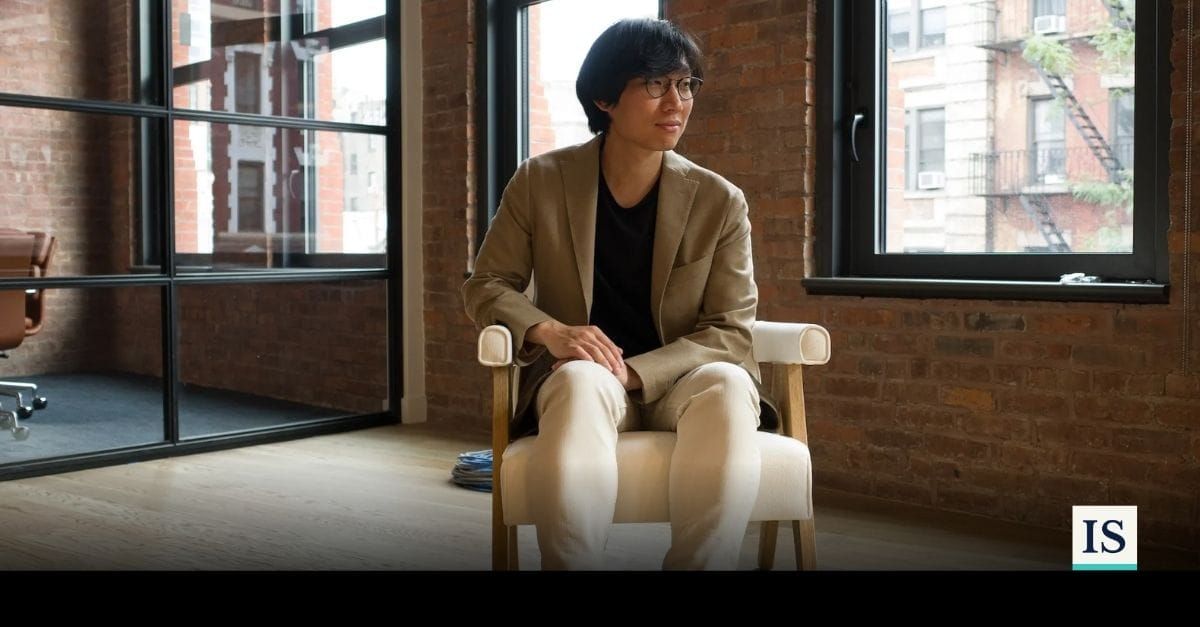
Simile, a San Francisco startup that builds AI models simulating human behavior, announced on July 30 that it raised a US$200 million Series B at a US$2 billion valuation, led by Greenoaks. Index Ventures and CVS Health Ventures returned from the company's earlier round, joined by Hanabi, Bain Capital Ventures, A*, Factory, and new investor Definition. The round comes just five months after a US$100 million Series A announced in February 2026, bringing Simile's total raised to roughly US$300 million in under six months. Angel investors include former Tesla AI head Andrej Karpathy, World Labs CEO Fei-Fei Li, and Quora CEO Adam D'Angelo.
The company was founded in late 2025 by CEO Joon Sung Park alongside Stanford human-computer interaction professor Michael Bernstein, Percy Liang, who directs Stanford's Center for Research on Foundation Models, and Lainie Yallen. Its technology grows out of Park's "Generative Agents" research, which won best paper at the UIST 2023 conference and simulated AI characters living in a virtual town called Smallville. Rather than generic personas, Simile grounds its simulated populations in interviews, self-reported data, and past choices from real people, allowing enterprises to test campaigns, pricing, products, and policies before committing resources. Customers include CVS Health, Wealthfront, Deloitte, and Gallup, and the company says its models have run tens of millions of simulations for Fortune 100 enterprises. Revenue has grown fivefold since the February launch, though the company has not disclosed baseline figures, and headcount now exceeds 50 people.
Market Context
Simile is targeting the global market research and consumer insights industry, valued at roughly US$80 billion, with a pitch that simulated respondents can deliver answers faster and far more cheaply than focus groups and survey panels. The underlying academic work offers some support: a Stanford study led by Park interviewed 1,052 people representative of the US population for two hours each, then built agents from those transcripts. Those agents replicated participants' General Social Survey answers with 85% accuracy, roughly matching how consistently the same humans answered themselves two weeks apart, and correlated at 80% on Big Five personality assessments. On behavioral economic games, however, correlation fell to 66%.
Investor enthusiasm for the category has been running well ahead of published validation. Competitor Aaru raised a Series A at a US$1 billion valuation in December 2025, and Simile's own valuation doubled in five months without the company disclosing revenue scale or customer counts. Simile says it has built a confidence model designed to predict the accuracy of each simulation, but has not released performance data. One CVS Health engagement drew on 2.9 million consented responses from more than 400,000 participants across over 200 behavioral scenarios, an indication of the data volumes involved in grounding the models.
The Signal
"With AI, anyone can create a product, a campaign, a policy, or script. Our mission is to simulate all eight billion people on earth, accurately and honestly." — Joon Sung Park, founder and CEO, Simile
Regional Relevance
For the United States: Simile's customer list spans healthcare, financial services, polling, and consulting, meaning simulated consumer behavior is already informing decisions at institutions that shape American benefits design, financial products, and published public opinion research. That reach makes the accuracy question a matter of more than commercial interest: Gallup's involvement in particular places synthetic respondents adjacent to the polling infrastructure through which the country reads itself. The pace of capital flowing into the category, roughly US$300 million into one company in half a year, also illustrates how quickly US enterprise AI valuations are being set on research promise rather than disclosed financial performance.
For California and the Stanford research pipeline: Three of Simile's four founders come directly from Stanford, including the director of its Center for Research on Foundation Models, and the company's core product is a commercialized version of a paper published less than three years ago. That compression, from academic conference to a US$2 billion valuation, reflects how tightly the Bay Area's university research and venture capital systems are now coupled, concentrating both the talent and the returns in a small geography. It also raises the familiar question of what happens to independent academic scrutiny of a technique when its leading researchers hold equity in its commercial application.
The Other Side
How well do synthetic respondents actually replicate human answers outside controlled studies? Independent academic work has found that 48% of coefficients estimated from AI-generated responses differed significantly from their human counterparts, and among those, the direction of the effect reversed 32% of the time; Simile's own founding research showed accuracy dropping to 66% correlation on behavioral economic games, precisely the domain closest to real purchasing decisions.
Can models trained on past behavior tell companies anything about genuinely new products? Synthetic respondents are backward-looking by construction, strong at reproducing established patterns but structurally unable to react to categories that do not yet exist, and researchers have documented cases where simulated professionals gave textbook-correct answers while real practitioners surfaced the constraint that actually drove their decisions. Roughly 43% of market researchers report they are not excited about synthetic respondents, even while embracing other AI tools.
Does a $2 billion valuation set before any disclosed revenue reflect proven demand or category momentum? Simile has not published revenue figures, customer counts, or validation data against observed outcomes, and its valuation doubled in five months in a segment where a competitor reached unicorn status even earlier; enterprise buyers will ultimately require repeatable comparisons between simulated forecasts and what real customers did, a standard no vendor in the category has yet met publicly.
Sources & Transparency
- TechCrunch — Synthetic-user startup Simile raises $200M at $2B valuation 5 months after $100M Series A
- Tech Funding News — Simile bags $200M at $2B, five months after $100M Series A, to predict what humans will do before AI gets it wrong
- RuntimeWire — Simile raises $200M at a $2B valuation to simulate human behavior
- FinSMEs — Simile Raises $200M in Series B Funding at $2 Billion Valuation
- Stanford HAI — AI Agents Simulate 1,052 Individuals' Personalities with Impressive Accuracy