TerraFirma: US$100M Series A fuels space construction robotics
TerraFirma has raised US$115M to scale its autonomous construction platform for extreme environments, signaling that infrastructure robotics is becoming a core theme in both industrial and space investing.

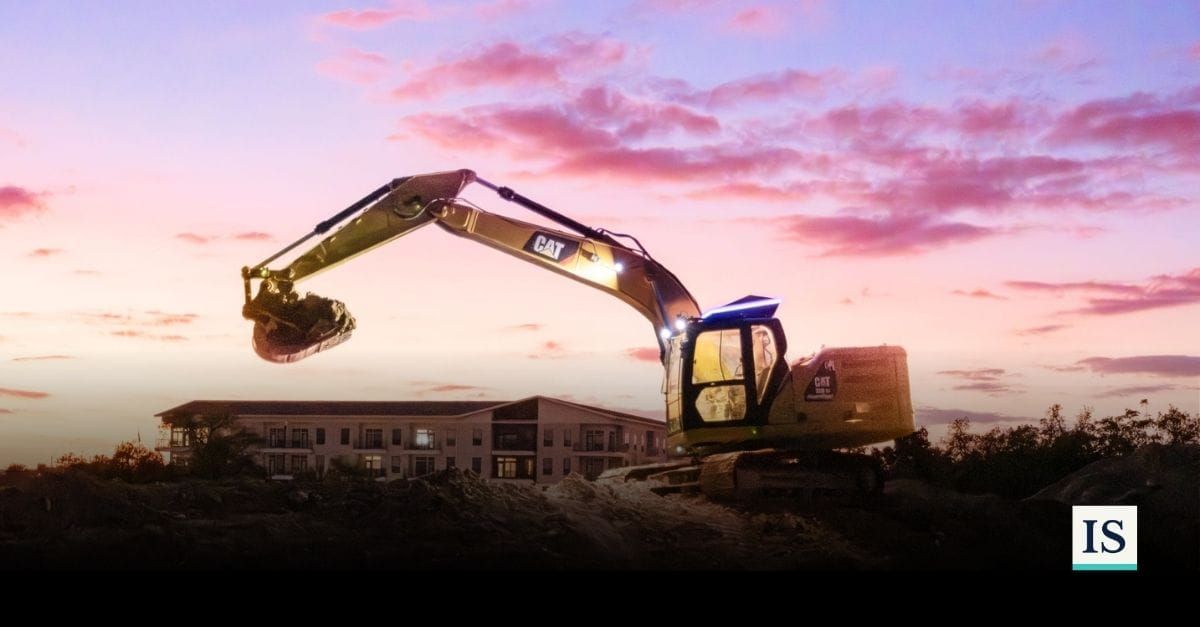
TerraFirma, a construction technology company focused on autonomous infrastructure in harsh and remote environments, closed a US$115M funding round including a US$100M Series A led by Kleiner Perkins, to accelerate deployment of its robotic building systems on Earth and in space. The capital will support engineering, manufacturing, operations, and construction teams as the company ramps up projects that range from industrial facilities to early-stage lunar infrastructure, putting it squarely on the radar of investors who track both frontier tech and hard-asset productivity.
The new capital comes at a moment when construction remains one of the least automated major industries, while governments and space agencies push aggressively into permanent off‑world installations. TerraFirma’s pitch is that a unified platform of rugged robotics, modular materials, and software can deliver reliable structures where human labor is scarce or impossible, differentiating it from conventional construction tech that still assumes human crews as the backbone of any project. This creates a natural bridge between industrial automation funds and space-focused capital, setting up TerraFirma as a case study for how infrastructure robotics can become an investable theme rather than a collection of experiments.
Autonomous construction as a business model
At the core of the announcement is TerraFirma’s autonomous construction platform, designed to build in extreme environments such as deserts, polar regions, and extraterrestrial surfaces. The business model appears to combine hardware, proprietary materials, and a software layer that orchestrates robotic units to produce foundations, shells, and essential infrastructure with minimal direct human involvement.
Revenue is likely driven by long‑term contracts with governments, space agencies, and large industrial clients that need reliable build‑outs in places where conventional crews are either prohibitively expensive or outright impossible. TerraFirma positions itself not as a general contractor, but as a technology provider that can deliver “build capacity” as a service: a stack of machines and processes that can be mobilized wherever infrastructure is needed, from mining sites to lunar bases.
Differentiation and mechanics of the deal
The US$115M round is structured to accelerate several parallel tracks: expansion of engineering and manufacturing capacity, scaling of operations, and funding of on‑the‑ground construction campaigns that prove the robustness of the technology. This implies investors are not just buying R&D; they are underwriting deployment risk in live environments, which is a key distinction from earlier robotics rounds that stayed closer to the lab.
TerraFirma’s differentiation lies in targeting “Earth and beyond” as a single market thesis. Rather than treating space infrastructure as a separate speculative vertical, the company builds a common platform for any environment where logistics are extreme and safety constraints are high. In practice, that means modular robotic units capable of operating with limited supervision, materials engineered for rapid assembly, and software that can be upgraded as mission profiles evolve. The new capital allows TerraFirma to harden this stack with more testing, redundancy, and scale.
Market context
The timing of TerraFirma’s round lands in a broader cycle where construction, defense, and space budgets are all under pressure to deliver more with fewer humans on site. Governments are funding lunar exploration programs that explicitly mention permanent or semi‑permanent infrastructure, while private space companies expand ambitions around off‑Earth mining, manufacturing, and habitats. Investors in this sphere are increasingly looking for dual‑use technologies: systems that improve productivity on Earth while also plugging into the space economy.
On the Earth side, the construction industry in 2025–2026 faces chronic labor shortages, cost overruns, and tightening safety regulations, particularly in remote industrial projects. This creates a receptive environment for robotics and automation solutions that can reduce exposure hours and standardize quality. TerraFirma’s framing of its platform as viable for deserts, polar regions, and other hard‑to‑reach sites aligns with this demand, while its marketing of “beyond Earth” applications taps into a narrative that space infrastructure is moving from PowerPoint to procurement. The US$115M figure signals that capital providers believe there is now enough technical maturity and mission demand to justify a sizable bet on autonomous construction as an asset class.
What this means for investors and business owners
- Frontier tech is becoming infrastructure, not a niche.
For years, space‑adjacent robotics felt like experimental capex for agencies and a few defense contractors. TerraFirma’s US$115M round suggests that investors now view autonomous construction as core infrastructure with real contract pipelines, not just speculative R&D. For allocators, this means frontier hardware and software can sit alongside traditional industrials in a portfolio, provided the company has a credible dual‑use path on Earth. - Dual‑use platforms reduce risk across cycles.
TerraFirma’s “Earth and beyond” thesis is a classic dual‑use strategy: solve pressing problems for Earth construction while keeping optionality for space infrastructure contracts as they materialize. For founders and owners, the lesson is to design products that generate cash flow in today’s markets while remaining upgradeable for future, more speculative demand curves, whether that is space, military, or other frontier verticals. - Automation in harsh environments is a defensible moat.
Operating reliably where human crews struggle is a clear source of pricing power. By focusing on deserts, polar sites, and extraterrestrial surfaces, TerraFirma builds a capability set that is difficult for conventional contractors to copy quickly, even if they invest heavily in basic robots. Investors should look for companies whose systems are tuned to specific, high‑friction operating environments, because those constraints make it harder for fast followers to undercut them purely on cost. - Capital is shifting from pure R&D to deployment.
The round’s stated use of proceeds emphasizes expansion of operations and construction teams, alongside engineering and manufacturing. This indicates that investors are prioritizing proof at scale, not just elegant prototypes. For business owners in adjacent sectors, the signal is clear: raising meaningful capital now requires a deployment roadmap and real‑world validation, not just a lab demo and patents. - Hardware‑software stacks in construction are investable themes.
TerraFirma presents itself as a unified platform combining robotics, materials, and orchestration software. This is different from the fragmented ecosystem of point solutions that has long characterized construction tech. For investors, the case points to the emergence of full‑stack plays that can capture more value across the project lifecycle, which may merit higher valuation multiples than single‑feature tools.
With US$115M in fresh capital, TerraFirma is not simply another robotics startup; it is a bet that autonomous construction will become a standard capability wherever humans cannot or should not build. If infrastructure is increasingly installed by machines, both on remote sites and in eventual lunar bases, the question for investors and operators is straightforward: are you positioning for a world where “going on site” is something software and robots do on your behalf?