Terraflos buys +NUTRI Co: eight figures for food AI
An eight-figure exit for a Peruvian foodtech shows that in Latin America, the strategic buyer who already owns a piece of your cap table is often the only buyer who will pay a real price.

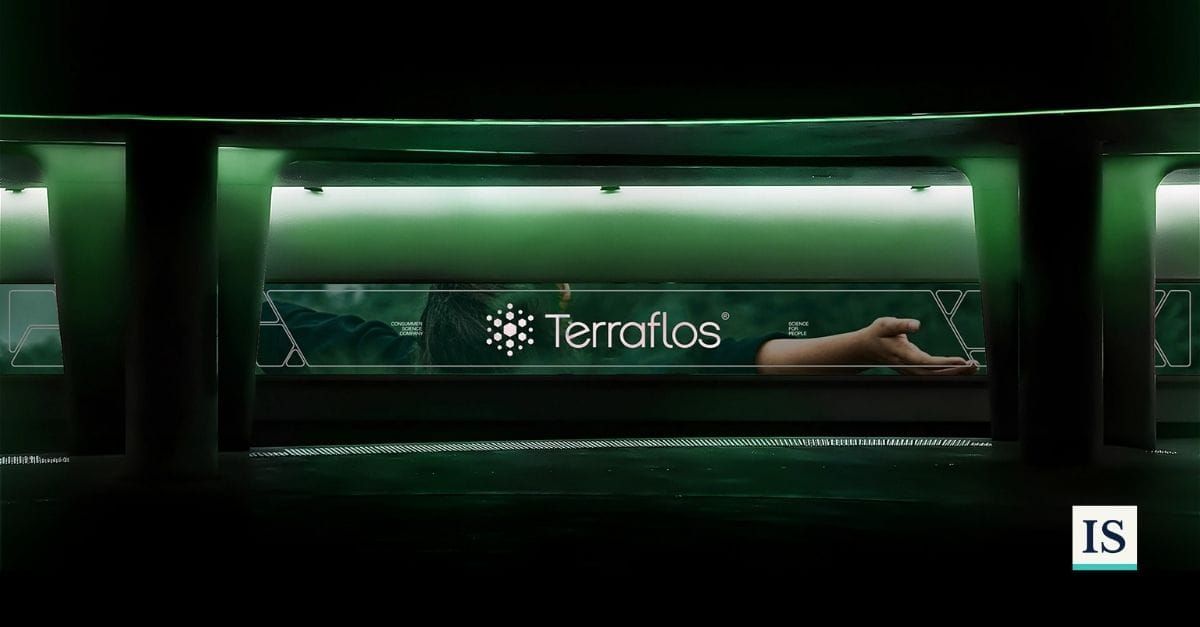
Uruguay-based Terraflos Inc., a multinational that develops bioactive ingredients and functional products led by Facundo Garretón, has acquired a majority stake in Peruvian foodtech +NUTRI Co in an eight-figure US$ transaction. Cofounders Carlos Noceda and Daniel Nuñez remain shareholders and continue running the business. Startups Latam places the deal among the most significant M&A moves by a Peruvian startup in the last decade, a market where meaningful exits are rare enough that a single transaction resets the reference price for an entire category. For investors and operators in the region, the number matters less than the path that produced it.
That path started two years before the signature. In July 2024, Terraflos had already put US$2 million into +NUTRI Co and taken an initial equity position. Noceda has said the acquirer knew the company from the inside since investing at an earlier stage, watched how it operated, and shared the same vision of bringing science, technology, and nature to mass consumption in the region. The strategic did not run a competitive process against a field of unknowns. It bought an asset it had been diligencing in real time for roughly two years, with more than 30 million products sold, over 50 SKUs across seven categories, and operations in Peru, Chile, and Mexico as the evidence base. That sequence, minority check first and control later, is the actual story here.
What exactly happened
+NUTRI Co builds healthy food products using a proprietary artificial intelligence system called Virgilio IA, named after Peruvian chef Virgilio Martínez, which optimizes the formulation of functional food products. The business is not a software company selling seats. It is a consumer packaged goods operation that uses AI as a formulation engine, compressing the cycle of designing a functional product that a shopper will actually buy off a shelf. The output is physical: SKUs, categories, and units sold. The moat is upstream, in how fast and how cheaply the company can generate a viable formulation and get it onto a retail shelf across three countries.
Terraflos sits on the other side of that equation. It develops the bioactives themselves, plus commercial networks and manufacturing capacity in markets +NUTRI Co had not reached. The mechanism behind the eight-figure price is the fit between those two halves. Following the deal, +NUTRI Co will launch +NUTRI Co Functional, a product line built on Terraflos bioactives delivered in mass-consumption formats rather than pills or complex supplements. The company also plans to expand into Argentina, Colombia, and Uruguay through Terraflos commercial and manufacturing infrastructure. Terraflos was not buying revenue. It was buying a distribution and formulation front end for ingredients it already makes, which is why a strategic can justify a multiple a financial buyer cannot.
Market context
The 2025 to 2026 window has been unforgiving for Latin American startups looking for liquidity. The IPO window for regional consumer companies is effectively shut, growth capital reprices every round, and the number of local strategics with hard currency and appetite for control is small. In that environment, exits concentrate: a handful of buyers with vertical logic absorb companies that would have raised a Series B in 2021. Terraflos is exactly that profile, a multinational with a biotech supply chain looking for demand-side assets rather than a fund looking for markup.
The functional foods category is the reason the check cleared. Consumer demand for health-positioned products has held up better than most discretionary categories, and the regional regulatory push on front-of-pack labeling, which Peru, Chile, and Mexico all enforce, has structurally advantaged companies that can reformulate quickly. Virgilio IA is a direct answer to that pressure. A formulation engine is worth more in a market where the label rules changed and every incumbent has to rework its portfolio. +NUTRI Co built for a constraint that its acquirer, and its acquirer's competitors, are still absorbing. Meanwhile, comparable regional M&A runs an order of magnitude smaller: LiveKid's June 2026 acquisition of Mexican edtech Aldea came with a US$3 million investment commitment, a useful marker for what mid-market LatAm consolidation typically looks like right now.
What this means for investors and business owners
- The best acquirer is usually already on your cap table. Terraflos invested US$2 million in 2024 and took majority control in 2026. That is not a coincidence, it is the mechanism. Strategic minority investments are extended diligence, and they systematically outperform banker-run processes for founders in markets without deep buyer pools. The corollary for founders is uncomfortable: when you take a strategic check, you are usually selecting your exit, not just your funding. Price that optionality at entry rather than discovering it at the end.
- AI is worth more when it touches something physical. Virgilio IA did not create a software business. It created a faster path to a shelf, and the shelf is where the 30 million units were sold. Investors overpay for AI that produces text and underpay for AI that produces margin in a legacy supply chain. The premium here was for compressed formulation cycles in a regulated category, not for the model.
- Regulation is a moat if you build against it early. Front-of-pack labeling rules across the Andean and Mexican markets forced every incumbent to reformulate. Companies that treated that as a compliance cost lost time. +NUTRI Co treated it as a design constraint and built tooling around it. Look for businesses whose core capability exists because a rule changed. Those are durable, because the rule does not un-change.
- Vertical integration is repricing. The deal works because Terraflos makes the ingredient and +NUTRI Co owns the customer. In a capital-constrained cycle, buyers pay for the missing half of their own value chain and almost nothing else. If your company is not the missing half of somebody's chain, you are competing on multiple alone, and multiples in LatAm consumer are not moving.
- Founders staying in is a signal to read carefully. Noceda and Nuñez remain shareholders and continue leading the business. That structure means the price is partly deferred and partly contingent, and it means Terraflos is buying operators, not just assets. For investors, a founder rollover is a stronger quality signal than a headline number, because the people with the most information chose to keep exposure.