Trump gives two years before 100% generics tariff
Trump has set a phased tariff of 100% in 2028 and 200% in 2029 on imported generic drugs, and it matters because generics fill roughly 90% of U.S. prescriptions while about 70% come from abroad, putting a low-cost, high-volume supply chain on notice.

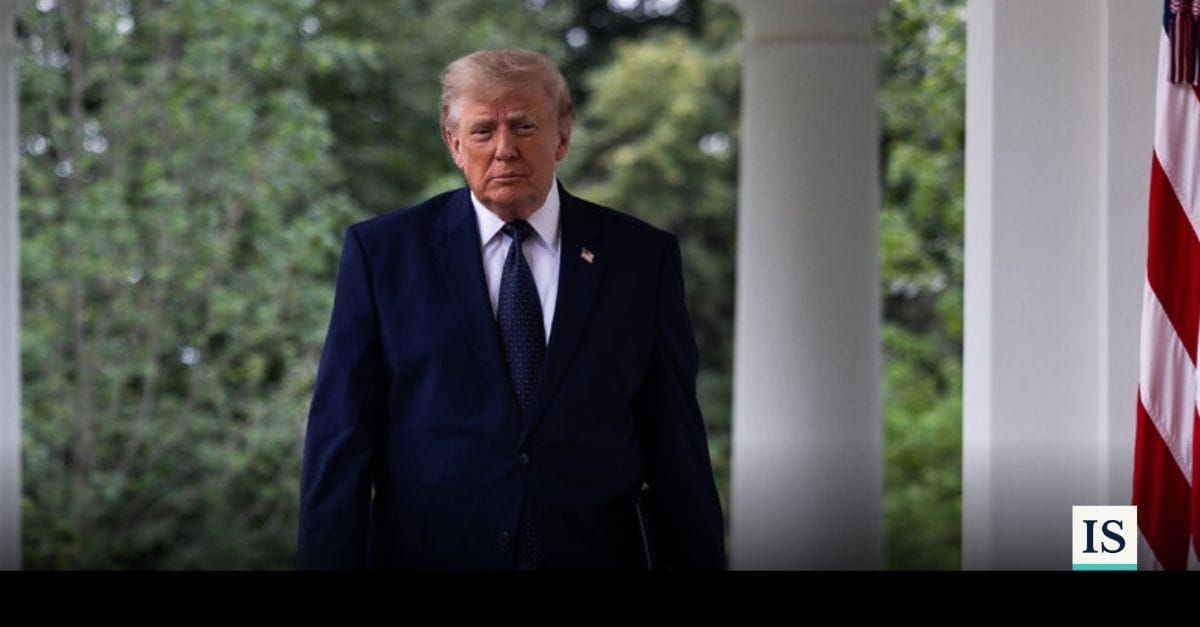
President Donald Trump announced on Tuesday, via a Truth Social post, a plan to impose a 100% tariff on imported generic drugs beginning in August 2028, with the levy doubling to 200% in August 2029. The structure is deliberate: generics keep a zero tariff for a two-year grace period starting August 1, 2026, after which the penalty rates take effect for companies that have not moved manufacturing onshore. Trump framed it explicitly as a tool to "reshore" generic pharmaceutical production, describing the escalation as a penalty for firms that decline to build plants in the U.S. within the window. For any business owner or investor with exposure to healthcare, supply chains, or trade-sensitive equities, the signal is the timeline: the market has two years to price in a supply shock that may or may not arrive.
The scale of what is being targeted is what makes this consequential. Generic drugs account for roughly 90% of prescriptions filled in the U.S. by FDA estimates, and around 70% of them are manufactured overseas, largely in India and Europe. The measure would put generics on par with branded and patented drugs, which already face tariffs as high as 100% at the end of the month under a Section 232 national-security investigation the administration launched in April 2025. Most major branded drugmakers, including Merck and Eli Lilly, have sidestepped the punitive measures through deals with the administration. Whether the generics industry, which runs on razor-thin margins and complex global supply chains, can do the same is the open question that leads into the analysis.
What exactly was announced
The policy is a phased tariff schedule communicated through social media, not yet a released regulation. Under Trump's stated plan, imported generics stay at zero tariff for two years, then face a 100% import duty for one year starting August 2028, then 200% from August 2029 onward. The stated mechanism is Section 232 of the Trade Expansion Act of 1962, the same national-security authority used for branded drugs, which lets the executive branch impose trade barriers on the grounds that import dependence threatens U.S. security. The escalating rate is designed as pressure: build domestic plants and equipment within the grace period, or absorb a tariff that eventually triples the cost basis of imported product.
The mechanism behind the numbers
The design targets a specific supply-chain reality. Because nearly all U.S. prescriptions are filled with generics and most are made abroad, the tariff aims to force a relocation of low-cost manufacturing that currently has little economic reason to sit in the U.S. But several trade experts have questioned whether the math works. Deborah Elms of the Hinrich Foundation noted that generic manufacturing is complex and costly to stand up, and that nearly all the chemical inputs would still come from abroad, meaning even a 200% tariff may not change the fundamental economics. There is also unresolved scope: the announcement gave no indication whether the tariffs will extend to biosimilars or to active pharmaceutical ingredients, the raw chemical inputs, which determines how much of the supply chain is actually captured. That ambiguity is itself a variable businesses now have to plan around.
Market context
The move lands inside the broader 2025 to 2026 tariff cycle, in which the administration has repeatedly used deferred implementation dates and the threat of severe consequences as leverage in negotiations with countries and companies. The pattern is visible across the sector: the U.S. Trade Representative launched a probe into Germany's pharmaceutical pricing, and in December the administration reached a deal exempting U.K. pharmaceuticals from tariffs in exchange for Britain paying more for medicines. The tariff tool is also under legal pressure, with pharmaphorum noting the Supreme Court ruled many earlier Trump tariffs unlawful, forcing the government to repay a reported US$81B in duties, which raises questions about the durability of any new levy. Politically, the backdrop is affordability: Trump has made drug prices a central cost-of-living theme ahead of the 2026 midterm elections, and separately launched TrumpRX, a direct-to-consumer discount platform. The tension at the center of the policy is that a tariff meant to strengthen domestic supply could, if it raises costs on 90% of prescriptions, cut against the affordability message driving it. Reflecting that uncertainty, the Association for Accessible Medicines, representing generic makers, said it needs more detail and urged the administration to address existing barriers to expanding domestic production.
What this means for investors and business owners
- A deferred deadline is a planning window, not a reprieve. The two-year grace period is the most actionable feature of this announcement. Markets and operators should treat the runway as time to model scenarios and diversify, not as evidence the tariff will never land. The administration's own pattern of using delayed dates as leverage means the outcome could be anything from full implementation to a negotiated carve-out, so the prudent move is to prepare for the range, not bet on one point.
- Policy risk is now a core input to supply-chain strategy. Any business dependent on imported goods, in pharma or adjacent sectors, has to treat trade policy as a live operational variable. The lesson generalizes well beyond drugs: concentrated overseas sourcing that made sense purely on cost now carries a tail risk that can triple your input cost. Mapping supplier geography and building optionality into sourcing is no longer a defensive luxury; it is baseline risk management.
- Watch who negotiates an exemption, because that reveals the real game. Branded drugmakers like Merck and Eli Lilly largely avoided the earlier tariffs through direct deals, and countries like the U.K. secured carve-outs. The signal for investors is that the announced rate is often a starting position, and the durable value accrues to players with the scale and leverage to cut side deals. Assess any tariff-exposed company partly on its negotiating position, not just its current cost structure.
- Legal durability matters as much as the headline rate. With courts already having struck down earlier tariffs and forced large repayments, the enforceability of a Section 232 action is a genuine variable. Investors pricing in a supply shock should weight the probability that the measure is delayed, narrowed, or overturned. A policy announced by social media post and not yet written into regulation carries implementation risk that a fully litigated rule would not.
- Follow the input chain, not just the finished product. The unanswered question of whether the tariff covers active pharmaceutical ingredients is where the real economic impact hides. A finished-goods tariff that leaves imported inputs untouched may simply shift, not eliminate, foreign dependence. For any manufacturing-exposed business, the discipline is to trace risk all the way up the supply chain, because the binding constraint is often several steps back from the product you actually sell.
Sources
- Trump plans generic drug tariffs from 2028 with two-year delay testing U.S. onshoring push
- Trump threatens 100 percent generic drug tariffs beginning in 2028
- Trump sets course for 100%, then 200%, tariffs on generics
- Trump says he will impose tariffs on generic drugs starting in August 2028
- Trump planea un arancel del 100% a medicamentos genéricos a partir de agosto de 2028