YPF Luz: top pure generator bets on Wall Street
Argentina's largest pure-play power generator has filed for a dual New York and Buenos Aires listing, and it matters because it tests whether foreign equity investors, not just bond buyers, will pay up for the Milei reform trade.

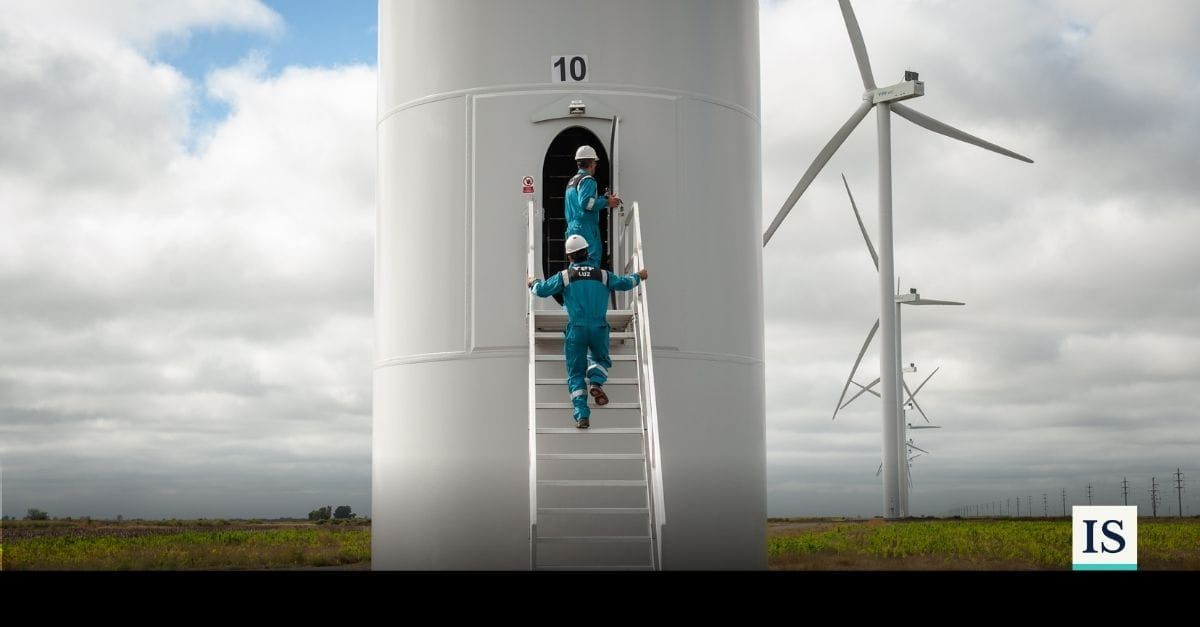
YPF Energía Eléctrica, the generator known as YPF Luz, has filed a preliminary prospectus with the U.S. Securities and Exchange Commission for an initial public offering that would list its shares simultaneously on the New York Stock Exchange, as American Depositary Shares under the ticker YLUZ, and on Argentina's BYMA exchange. YPF, the state-controlled oil company that owns 75.01% of YPF Luz, remains the controlling shareholder, while the selling party in the offering is BNR Power Investments, a vehicle tied to GE Vernova and China's Silk Road Fund. Goldman Sachs, BofA Securities, and Citigroup are the global coordinators. For investors, the hook is bigger than one company: this is the second Argentine IPO filing in July 2026, after renewable generator Genneia, and together they test whether Wall Street will buy Argentine equity again after a seven-year drought.
The financials give the filing weight. YPF Luz posted 2025 revenue of US$640.8 million, adjusted EBITDA of US$427.5 million at a 66.7% margin, and net income of US$7.4 million, with revenue up 22.2% year over year. It is the country's third-largest generator by installed capacity and the largest among companies dedicated exclusively to generation. One structural detail separates it from a typical emerging-market utility and leads directly to the lessons below: 76% of its 2025 billing came from long-term power purchase agreements denominated in U.S. dollars, insulating its cash flow from the peso. That is precisely the profile designed to make Argentine risk palatable to foreign capital.
What exactly happened
A dual listing, and a shareholder cashing out
The offering is a global deal with two simultaneous tranches, one international and one registered with Argentina's securities regulator, the CNV, with each closing conditioned on the other. Each ADS will represent ten Class B shares. A critical detail that shapes how investors should read the deal: this is a secondary sale. The shares are being sold by the existing GE-linked shareholder, BNR Power Investments, meaning YPF Luz itself will not receive the proceeds. After the offering, the company will carry two share classes, the unlisted Class A held exclusively by YPF and the publicly traded Class B. YPF retains veto power over decisions like mergers, voluntary dissolution, or the sale of substantial assets as long as it holds at least 10% of capital. The prospectus does not set a price or a firm date, and the registration is not yet effective, so no shares can be sold until it clears.
What YPF Luz actually owns
YPF Luz operates 17 assets totaling 3,764 MW of installed capacity, equal to 8.2% of everything connected to Argentina's national grid. The portfolio splits into 2,740 MW of thermal generation, 73% of the total, and 1,024 MW of renewables spread across five wind farms and two solar parks in eight provinces, making it the country's second-largest renewable generator. It is building its first battery storage project, a 90 MW system fully contracted for 15 years with distributor Edesur. The company describes its assets as the most modern among the three largest generators, with an average age of roughly 13 years, and it expanded capacity at a 16% compound annual rate over the decade to March 2026, the fastest of the three. Near half of its contracted revenue comes from over 100 large private industrial clients, including Ford Argentina, Coca-Cola FEMSA, Toyota, Holcim, and Nestlé.
Market context
The timing is the story. Both YPF Luz and Genneia are racing to become the first Argentine company to IPO in the United States since 2019, a window that reopened on the back of President Javier Milei's pro-market reforms. Cooling inflation, a budget surplus, and near record-low country risk have revived investor appetite that Argentina's history of abrupt reversals could still snap shut. Genneia filed around July 1 to list under the ticker GENN, running roughly 2.1 GW of mostly wind and solar capacity. The two filings share global coordinators and a common thesis: both lean on dollar-linked, long-contract revenue to offer foreign buyers steadier cash flow than a peso-dependent business could.
The open question is pricing, and it is the same question for every issuer riding this trade. If these companies price at valuations comparable to renewable and utility peers in Brazil or Chile, it signals a genuine re-rating of Argentine risk. If they price at a steep discount, the listings are really capital-access plays dressed as confidence votes. YPF Luz also flags the risks itself: dependence on the Argentine economy, state intervention and regulatory change in the power sector, the possibility that grid administrator CAMMESA delays payments, and heavy reliance on two key clients, CAMMESA and YPF, the latter of which alone represented 20.5% of 2025 billing. The 2025 sector reform and rising demand from oil and gas, mining, and digital infrastructure are the growth case; the country risk is the discount.
What this means for investors and business owners
- Dollar-linked revenue is the moat in a fragile currency. The single feature making YPF Luz investable to a foreign buyer is that 76% of its billing sits in long-term dollar-denominated contracts, shielding cash flow from peso devaluation. The general principle extends far beyond Argentina: in any economy with an unstable currency, the businesses that attract international capital are those that can price and collect in hard currency. Founders and owners operating in volatile markets should treat contract currency as a strategic variable, not an accounting footnote, because it determines who will fund you.
- Know whether an IPO raises capital or just provides an exit. This is a secondary offering, so YPF Luz gets no new money; the GE-linked shareholder is selling down. That does not make the deal bad, but it changes what an investor is buying. A primary raise funds growth; a secondary sale transfers ownership and often signals an existing holder's desire for liquidity. Before buying into any listing, investors should read who sells and where the proceeds go, because the answer reveals whether the company is being fueled or simply repriced.
- The first mover through a reopened window carries outsized signaling risk. YPF Luz and Genneia are competing to reopen a market that has been closed to Argentine equity since 2019. Being first is valuable, but the price these deals fetch will define the terms for everyone behind them. The broader lesson for business strategy is that reopening a frozen market is a collective act: the pioneer sets the benchmark, and a weak debut can close the window as fast as a strong one opens it. Timing an offering into a fragile window is a bet on both your own numbers and the durability of the macro trade.
- Concentrated customers are a discount, however strong the counterparty. YPF Luz names client concentration as a top risk, with YPF at 20.5% of billing and CAMMESA a second pillar. Even blue-chip counterparties introduce fragility when a handful of them drive revenue. For any business owner, the takeaway is that customer diversification is not just operational hygiene, it is a valuation input. Buyers and public-market investors systematically discount concentrated revenue, so broadening the client base is one of the cleaner ways to lift the multiple a company can command.
- Political reform is an opportunity and a risk on the same page. The entire IPO thesis rests on Milei-era reforms improving Argentina's investability, yet the prospectus lists state intervention and regulatory change as core risks. Reform-driven rallies reward those who move early but punish those who assume the trend is permanent. Investors should size positions in reform trades to survive a reversal, and business owners should build plans that work across policy regimes rather than betting the company on one administration's continuity.
Sources
- IPO: YPF Luz solicita salir a cotizar en las bolsas de Nueva York y Buenos Aires
- Argentina IPO pipeline grows as YPF power unit files for US listing
- YPF Luz, Power Generation Company in Argentina, Files for NYSE IPO
- Genneia files for first Argentine IPO in US since 2019
- YPF Luz Files for a US IPO on the NYSE in 2026
- Argentina's YPF Luz seeks dual listing in New York and Buenos Aires