
DigitalBridge Delists. SoftBank's AI Bet Begins
Hi, and welcome to a new edition of The Daily Dealflow — the 5-minute briefing that gives you clear context on capital flows and market-moving trends across the Americas, from Silicon Valley to Buenos Aires. Let's dive in.
🏆 Deal of the Day
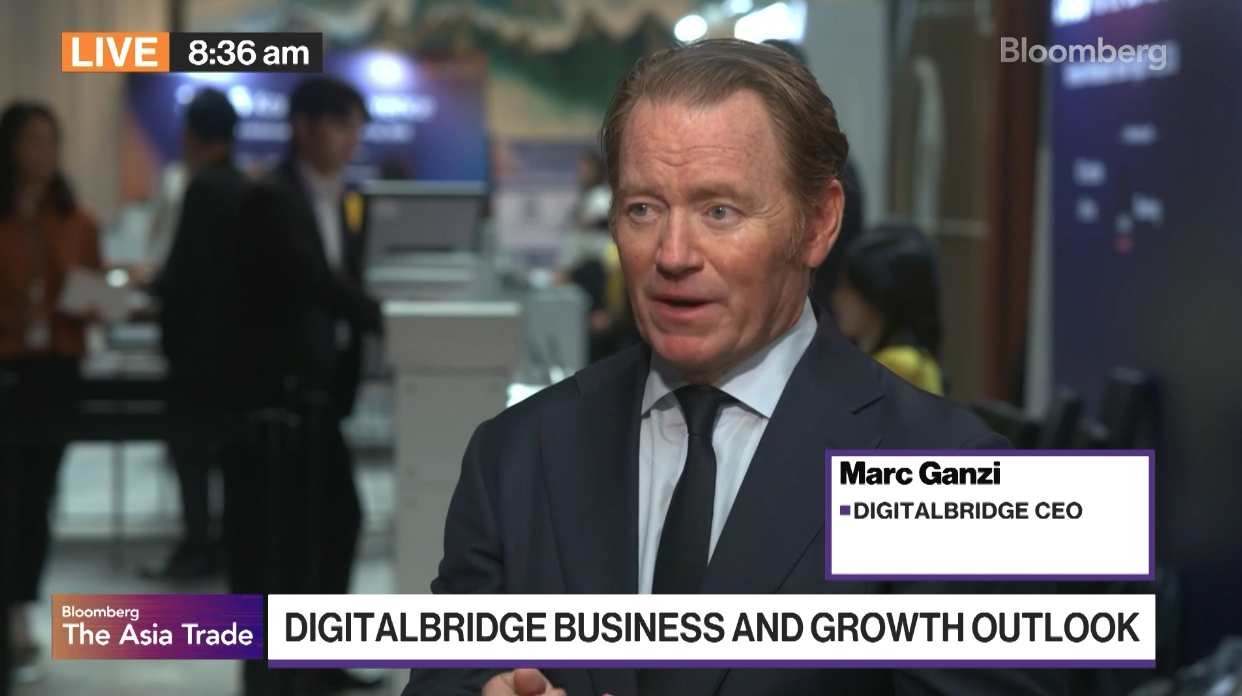
DigitalBridge (NYSE: DBRG) said Tuesday it has received every regulatory approval — from FERC to CFIUS — needed to close its roughly $4 billion, $16.00-per-share cash acquisition by SoftBank Group, with the deal now expected to close within five business days and DigitalBridge's stock set to delist from the NYSE entirely – StockTitan.
Why This?: This is SoftBank's largest infrastructure bet since it bought Sprint in 2013, handing it control of a $108B alternative-asset manager spanning data centers, cell towers, and fiber networks — precisely as AI's compute crunch turns "who owns the power and the pipes" into one of the most contested questions in markets from Texas to Querétaro.
Positive Context:
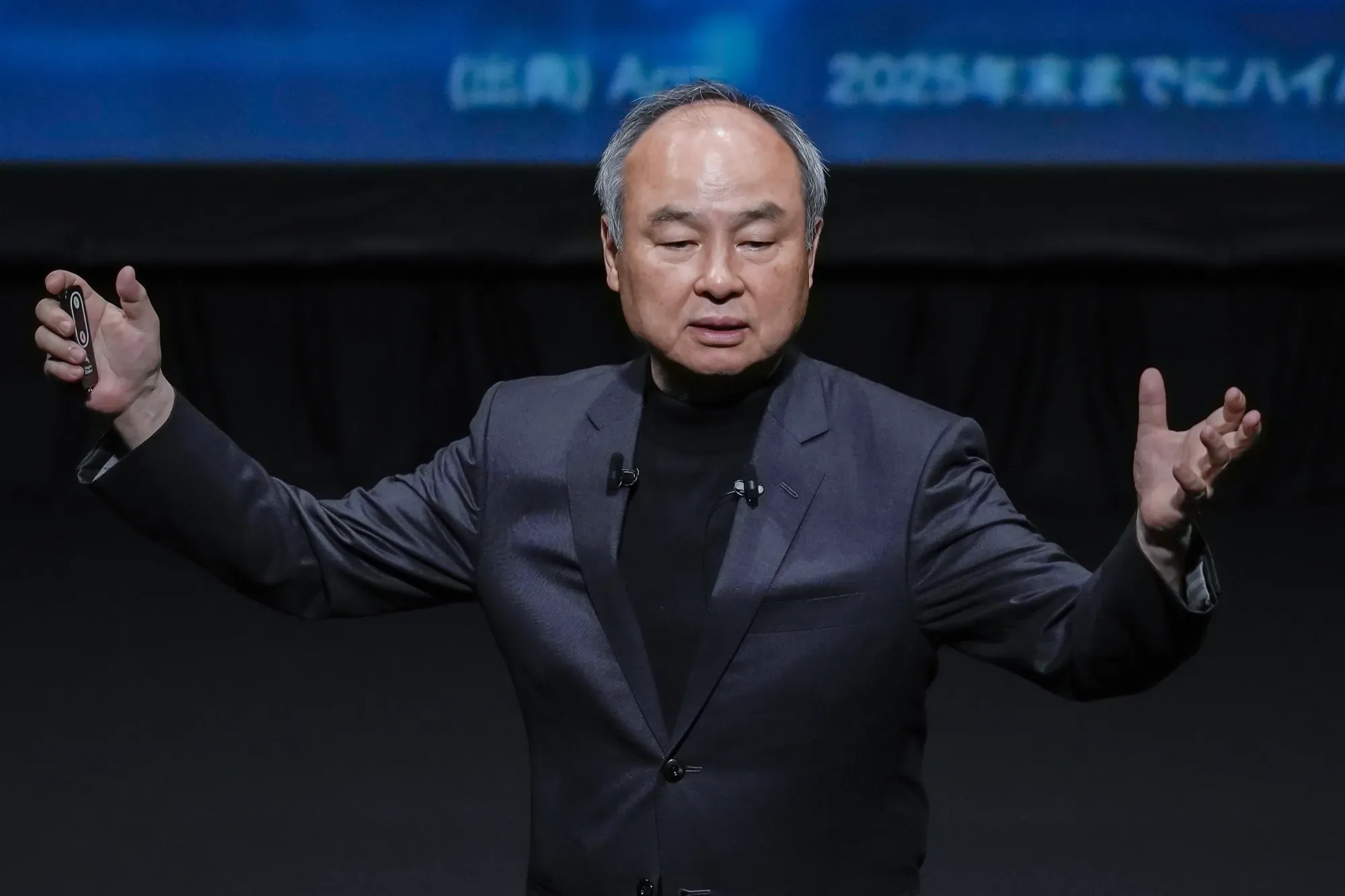
- SoftBank Chairman Masayoshi Son called digital infrastructure "the railroads and highways of the AI era," the clearest signal yet that SoftBank is pivoting from its Vision Fund's venture-stage bets toward owning hard, physical AI infrastructure outright.
- The $16-per-share price carried a 28% premium to DigitalBridge's undisturbed trading price, and more than 97% of shareholders who voted approved the deal back in April — a rare show of near-unanimous support for a take-private this size.
Yes, but:
- One institutional investor described the situation as a "frustrated seller meeting an opportunistic buyer" — DigitalBridge wasn't distressed, but a persistent gap between its public-market price and the value of its underlying infrastructure is exactly why it's leaving the NYSE altogether.
- The bet only pays off if AI workload demand stays strong enough to keep data-center utilization and lease rates elevated even as a wave of new supply comes online across the industry.
Zoom in: Buried in the deal's fine print, holders of DigitalBridge's Series H, I, and J preferred stock will each receive a formal "change of control" notice with the option to convert their shares — the unglamorous mechanics that come with taking a $108B infrastructure manager private.
The comment: "As AI transforms industries worldwide, we need more compute, connectivity, power, and scalable infrastructure... this acquisition will strengthen the foundation for next-generation AI data centers, advance our vision to become a leading ASI platform provider, and help unlock breakthroughs that move humanity forward," said Masayoshi Son, Chairman and CEO of SoftBank Group – SoftBank Group.
💰 Venture Capital
Submit a deal for The Daily Dealflow newsletter via DM here on LinkedIn.
Corridor (US) – US$25M, seed round, a health benefits brokerage using AI agents to serve businesses with 1 to 500 employees; founded by Nikhil Aggarwal, Jason Dong, Jackson Wagner, and Eric Qian. Bain Capital Ventures led the round, joined by BoxGroup, Definition Capital, and angels from OpenAI, Scale AI, Ramp, Modal, and Oscar. The company says its clients reduce benefits spending by an average of 20%, though that claim still needs to be validated across several renewal cycles – The Investor Society.
Firecrawl (US) – $75M, Series B, a web-data infrastructure company whose API lets AI agents crawl, search, and extract structured information from the open internet — used by more than 1.5 million developers and clients including Apple's online store and Canva. The round was led by Smash Capital with Altos, Nexus, Y Combinator, Freestyle, and Offline Ventures also joining. Co-founded by Brazilian-born CTO Nicolas Silberstein Camara alongside Caleb Peffer and Eric Ciarla, the fresh capital funds Alexandria, a new platform meant to unite scientific research, code, and real-time data into one library AI models can actually read – PR.com.
Certuma (Argentina) – $10M, seed round, an AI clinical-copilot startup pursuing what may be the most audacious pitch in health tech: an FDA-approved "AI doctor" capable of diagnosing and treating common ailments like UTIs and sore throats. Founded by serial entrepreneur Martín Varsavsky — who previously built Fon, Jazztel, and Prelude Fertility — the round funds Certuma's expansion into Argentina as its first Latin American market, betting that regulatory-grade AI medicine can scale faster outside the U.S. than inside it – LatamRepublic.
AI Hospitality Group (US) – $7.5M, seed funding, a startup that skips selling software to hotel managers and instead becomes the hotel operator itself, running back-office functions like scheduling, procurement, and guest communications through autonomous AI agents. Founded by Sloan Dean, the former CEO of hotel-management giant Remington Hospitality, the round was led by Rackhouse Venture Capital with Sierra Ventures and Dynamo Ventures also participating — a bet that AI can wring out the margin that traditional hotel management has left on the table for decades – PR Newswire.
Kairos Power (US) – Up to US$100M, strategic investment and engineering partnership: Samsung C&T will contribute approximately US$70M in capital and provide the remainder in services for the Hermes 2 project, an advanced 50 MW reactor expected to supply electricity to Google from Tennessee in 2030. Kairos CEO and co-founder Mike Laufer retains control of the reactor technology; Samsung gains priority for future engineering and construction contracts. The design uses molten fluoride salts rather than a conventional cooling system – The Investor Society.
🏛️ Private Equity
Energy Vault (US) acquired Goshe Energy Storage (US) – undisclosed value, portfolio acquisition, the battery-storage developer bought a 2.3-gigawatt-plus pipeline of 15 U.S. battery projects, including 350 megawatts ready to break ground, backed by a new $40M credit facility from S2G Investments. Energy Vault Chairman and CEO Robert Piconi called it a deal that "adds meaningful scale to our pipeline," part of a build-own-operate strategy the company projects will generate more than $200M in annual run-rate earnings by 2028 – BusinessWire.
DHL Supply Chain (Germany/US) acquired Open Market (Colombia) – undisclosed value, acquisition, the logistics giant bought the Colombian operator's 21 warehouses (120,000 square meters), 13 cross-docking platforms, and roughly 4,100 employees as part of DHL's "2030 Strategy" to deepen its footprint in Latin America's life-sciences, healthcare, and consumer-goods supply chains. DHL Supply Chain Latin America CEO Agustín Croche framed it as strengthening specialized logistics capabilities in the region, while Open Market's parent, AGV, is redirecting its own investment focus toward Brazil — a tidy illustration of how global logistics roll-ups are quietly consolidating Latin America's fragmented warehousing sector – International Transport Journal.
Butterfly Equity (US) acquired Sabert (US) – undisclosed value, acquisition, the Los Angeles private equity firm bought the Sayreville, New Jersey-based food packaging manufacturer, which holds more than 400 patents and runs 13 facilities worldwide making plastic, paper, and molded-fiber containers. It's Butterfly's latest bet on unglamorous but essential food-supply-chain infrastructure, following its prior acquisitions of Bolthouse Farms and Duckhorn - PE Hub.
Norwest Equity Partners (US) invested in E-Z UP (US) – undisclosed value, acquisition, the growth-equity firm bought the pop-up canopy category creator from Beach Point Capital, betting on further expansion of its B2B and industrial distribution channels. Founded in a Southern California garage in 1983 and now holding nearly 100 patents, E-Z UP CEO Eric Hernandez called it a partnership for "our next chapter of growth" – Middletown Life.
📈 Public & Capital Markets
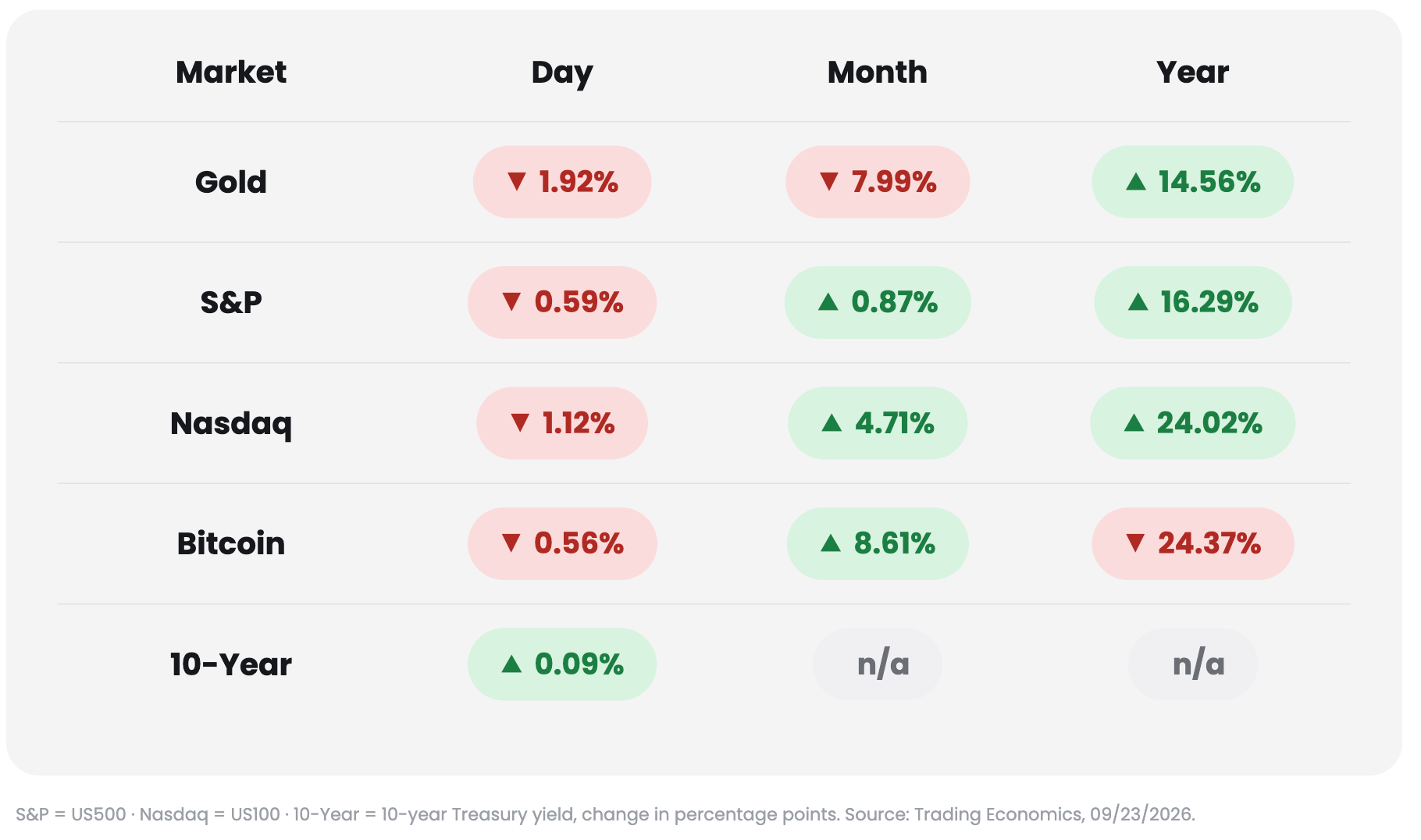
US equity markets (US) – broad market move, the Nasdaq closed at a record high (up roughly 2.3%) and the Russell 2000 outperformed as oil prices sank on hopes of a U.S.-Iran diplomatic breakthrough and Treasury yields retreated, giving risk assets across the board room to run even as Fed officials struck a more hawkish tone on rates, macro/equities industry – TheStreet.
AMD (US, Nasdaq: AMD) – stock milestone, shares surged roughly 10% to push AMD's market capitalization above $1 trillion for the first time, making it the fourth U.S. chipmaker after Nvidia, Broadcom, and Micron to reach the milestone, as the company's shift from a standalone chip vendor into a full-stack AI platform provider keeps paying off, semiconductor industry – Investing.com.
Meta Platforms (US, Nasdaq: META) – stock surge, shares jumped as much as 11% and added roughly $190B in market value after the company's new "Muse" AI shopping and personal-assistant agent shot to the top of Apple's App Store, dragging chipmakers Intel (+12%) and Arm (+17%) higher along with it on renewed AI-demand optimism — even as Amazon moved separately to block Muse from accessing its marketplace, technology/AI industry – Yahoo Finance.
Viking Therapeutics (US, Nasdaq: VKTX) – stock surge, shares jumped roughly 31% after new trial data showed its injectable obesity drug candidate maintained durable weight loss over an extended maintenance period, giving the biotech a rare solo rally in a crowded GLP-1 field where larger rivals' stocks barely moved on the same day, biotech/pharmaceuticals industry – 24/7 Wall St.
Iron Horse Acquisition II Corp. (US, Nasdaq: IRHO) – SPAC transaction, Iron Horse and Electra Vehicles reported fresh commercial momentum ahead of their previously announced $250M-plus business combination, which would make the AI-powered battery-intelligence startup the first publicly traded company of its kind once the de-SPAC merger closes, energy-tech/capital-markets industry – StockTitan.
📅 ICYMI
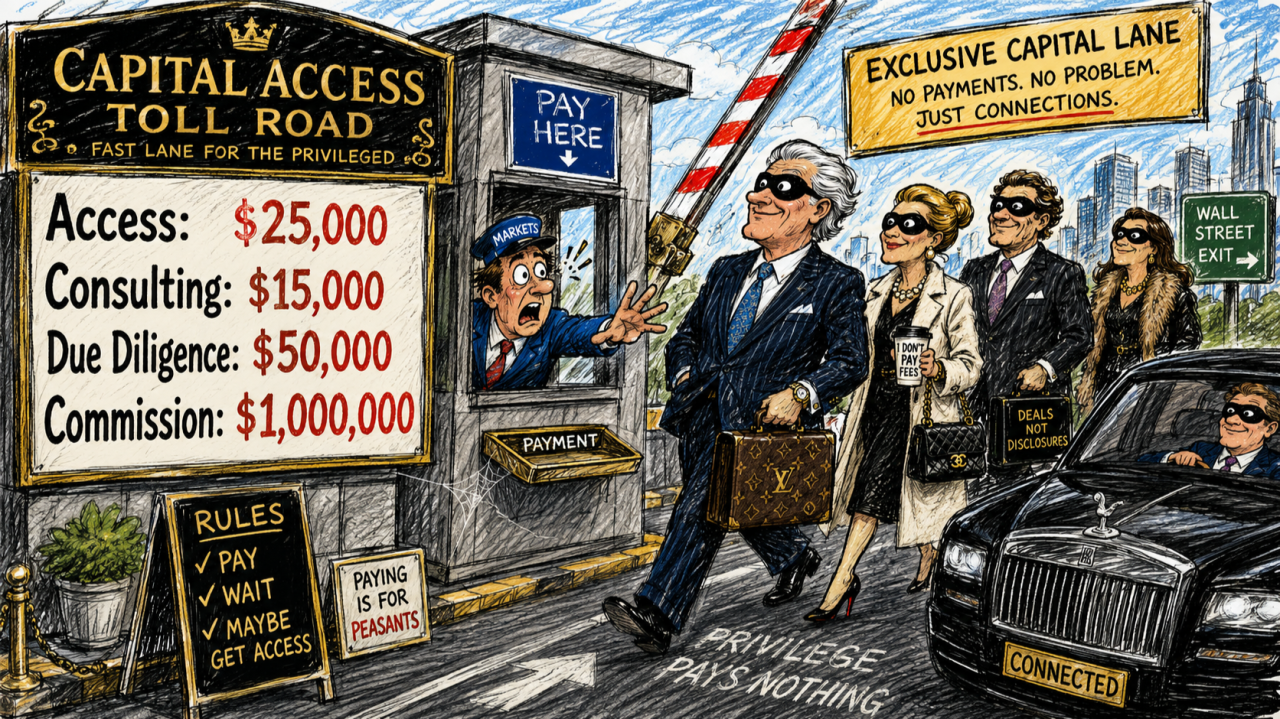
Before capital reaches a company, plenty of people are already getting paid—for access, introductions, databases, and advice. How much of this “capital-raising economy” genuinely creates value, and how much benefits from fundraising remaining difficult? A reflection on who ultimately pays the price for friction in private markets - The Rent Economy Around Capital Formation.
On September 23, 1998, Long-Term Capital Management — a hedge fund run by Nobel laureates using models so sophisticated Wall Street thought they'd made risk obsolete — received a $3.6B bailout from 16 banks after losing nearly $2.8B in two months, a 92% wipeout that remains one of the all-time reminders that "the smartest people in the room" can still blow up spectacularly.
Gen Z is trading bar nights for board-game nights: nearly three-quarters say they want more social spaces where alcohol isn't the centerpiece, a shift that's helped push the trading-card market toward a projected $17B by 2035 and sent shares of game maker Asmodee up 56% this year.
See you tomorrow,
Jose Kont
The human behind The Investor Society.