
Ex-Spotify Team Raises $10M for Malachyte to Bring Behavior Intelligence to E-Commerce
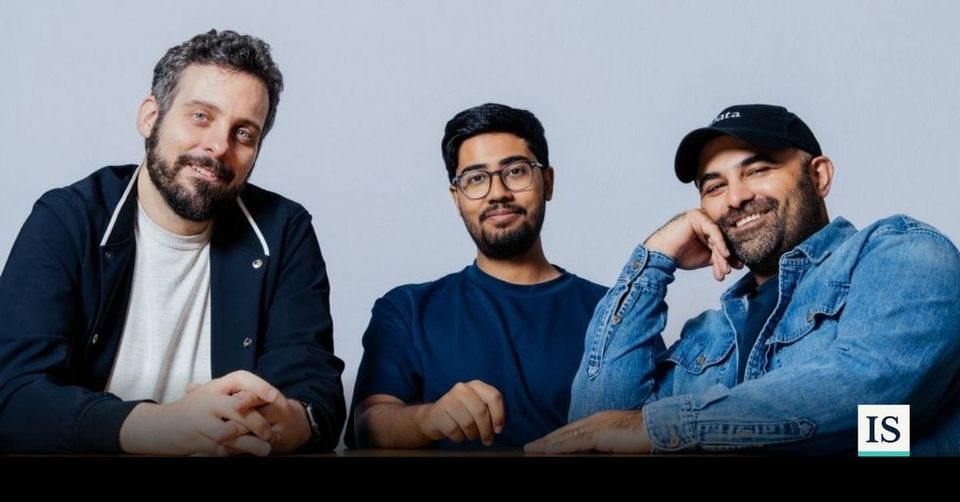
Malachyte, a New York company applying real-time behavioral AI to online retail, has raised a US$10 million seed round co-led by Bessemer Venture Partners and Gradient Ventures, with participation from Harpoon Ventures. The company was founded by CEO Sidd Motwani, CTO Ian Anderson, and COO Shivaditya Sinha, all former Spotify engineers who worked on the streaming service's Vector AI, the behavioral intelligence system that powers roughly 90% of recommendations served to some 800 million users.
The technology they built at Spotify used what they call a two-headed vector model, separating a listener's long-term taste from what they want in the moment, and predicting intent for brand-new users with no history. Malachyte applies the same approach to shopping, reading page-load context, hovers, clicks, scroll behavior, search refinements, and add-to-cart signals in real time, without requiring cookies, logins, or historical customer profiles. The company says it deploys in about seven days and responds in under 200 milliseconds during peak traffic. "A search for 'heavy-duty boot' followed by two clicks on steel-toed boots is enough to move work pants and gloves up the page," Motwani said. After piloting with more than 20 enterprises across travel, grocery, and retail beginning in 2024, and going live with Fun.com in fall 2025, Malachyte reached general availability in June 2026 through a native Shopify integration, with larger retailers connecting via API. The funding will go toward distribution and senior commercial and product hires.
Market Context
The problem Malachyte targets is what the industry calls the cold start: most personalization systems need a login, a cookie, or purchase history to work, and by Motwani's account roughly 90% of a retailer's traffic is anonymous. "Believe it or not, brands aren't using their most valuable dataset: what customers actually do inside their own shopping experience," he said, arguing that most systems either ignore in-session signals or aggregate them into overnight segments.
The commercial stakes are well documented. Shoppers who click recommendations convert about 4.6 times more often and account for roughly a quarter of revenue from about 7% of visits, according to Salesforce data, while average cart abandonment across studies sits above 70%. At the same time, 89% of business leaders call personalization critical but only about 35% believe they have achieved it across channels. Malachyte reports early results including a 31% lift in revenue per visitor at HalloweenCostumes.com, an 80% improvement in add-to-cart click-through at Brunt Workwear, and a 17% increase in revenue per visit from first-time shoppers at Jordan Craig. It competes with established point solutions such as Bloomreach and Algolia, which Motwani argues generally depend on logins or cookies, and positions itself as replacing several tools rather than adding one.
The Signal
"In e-commerce, a wrong recommendation costs a sale, not just a skipped track." — Sidd Motwani, co-founder and CEO, Malachyte
Regional Relevance
For the United States: Malachyte operates from New York and sells into an American retail sector where online conversion has become the primary competitive battleground and where privacy regulation and browser changes have steadily degraded the tracking infrastructure that personalization historically relied on. A system that works without cookies or logins addresses that shift directly, and the Shopify integration puts it within reach of mid-market direct-to-consumer brands rather than only large enterprises with engineering resources. Bessemer and Gradient Ventures, the latter backed by Google, betting on infrastructure that reads first-party in-session behavior signals where the category is heading as third-party data becomes less reliable.
For the global retail technology market: Spotify is a Swedish company, and the recommendation architecture at the center of this story was built to serve a global listener base across languages and markets, which is part of why the founders argue it transfers to commerce. Retailers outside the United States face the same anonymous-visitor problem and often stricter privacy regimes, particularly under European rules, which makes a personalization approach that avoids cookies and stored profiles potentially more portable across jurisdictions than systems built on tracking identifiers.
The Other Side
Does music recommendation actually transfer to buying decisions? Motwani acknowledges the asymmetry himself: a wrong song costs a skip, a wrong product costs a sale. Purchase intent involves price sensitivity, sizing, delivery timing, and return risk, variables absent from streaming, and the underlying signal is far sparser, since a listener generates hundreds of data points an hour while a shopper may generate a few dozen in a session.
Are the reported results representative? The lifts the company cites, 31% revenue per visitor at one retailer and 80% add-to-cart improvement at another, come from a small set of named early customers and have not been independently audited; personalization vendors routinely publish strong case studies, and the meaningful test is performance across a broad customer base over multiple seasons rather than in initial deployments.
Can a US$10 million seed defend a category the platforms may absorb? Shopify, Amazon, Salesforce, and Adobe all have both the data and the incentive to build in-session personalization natively, and Malachyte's distribution currently depends on being an app inside Shopify's ecosystem; the company argues it replaces multiple point solutions at lower combined cost, but that positioning is strongest precisely against the vendors most likely to respond.
Sources & Transparency
- FinSMEs — Malachyte Raises $10M in Seed Funding
- TechCrunch — Ex-Spotify employees raise $10M to bring the AI behind its recommendations to e-commerce
- AlleyWatch — Malachyte Raises $10M to Solve E-Commerce's Biggest Blind Spot: the Visitor Who Never Logs In
- citybiz — Malachyte Raises $10 Million Seed Round to Expand AI-Powered Commerce Personalization
- PR Newswire — Ex-Spotify Team Raises $10M for Malachyte to Bring Behavior Intelligence to Consumer Commerce
- Hello Retail — Ecommerce personalization statistics: 30+ numbers on revenue, loyalty, and AI