
Foundry Robotics: US$100M to turn hardware designs into products in weeks
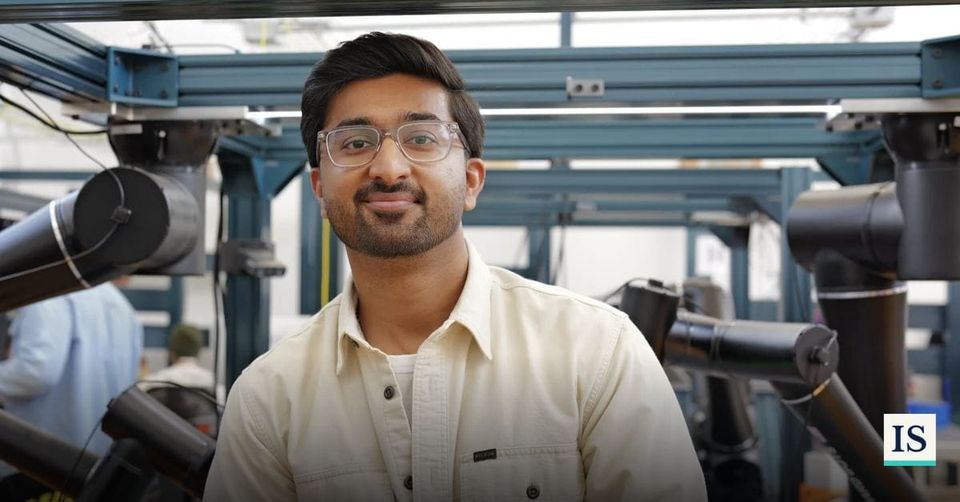
Foundry Robotics, an Emeryville, California-based startup that runs factories built around AI-powered robots, raised a US$100 million Series A led by Marlinspike Partners, according to RuntimeWire. The company announced the round on October 28, 2026. Khosla Ventures, which led the seed round according to The Information, returned along with Red Glass Ventures. SE Ventures, Wing VC and Axiom Ventures joined as new investors, and Hanabi and Zero Shot Fund also took part. Marlinspike is a veteran-led venture firm co-founded by Neil Keegan, its CEO, and Mislav Tolusic, its managing partner and chief investment officer, that invests in technology with both defense and commercial uses. The valuation was not disclosed.
Foundry was co-founded by CEO Adarsh Kulkarni and Emmanuel Lamacchia. Kulkarni was employee number four at Ghost Robotics, a maker of legged robots for the U.S. military, and later became Scale AI's first head of robotics. Lamacchia previously led Tesla's Model Y program, according to VentureBurn. Rather than selling robots, Foundry owns and operates its plants and offers "manufacturing as a service." Its robots work in skill-based cells for tasks like cabling, fastening and precise placement, so one site can build many products, The Information reported. The money will expand the 130,000-square-foot Emeryville facility, which the company says multiplies its footprint twentyfold, and fund FoundryOS, its software that coordinates robots, factory operations and cloud systems.
Market Context
Foundry targets products made in low to mid volumes whose designs change often: drones, satellite parts, wire harnesses, underwater vehicles, autonomous vehicle subassemblies and data center hardware. Traditional assembly lines can take months to set up and are costly to rework for each new product. The company claims it can move a customer from design to production in weeks. According to The Information, Foundry already ships to a handful of paying customers in defense, energy, autonomous vehicles and telecom, while still setting up the Emeryville site.
The round lands in a busy month for AI-driven U.S. manufacturing. Arda Industries, also backed by Khosla Ventures, came out of stealth on October 20 with a US$160 million Series A at a US$1.5 billion valuation. Hadrian, which runs automated factories for aerospace and defense parts, raised US$1.37 billion in August. Demand for factory robots is also recovering: U.S. industrial robot installations rose 11% to about 38,000 units in 2025, the third-best year on record, according to preliminary International Federation of Robotics (IFR) data.
The Builder's Thesis
"Our mission is to revitalize U.S. manufacturing and create more capacity to build and scale critical product assembly."
Adarsh Kulkarni, co-founder and CEO, Foundry Robotics (via The AI Insider)
Regional Relevance
For the United States, Foundry is a test of whether AI can make small-batch, high-value assembly economical at home. Much of that work, from drones to satellite components, is done overseas because it relies on skilled hands and frequent retooling. The labor gap is real: Deloitte and the Manufacturing Institute estimate U.S. manufacturers could need up to 3.8 million new workers by 2033, and about 1.9 million of those jobs could go unfilled. Defense demand adds urgency. Duane Fotheringham, president of HII Unmanned Systems, said in the company's announcement that "production capacity is a national constraint on getting unmanned systems to the fleet."
For Latin America, and Mexico in particular, the trend deserves attention. Mexico installed about 5,600 industrial robots in 2024, down 4% from the prior year, and 63% of them went to the auto industry, according to the IFR. The U.S. installed 34,200 that same year. Mexico's automation remains concentrated in high-volume car production, while startups like Foundry aim at flexible, lower-volume assembly. If robots make that kind of work cheaper in the U.S., some advanced manufacturing that might have moved to Mexico through nearshoring could stay north of the border. That shift would take years and depends on the technology proving itself at scale.
The Other Side
How autonomous is the "autonomous factory"? Foundry calls Emeryville "America's first autonomous factory for assembly," a claim no outlet has independently verified. The Information reported that the company employs hundreds of human technicians whose work helps train its models, and that robots still struggle with micron-level precision. Kulkarni also acknowledged that flexibility costs some efficiency.
What does the business actually look like? The announcement omits revenue, production volumes, customer names and valuation. Marlinspike's Tolusic reportedly said Foundry is signing customers quickly, but no contracts have been disclosed. HII Unmanned Systems offered a supportive quote, though the announcement does not say whether it is a customer.
Can owning factories scale like software? Owning plants means heavy capital needs, long build-outs and operational risk that pure software firms avoid. RuntimeWire framed the key question as whether flexible assembly can deliver reliable, repeatable output across very different customers. A second site and more funding will likely be needed before that answer is clear.
Sources & Transparency
- Foundry Robotics raises $100M to build a factory for complex assembly
- Foundry Raises $100 Million for Autonomous Factories
- Foundry Robotics Raises $100 Million To Build America's First AI-Powered Assembly Factory
- Foundry Robotics Raises $100M in Series A Funding to Expand Autonomous Assembly for Defense, Industry
- Foundry Robotics plans expansion after raising $100 million