Freehand Raises $75M to Put AI Agents in Charge of Fortune 500 Supply Chain Spend

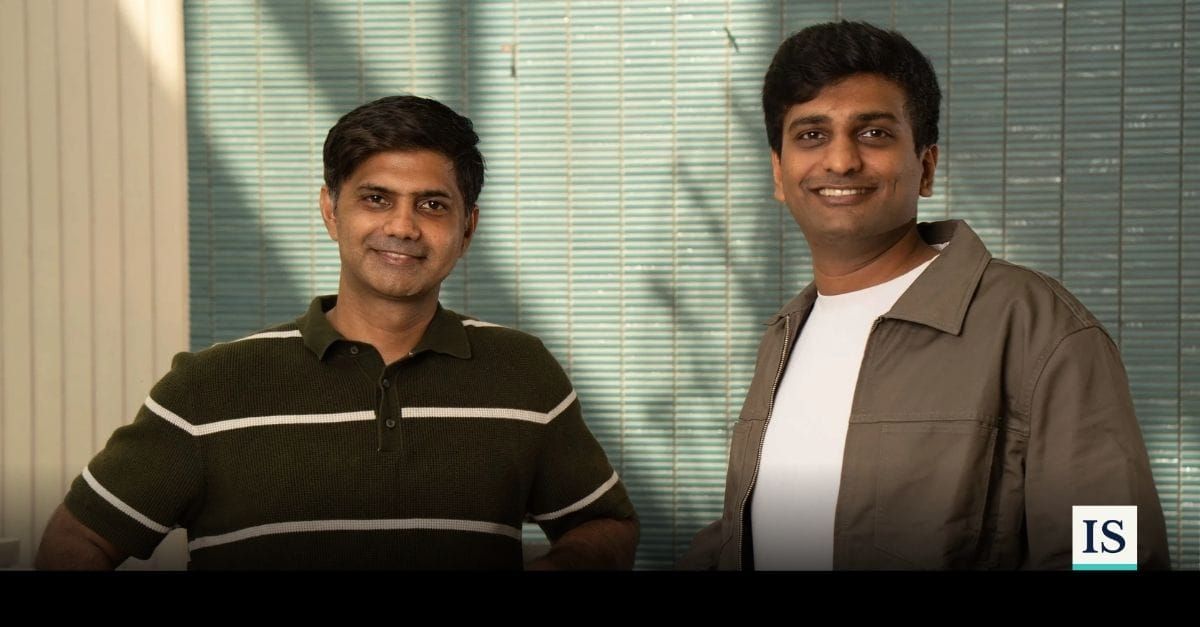
Freehand, a San Francisco company building autonomous AI agents that manage supply chain spending for large enterprises, announced on July 29 that it has raised US$75 million in a round co-led by Battery Ventures and NewRoad Capital Partners, with participation from Nexus Venture Partners and PSP Growth, the investment vehicle founded by former US Commerce Secretary Penny Pritzker. Most outlets characterize the round as a Series B; it follows a US$25 million Series A raised in March 2024 and brings total funding to US$100 million. The company did not disclose a valuation, describing it only as a significant step up from the prior round. Battery Ventures general partner Dharmesh Thakker joins the board.
Freehand was founded in February 2024 by CEO Nitin Jayakrishnan and co-founder Abhijeet Manohar, who previously built Pando, an enterprise logistics and procure-to-pay platform sold to a strategic buyer in early 2026; the pair moved to board roles at Pando in early 2024 to start Freehand as a separate company. Its agents read invoices, contracts, supplier records, emails, and internal messages, then decide whether to pay, dispute, or negotiate, executing those decisions directly inside customers' ERP and procurement systems. The technology rests on a proprietary "Category Context Graph" that maps decisions and exceptions across spend categories, orchestrated across 18 different models. Freehand counts roughly 50 customers including Meta, Unilever, Johnson & Johnson, Pfizer, Cardinal Health, and Dunkin', processes billions in payments across 60 to 70 countries, and maintains its Asia Pacific headquarters in Chennai, India. Customers recover 5% to 10% of spend in complex categories, complete workflows five to seven times faster, and cut procure-to-pay cycles by more than 70%, according to the company.
Market Context
The pitch centers on a gap in enterprise spending that Jayakrishnan quantifies bluntly: "Enterprises spend $16 billion a year on supply chain software and another $348 billion hiring people to do what this software cannot." American companies spend more than US$20 trillion annually on supply chain materials and services, meaning even single-digit efficiency gains translate into large absolute savings, which is the arithmetic behind the category's appeal to both buyers and investors.
Capital is flowing accordingly. Supply chain and logistics startups raised US$6.2 billion across 350 deals in the first half of 2026, the strongest pace since 2022. Freehand's positioning also reflects a broader shift in how enterprise AI is being sold: away from copilots that surface information toward agents that execute. Manohar framed the distinction as "shifting from building software for the user to building software that is the user." The company's commercial model reinforces that claim, with Jayakrishnan stating that if an agent does not fully autonomously process a transaction, Freehand does not get paid. Unilever global vice president of supply chain Matt Algar described the deployment as "one of the first full-scale agentic deployments at Unilever."
The Signal
"Enterprises spend $16 billion a year on supply chain software and another $348 billion hiring people to do what this software cannot." — Nitin Jayakrishnan, co-founder and CEO, Freehand
Regional Relevance
For the United States: Operating from San Francisco, Freehand is selling into the back-office functions of some of the country's largest employers, and the labor implications are explicit in its own pitch: the US$348 billion figure it cites as the market opportunity is money currently paid to people. Penny Pritzker, whose PSP Growth backed the round, framed the stake in national terms, saying "America's industrial competitiveness relies on how effectively our largest companies operate." For US procurement, accounts payable, and supply chain finance teams, this is among the clearest examples yet of enterprise AI targeting a defined category of white-collar work rather than augmenting it.
For India: Freehand's Asia Pacific headquarters sits in Chennai, and its founders built their previous company, Pando, within India's enterprise software ecosystem, with India-focused Nexus Venture Partners backing both ventures. The pattern, Indian founders building global enterprise software with US headquarters and Indian engineering operations, has become a recognized route to scale, and this round adds to that record. There is also a sharper local dimension: India hosts a large share of the outsourced finance and procurement operations that Freehand's agents are designed to replace, making the country simultaneously a base for the company and a market exposed to what it automates.
The Other Side
What happens when an agent approves the wrong payment at a pharmaceutical company? Freehand's defense is audit trails and outcome-based pricing, but security researchers have documented that autonomous payment agents become the new target for business email compromise tactics, with manipulated invoices, altered beneficiary details, and prompt injection aimed at the agent rather than a human approver; because agents execute at machine speed, losses that once accumulated over days of social engineering can occur within a single payment cycle.
Are enterprise controls actually designed for agents yet? Analysts describe a bifurcation in which a small group of companies has redesigned authorization frameworks for agent activity while a much larger group runs agents against legacy controls written for human approvers, leaving governance gaps that existing fraud-prevention and operational resilience regulations do not clearly address.
Do the reported savings hold up beyond early deployments? The 5% to 10% spend recovery and 70% cycle time reduction are company-reported figures drawn from early customer deployments in a company founded in February 2024, and the largest recoveries in procurement typically come from the first pass through years of accumulated billing errors; whether the agents keep finding comparable value once that backlog is cleared is the question that determines whether this becomes recurring infrastructure or a one-time audit.
Sources & Transparency
- Freehand — Freehand Raises $75M to Scale AI Teams Managing Supply Chain Spend for Fortune 500 Companies
- Crunchbase News — Freehand Raises $75M Series B To Automate Fortune 500 Supply Chain Spend
- GlobeNewswire — Freehand Raises $75M to Scale AI Teams Managing Supply Chain Spend for Fortune 500 Companies
- Startup Fortune — Freehand raises $75 million to let AI agents decide which invoices Fortune 500 companies pay
- TrustSphere — The Agent in the Treasury: How Autonomous AI Is Reshaping B2B Payment Operations and the 2026 Fraud Risk Model
- Inc42 — Freehand Raises $75 Mn To Expand Enterprise AI Platform