P-1 AI Raises $50M Series A Led by NEA to Scale Its AI Hardware Engineer

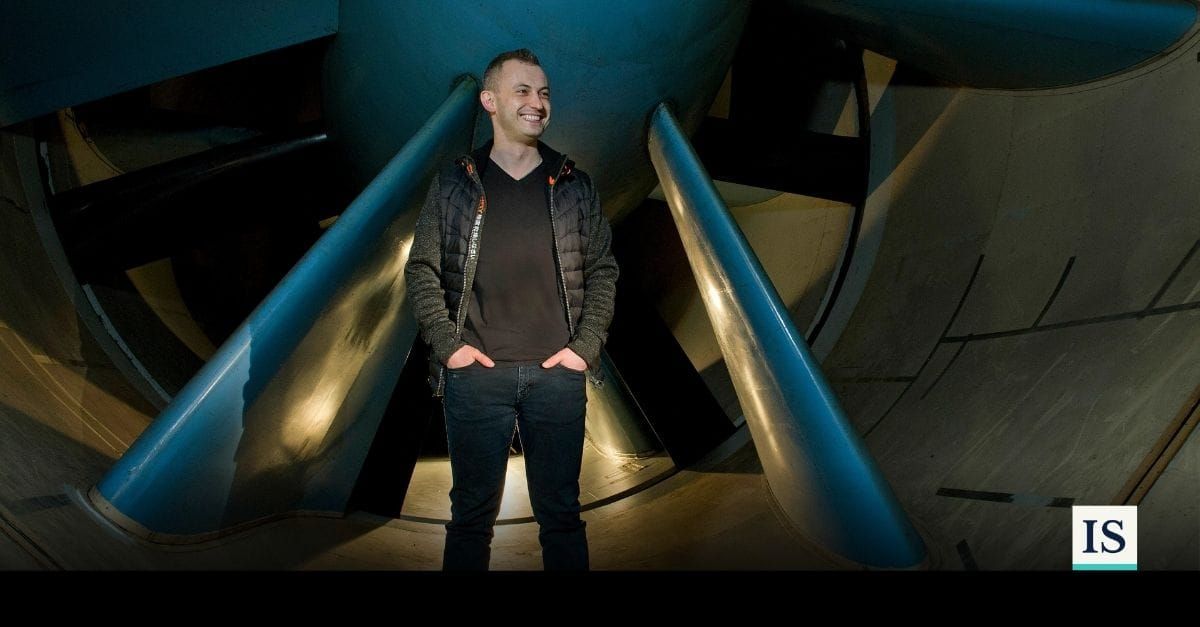
P-1 AI, a San Mateo, California startup building an artificial intelligence engineer for physical systems, announced on July 29 that it has raised a US$50 million Series A led by New Enterprise Associates. The round follows a US$23 million seed led by Radical Ventures in April 2025 and brings total funding to roughly US$73 million. Jeff Immelt, the former chairman and CEO of General Electric and now an NEA partner, joins the board alongside Radical Ventures partner Molly Welch, with NEA partner and former Microsoft deputy CTO Lila Tretikov as board observer. Angel investors include Google's Jeff Dean, OpenAI's Peter Welinder, Weaviate's Bob van Luijt, and executives from Anthropic and Nominal.
The company was co-founded by CEO Paul Eremenko, previously chief technology officer at both Airbus and United Technologies and earlier deputy and acting director of DARPA's Tactical Technology Office, along with Aleksa Gordić, a former Google DeepMind and Microsoft researcher, and Adam Nagel, who ran engineering at Airbus Silicon Valley. Its product, Archie, is an agentic AI that performs mechanical, electrical, thermal, fluids, and systems design work at what the company describes as junior engineer proficiency, using standard industry engineering tools. P-1 AI trains it on physics-based, supply-chain-informed synthetic design datasets, an approach meant to work around the scarcity of real engineering training data. Archie is currently deployed with industrial OEMs working on data center cooling and critical power systems, was showcased at COMPUTEX 2026 supporting NVIDIA's DSX data center reference design, and the company says automotive and aerospace and defense partnerships launch later in 2026. "Interest in Archie from major industrial firms has been extraordinary and emphasizes the need to scale our product and deployment teams," Eremenko said.
Market Context
The pitch lands against measurable strain in engineering organizations. A 2026 WSCAD survey of 1,267 electrical CAD users across 40 countries found workforce shortages ranking among practitioners' top concerns alongside rising system complexity and compressed timelines, with only 42% of respondents holding a decade or more of experience, pointing to a succession gap. Roughly 72% cited component searches and documentation upkeep as their most time-consuming tasks, and fewer than 46% felt they had adequate time for innovation. That survey's own conclusion, however, was that AI is unlikely to replace engineers and that its value lies in reducing repetitive work.
P-1 AI's commercial beachhead is deliberate. Data center cooling and power systems are among the fastest-growing categories of industrial design work, driven by AI infrastructure construction, and they are well suited to a system that reasons about thermal and fluid behavior. The choice also puts P-1 AI inside the NVIDIA reference design ecosystem at a moment when hyperscalers are building faster than engineering capacity allows. The board composition signals the customer the company is chasing: Immelt spent 16 years running one of the world's largest industrial manufacturers, and his presence is aimed squarely at enterprise adoption. "By fitting naturally into how engineers collaborate, P-1 AI can shorten cycle times, improve competitiveness, and deliver results," Immelt said.
The Signal
"P-1 AI is taking a differentiated approach to one of the hardest problems in AI: engineering reasoning for the physical world." — Lila Tretikov, partner and head of AI strategy at NEA, former deputy CTO at Microsoft
Regional Relevance
For the United States: Operating from San Mateo, P-1 AI is targeting the engineering bottleneck constraining American industrial expansion, from data center buildout to reshored manufacturing and defense production, where projects are increasingly limited by the availability of experienced engineers rather than by capital. The founders' résumés, spanning DARPA, Airbus, United Technologies, and Google DeepMind, reflect a pattern of aerospace and defense expertise migrating into venture-backed AI, and the involvement of a former GE chief executive underscores how seriously legacy American industrial leadership is treating the category. If the tool performs as described, the near-term effect falls on entry-level engineering roles, the same rung of the career ladder AI coding tools have already begun to compress.
For the global industrial base: P-1 AI's stated ambition is to place an AI engineer on every engineering team at every major industrial company, a market that extends well beyond the United States into European aerospace, Asian manufacturing, and the Gulf's infrastructure programs. Countries facing engineering workforce shortages and aging technical populations, particularly across Europe and Japan, have the most to gain if the approach works, though they also face the sharpest questions about deskilling and where the next generation of senior engineers will come from if the junior tier is automated first.
The Other Side
Does "junior engineer proficiency" mean the work can be trusted without supervision? In physical systems, a design error carries consequences that a software bug usually does not, and the WSCAD survey's own respondents concluded AI's realistic value is in reducing repetitive work rather than replacing engineering judgment; the gap between assisting a licensed engineer and producing designs that hold up under certification and liability review is substantial and largely unaddressed in the announcement.
Can synthetic training data capture how physical systems actually fail? P-1 AI's core technical bet is that physics-based synthetic datasets can substitute for scarce real-world engineering data, but manufacturing tolerances, supplier variability, material defects, and field failure modes are precisely the knowledge that accumulates in experienced engineers and rarely appears in clean simulated data.
What does the founder's track record suggest about execution risk? Eremenko's credentials are unusually strong, but his previous venture, hydrogen aviation company Universal Hydrogen, which he co-founded in 2020, ceased operations in June 2024 after failing to raise further capital, months after he departed to start P-1 AI. Ambitious hardware-adjacent ventures with distinguished founders are not immune to running out of runway, and industrial sales cycles are long enough that US$73 million may not carry the company to broad commercial adoption.
Sources & Transparency
- The SaaS News — P-1 AI Raises $50M Series A
- GlobeNewswire — Engineering AI startup, P-1 AI, Announces Its Series A Financing Led by NEA, Adding Jeff Immelt to the Company's Board
- BusinessWire — P-1 AI Comes Out of Stealth, Aims to Build Engineering AGI for Physical Systems
- BusinessWire — New Data Suggests AI Could Help Relieve Pressure on Electrical Design Engineers Amid Growing Workforce Shortages and Project Complexity
- GeekWire — Universal Hydrogen runs out of runway and shuts down, one year after first flight
- Dealroom.co — P-1 AI raises $50M Series A led by NEA, adds ex-GE CEO Jeff Immelt to board