
Labelbox: US$100M+ Series E to Train AI Models and Agents Through Practice
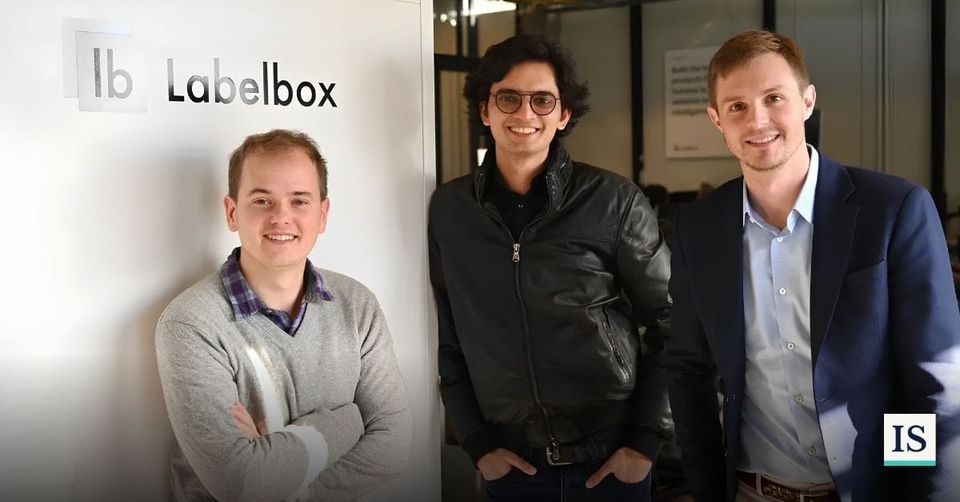
Labelbox, a San Francisco-based company that builds the training infrastructure behind advanced AI models, announced on October 14, 2026, that it raised more than US$100 million in a Series E round that combines equity and a credit facility. Infinitum Partners led the round, with participation from Wipro Ventures, Andreessen Horowitz (a16z), B Capital, Tau Ventures and Snowpoint Ventures, among others. According to Unite.AI and the company, the deal values Labelbox at US$1.25 billion before the new money. The split between equity and debt was not disclosed.
Labelbox was founded in 2018 by Manu Sharma, Brian Rieger and Dan Rasmuson. Sharma, a former DroneDeploy and Planet Labs engineer, is CEO. The company started as data-labeling software and now runs two main products: Horizon, which builds simulated work environments where AI models practice multi-step tasks and get graded, and Recursion Managed Agents, which lets companies deploy teams of AI agents inside the business apps they already use. The funds will go to research and engineering on both products and to expanding the teams that sell and support them.
Market Context
Labelbox says it turned profitable in 2026, grew revenue more than fivefold year over year and now has over 400 customers, including more than 90% of leading U.S. AI labs and hyperscalers. Revenue was not disclosed. The company also draws on a network of more than 4 million domain experts and runs sandbox infrastructure with millions of virtual machines. Its last disclosed raise was a US$110 million Series D led by SoftBank Vision Fund 2 in January 2022, before the generative AI boom reshaped its market.
The business of feeding AI labs has become one of the hottest corners of tech. Meta paid about US$14.3 billion for a 49% stake in Scale AI in 2025, Mercor was valued at US$10 billion last year, and Surge AI has reportedly sought funding at a US$15 billion valuation. The focus is shifting from labeled datasets toward reinforcement learning, where models improve by attempting tasks and receiving feedback. Next to those peers, Labelbox's US$1.25 billion pre-money valuation looks modest.
Key Signal
"Every company will soon run on agents that learn from their own work." Manu Sharma, Co-Founder and CEO, Labelbox
Regional Relevance
For the United States, the round shows where the AI arms race is spending money now. Labs are no longer just buying more text and images. They want realistic practice environments for coding, research and computer use, plus expert human feedback to grade results. Labelbox works with most of the leading U.S. labs, so its growth is a direct read on how much those labs are investing in post-training. Its push into enterprise agents also puts it in competition with software giants trying to sell the same idea to Fortune 500 companies.
For Latin America, the impact runs through talent and adoption. Expert networks like Labelbox's recruit engineers, lawyers, doctors and other specialists worldwide to evaluate AI output, creating remote work opportunities for skilled professionals in the region. And as agent platforms plug into common business software, Latin American companies that already run on those tools could deploy the same agents without building their own AI teams.
The Other Side
How much of the US$100 million is actually equity? The round mixes equity and a credit facility, and neither the company nor the coverage breaks down the split. Debt has to be repaid, so the headline number may overstate fresh capital.
Is the valuation a step up or a reset? At US$1.25 billion pre-money, Labelbox trades far below rivals like Scale AI, Surge AI and Mercor. That could mean the market sees it as a smaller player, or that investors got a good entry price. The announcement does not compare it with the company's 2022 valuation.
How durable is demand from AI labs? Labelbox depends heavily on a few dozen frontier labs and hyperscalers. Those buyers are concentrated, demanding and increasingly building tools in-house. The enterprise agent business adds diversification, but it only opened to customers in October 2026.
Sources & Transparency
- Labelbox Raises $100M+ in Series E Funding
- Labelbox Raises $100M+ Series E at $1.25B Valuation to Advance RL and AI Agents
- Labelbox Closes $100M+ in Series E Funding to Advance Reinforcement Learning and Enterprise AI Agents
- Labelbox lands $100M Series E to push reinforcement learning and AI agents
- Labelbox Raises $100M+ at $1.25B Pre-Money After 5x+ Growth
- Labelbox Raises $100M+ Series E