
Scanntech: Uruguay's Retail Data Firm Raises US$180M to Expand Beyond Brazil
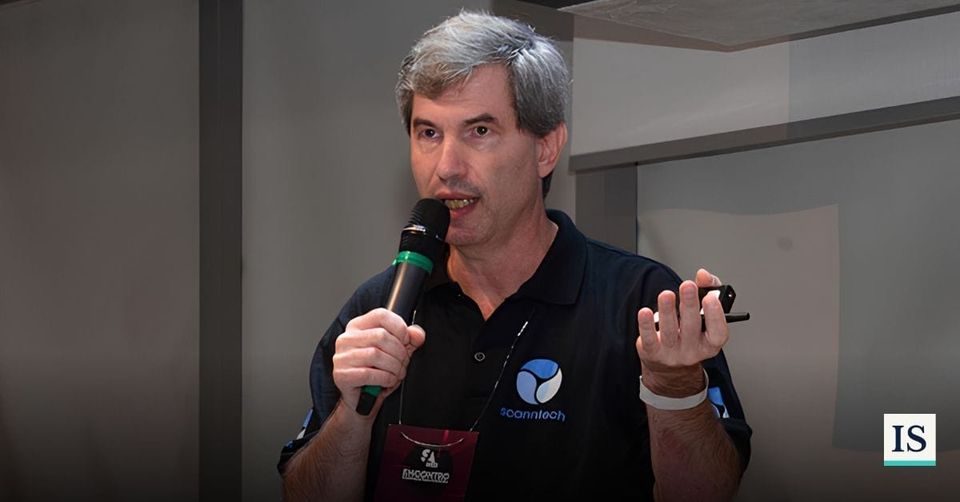
Scanntech, a Montevideo-based company that turns supermarket checkout data into market intelligence, announced a US$180 million Series F on October 13, 2026. L Catterton led the round, with Partners Group as co-lead and Bradesco and SPX participating. Existing shareholders Warburg Pincus, Hindiana, IFC and Endeavor remain on the cap table. Brazil Journal, which first reported the deal, said the round splits roughly evenly between new capital for the company and shares sold by existing investors, with the new backers taking close to 30%. Warburg Pincus, which invested US$40 million in 2023, is selling part of its stake. J.P. Morgan acted as placement agent.
Scanntech was founded in Uruguay in 1992 by Raúl Polakof, Benny Szylkowski and Soledad Fernández, who built software that let small shops use a computer as a cash register. That network now captures ticket-level sales data that the company says covers more than 80% of retail sell-out in its markets, used by more than 600 manufacturers plus retailers and distributors to track prices, volumes, market share and promotions. Polakof remains CEO. The money will fund growth in Brazil, Mexico, Colombia, Argentina, Peru and Uruguay, new AI and analytics products, and entry into new markets starting in 2027.
Market Context
According to Brazil Journal, the deal values Scanntech at about 5.5 times annual revenue, with the company growing around 30% a year and already profitable. Neither revenue nor an absolute valuation was disclosed. General Atlantic, GIC and Advent also engaged during a process that took close to a year, a sign of how much large investors want exposure to profitable data businesses in Latin America.
Scanntech competes for the same budgets as global consumer data firms such as NielsenIQ and Circana, but its edge is direct access to point-of-sale systems in thousands of independent and mid-sized stores that traditional panels often miss. Its investor history tracks the region's venture story: Sequoia Capital made its first Latin American investment in Scanntech with a US$10 million check in 2011 and later exited, and Brazil became the company's main market after it entered in 2013.
Key Signal
"We have built the most granular view of retail in Latin America, and we are only getting started." Raúl Polakof, Co-Founder and CEO, Scanntech
Regional Relevance
For the United States, the round shows U.S. growth investors putting large checks into Latin American companies that are already profitable, rather than into cash-burning startups. L Catterton, a consumer-focused firm with about US$40 billion under management, is betting that shopping data from the region is valuable to the same global food, beverage and personal care brands it backs elsewhere. For U.S. consumer goods companies selling into Latin America, a deeper and faster sales data network means better pricing and promotion decisions in markets where informal and small-format retail still matters.
For Uruguay, Scanntech is one of the country's few homegrown technology companies operating at regional scale, alongside names such as dLocal. A round of this size, plus a partial exit for an early investor, keeps Montevideo on the map for growth capital. For Brazil, its largest market, the participation of Bradesco and SPX points to local institutions wanting a piece of a business that already sits at the center of how grocery suppliers make decisions.
The Other Side
How much new money actually reaches the company? Roughly half of the US$180 million goes to existing shareholders selling shares, according to Brazil Journal. That leaves something closer to US$90 million for expansion. The official announcement does not break down the split.
Is growth slowing? Brazil Journal reports growth of about 30% a year, slower than in prior years. Expansion into new countries is meant to restart momentum, but entering new markets requires building store networks from scratch, which takes time and capital.
What happens if retailers push back on data sharing? The model depends on access to checkout data from stores. Larger chains could choose to sell their own data directly, and stricter privacy rules in the region could raise costs. The announcement does not address either risk.
Sources & Transparency
- Scanntech Raises $180M in Series F Funding
- Scanntech fecha rodada de US$ 180 milhões; Warburg faz saída parcial
- La uruguaya Scanntech cierra una ronda de US$ 180 millones liderada por el fondo estadounidense L Catterton
- Scanntech lands $180M as L Catterton leads, Warburg Pincus takes partial exit
- L Catterton Leads $180 Million Investment in Scanntech
- Scanntech lands $180 million to expand its retail data network