
Prosus Backs Emilia AI to Turn Restaurant Cameras Into Sales Coaches
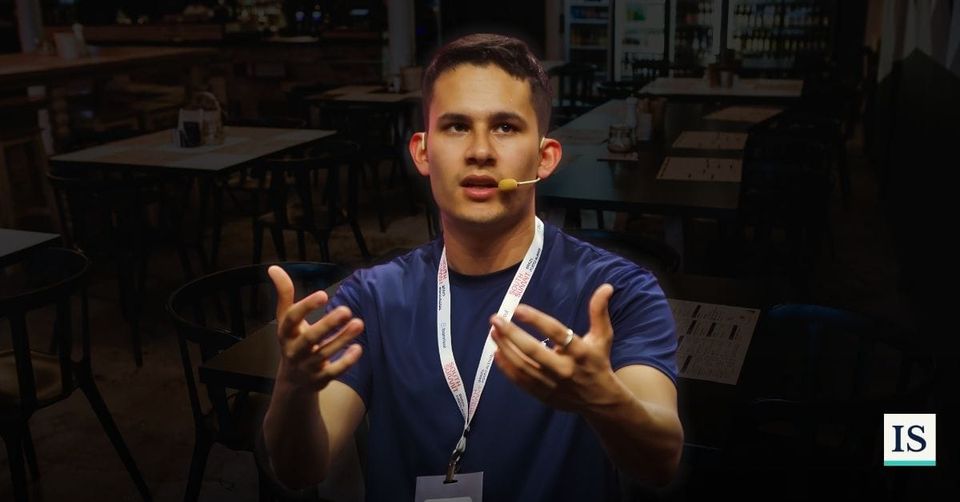
Emilia AI, a startup that turns the security cameras restaurants already have into an operations and fraud-detection system, raised US$1.5 million in a pre-seed round led by Prosus Ventures, according to reporting published on September 14, 2026. Prosus, the Dutch-listed technology group that owns the Brazilian delivery platform iFood, put in US$1 million, with angel investors from the technology sector contributing the remaining US$500,000. The company was founded in 2024 by Chief Executive Officer Andrés Cajiao and Chief Technology Officer Sebastian Rojo, both Colombian, and is headquartered in the United States with its commercial focus on Brazil and Colombia.
The product pairs video from in-store cameras with point-of-sale data and runs two agents on top of it. Coach watches the dining room for service gaps and prompts staff toward upsells, such as a dessert or a second round of drinks. Sentinel looks for mismatches between what leaves the kitchen and what gets rung up, flagging items served without a ticket or cash that never reaches the register. At Alife Nino, a group with more than 100 locations, the company says the pilot produced roughly US$300 in additional monthly revenue per table against a cost of US$10 per table, a 28-times return. At Jin Jin, a franchise operating on iFood, the fraud agent surfaced losses management had not detected, and the rollout is expanding to more than 77 units. The new capital will go toward the platform and expansion across Brazil and the wider region.
Market Context
The pitch rests on a labor problem that is specific and measurable. Brazilian restaurants turn over more than 70% of their staff a year, which works out to replacing the entire team roughly every 16 months. Under those conditions, training never compounds, service quality drifts, and the informal controls that keep small losses small never take hold. Software that encodes the upselling and the oversight is being sold as a substitute for institutional memory the business cannot retain.
The investor matters as much as the round size. Prosus has spent the past year pushing artificial intelligence through its portfolio companies rather than treating it as a standalone bet, and reported an 84% jump in profitability in its 2026 fiscal year with iFood as the main engine. A US$1 million check is trivial on that balance sheet, but it buys an option on the layer beneath delivery: the restaurant's own floor operations, where iFood currently has no visibility. Computer vision for physical retail and food service has drawn capital for a decade, mostly aimed at checkout-free stores in wealthy markets. Emilia's variant is cheaper by design, since it runs on cameras that are already installed and integrates with a point-of-sale system the restaurant already pays for.
What Stands Out
"Emilia was built to be the owner's eyes on the restaurant floor, even when he's not there." — Emilia AI
Regional Relevance
For the United States, the relevant signal is the technology, not the check. Computer vision applied to existing security cameras is becoming cheap enough to sell to single-location operators, which moves the addressable market from large chains piloting checkout-free formats to the long tail of independent restaurants. American food service faces the same turnover economics and the same shrinkage problem, and it is a far larger spending base. It also brings the regulatory question forward: employee monitoring through video and artificial intelligence sits under a patchwork of state biometric and surveillance laws, and a system that scores individual servers on upsell performance is the kind of product that attracts scrutiny from labor regulators before it attracts a class action.
For Brazil and the broader Latin American market, the case is margin. Restaurants operate on thin single-digit net margins where unrecorded sales and cash leakage translate directly into survival, and the sector is dominated by owner-operators without the systems a chain would have. A tool priced per table rather than per site is reachable for that segment, which is what makes the model interesting beyond the pilot logos.
The strategic layer is Prosus. Having spent years building iFood into the demand side of Brazilian food service, the group is now funding visibility into the supply side. Emilia AI enters as a small position in a portfolio where a single distribution decision from iFood could scale it faster than any subsequent round.
The Other Side
Do pilot returns survive contact with the average restaurant? A 28-times return at a 100-location group with engaged management is a best case, not a baseline. Independent operators without a head office pushing adoption may run the system, ignore the prompts, and churn within a quarter.
Who is being watched, and who agreed to it? A product that records staff behavior and scores it is a labor relations issue as much as a software purchase. Emilia frames the agents as a way to raise variable pay by lifting sales, but the same data supports discipline and dismissal decisions, and consent standards for workplace video vary across Brazil, Colombia and any market the company enters next.
Is US$1.5 million enough to defend the position? The technical components, camera feeds, point-of-sale integrations and vision models, are increasingly commodity, and a point-of-sale provider or a delivery platform could ship a comparable feature to an installed base of thousands. Prosus is an advantage and a constraint: the same investor that opens iFood's network could decide the feature belongs inside iFood.
Sources & Transparency
- Prosus sobe aposta em IA nos restaurantes e investe US$ 1,5M na Emilia AI
- Dona do iFood lidera rodada de US$ 1,5 milhão em startup que usa câmeras de restaurantes para aumentar vendas
- Emilia AI Raises $1.5M Pre-seed
- Prosus investe na Emilia AI para revolucionar gestão
- Prosus profitability jumps 84%, free cash flow up US$2bn in 3 years
- Prosus lifts profits and doubles down on AI ecosystems as iFood powers growth