
Samsung Puts US$1B Into KKR's Helix to Supply the AI Data Center Boom
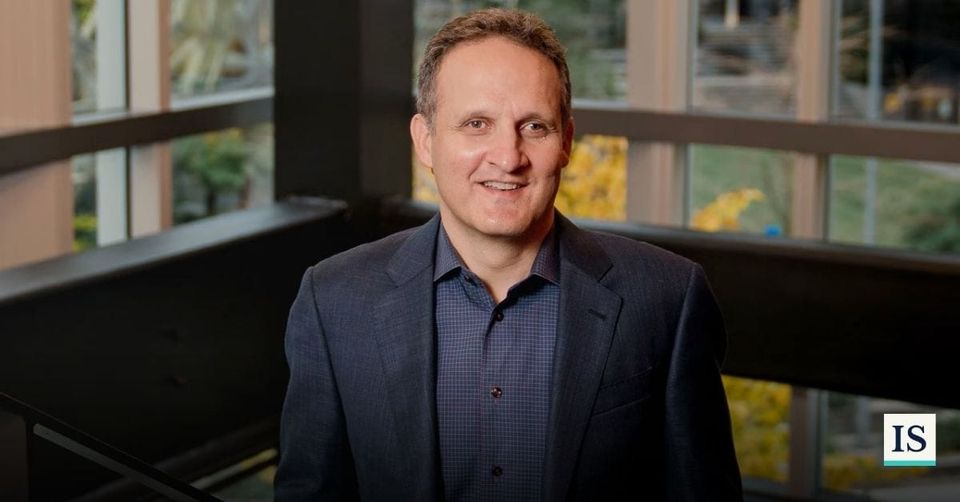
Samsung has committed US$1 billion to Helix Digital Infrastructure, an AI infrastructure company formed by KKR to build data centers and power capacity for hyperscalers, the large cloud and AI operators. Helix and KKR announced the deal in New York on September 28, and Samsung confirmed it in Seoul the next day. Samsung Electronics, led by co-CEOs Jun Young-hyun and Roh Tae-moon, will contribute US$500 million. The other US$500 million comes from five affiliates: Samsung C&T, Samsung SDS, Samsung SDI, Samsung Life Insurance and Samsung Fire & Marine Insurance. The money goes into Helix's long-duration capital fund. Helix is led by co-founder and Chief Executive Officer Adam Selipsky, the former head of Amazon Web Services, with KKR's global head of digital infrastructure, Waldemar Szlezak, as chief investment officer.
The commitment adds to more than US$10 billion pledged when Helix launched in June with KKR, the Kuwait Investment Authority, Nvidia and power producer Vistra as founding investors. Helix plans to invest in, build and manage data centers, power generation and transmission, fiber and related infrastructure in North America and abroad. It expects to draw on Samsung's capabilities in advanced technology, construction, energy storage and cooling. Samsung said power supply is the biggest bottleneck in AI infrastructure, and that Helix plans to secure electricity through its own investments and its partnership with Vistra.
Market Context
Helix is a bet on the hardest part of the AI buildout: getting sites, power and equipment delivered at the same time. The four largest U.S. hyperscalers (Amazon, Microsoft, Alphabet and Meta) plan roughly US$725 billion in capital spending in 2026, up 77% from about US$410 billion last year, according to a Financial Times tally cited by Yahoo Finance. Helix is structured as a permanent operating company rather than a traditional fund. Nvidia supports the deployment of its AI data center designs, and Vistra, which runs about 50 gigawatts of generation across 18 U.S. states, is the preferred power provider. KKR says it has invested more than US$75 billion across digital infrastructure and power globally, and about US$9 billion in Korea since 2009.
Samsung brings more than cash. Its Device Solutions division makes memory and other chips, and its Device eXperience division sells data center cooling through FläktGroup, an HVAC specialist it bought in 2025. Samsung C&T builds data centers and power plants as a contractor, Samsung SDS designs and operates data centers and has started renting out GPU capacity, and Samsung SDI makes backup power systems and batteries that keep servers running during outages. Neither Helix nor Samsung has disclosed specific projects or sites.
Fine Print Worth Reading
"These and other investors will serve as strategic partners and may have certain rights, such as priority or first look rights, to provide goods or services to Helix investments." — Helix and KKR announcement, September 28, 2026
Regional Relevance
For the United States, the deal brings more foreign capital into the physical layer of American AI: buildings, grid connections and cooling that must exist before any chip can be switched on. Helix is positioned as a single point of contact for hyperscalers that cannot build fast enough on their own. More capital lined up behind it increases pressure on U.S. utilities, permitting agencies and local communities, where power access has become the main constraint on new data center projects.
For South Korea, the investment marks a shift in how Samsung participates in the AI boom. The group has mostly profited as a supplier of memory chips, a business known for sharp cycles. A stake in Helix gives six affiliates, including two insurers, exposure to infrastructure returns and a potential inside track to sell equipment and services. It also comes as Korean companies balance large U.S. investment pledges tied to Seoul's trade deal with Washington against government pressure to keep investing at home.
The Other Side
Is this an investment or a sales channel? The announcement discloses that investors may get priority or first-look rights to supply Helix projects. That could steer contracts for cooling, batteries or construction toward Samsung and Vistra rather than competitors. Hyperscaler customers and other investors will want to see whether Helix buys on price and performance or on partnership. The framing also differs slightly: Samsung describes its affiliates as joining the founding investors, while KKR presents the money as building on founding commitments already made.
Can capital solve a power problem? Money is not the scarcest input in the AI buildout. Grid interconnection delays, transformer and turbine shortages, and local opposition to large data centers can slow projects regardless of funding. More than three months after launch, Helix still has not named a site publicly.
What if AI spending cools? Helix's business depends on a handful of very large customers continuing to raise capital spending at record rates. For Samsung, the stake adds to an exposure it already has through memory chip sales. A slowdown in AI investment would hit both at once.
Sources & Transparency
- Samsung Commits $1 Billion to Helix Digital Infrastructure to Support Global AI Infrastructure Buildout
- Samsung to Invest $1 Billion in KKR's AI Infrastructure Company
- Samsung group invests $1 bil. in KKR-founded AI infrastructure firm
- Samsung invests $1B in KKR's AI-infrastructure firm Helix, joining NVIDIA, Vistra
- Samsung Invests $1 Billion in Nvidia- and KKR-Backed Helix Digital