Why Do Investors Want a Second SpaceX?

Hi, and welcome to a new edition of The Daily Dealflow — the 5-minute briefing that gives you clear context on capital flows and market-moving trends across the Americas, from Silicon Valley to Buenos Aires. Let's dive in.
🏆 Deal of the Day
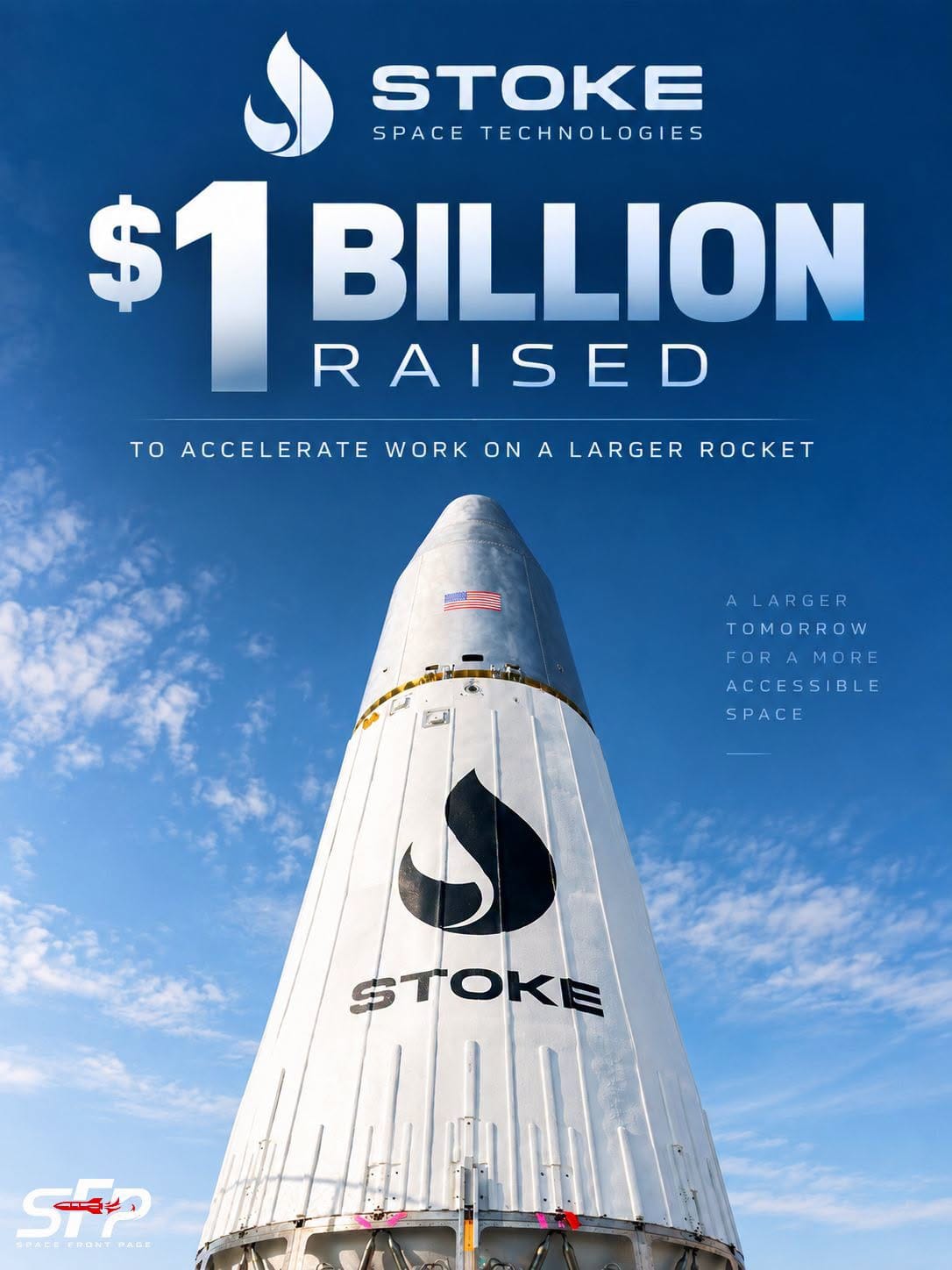
Stoke Space, a Kent, Washington-based rocket maker building a fully reusable launch vehicle, raised $1B in a Series E co-led by Point72 Ventures and Spark Capital — pushing its total funding to $2.3B — as it races to put its Nova rocket into orbit and go head-to-head with SpaceX on reusability – TechCrunch.
Why This?: In today's capital markets, "the Americas" increasingly means the US aerospace complex writing ten-figure checks to challenge its own biggest incumbent, at a moment when launch capacity — not chips — may be the next physical bottleneck for satellites, defense and even AI compute in orbit.
Positive Context:
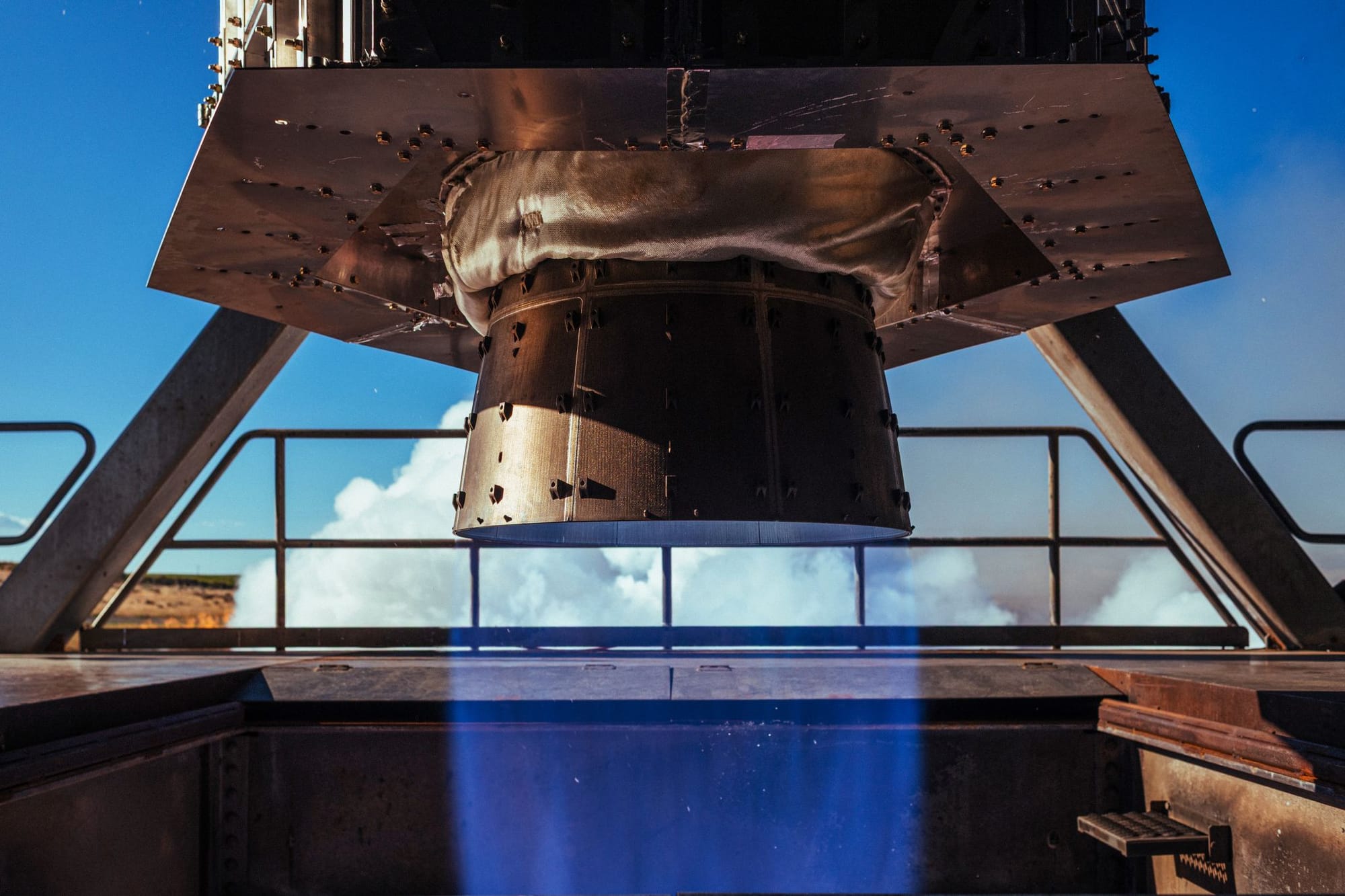
- Nova's second stage uses active cooling with super-cooled liquid hydrogen to survive atmospheric reentry — tackling the same recovery problem that has dogged SpaceX's own Starship program — and the company has already sold launch contracts for its first vehicle.
- Founder and CEO Andy Lapsa says the round funds pure scale: production capacity and flight frequency, not new technology risk, with Nova Pathfinder targeted for an early 2027 debut and a larger, Falcon 9-class Nova Block 2 planned for 2029.
Yes, but:
- Stoke is chasing a market SpaceX has spent two decades and tens of billions of dollars dominating — Falcon 9 alone lifts roughly six times more payload to orbit than Stoke's first-generation Nova will.
- Reusable second-stage recovery is exactly the problem that has taken SpaceX years and multiple Starship test flights to work through; Stoke is betting it can solve the same physics faster with a fraction of the capital and headcount.
Zoom in: Of Stoke's roughly 400 employees, 100 are already split evenly between a test site in Moses Lake and a launch pad in Cape Canaveral — a quarter of the company's headcount stationed at the two ends of where its rockets will actually fly, more than a year before the first launch.
The comment: "Full reusability is the inevitable end state of the market, providing an order-of-magnitude cost and service advantage over partially reusable rockets," said Spark Capital's Clay Fisher, per GeekWire.
💰 Venture Capital
Submit a deal for The Daily Dealflow newsletter via DM here on LinkedIn.
Diameter Pay (US) – US$10M, Series A, API infrastructure enabling banks, fintechs and exchanges to offer virtual dollar accounts, cross-border payments and stablecoin on/off-ramps. David Lighton leads the company; CMT Digital and Lightspeed Faction co-led the round after years of bootstrapping – The Investor Society.
BrainChild Bio (US) – $116M, Series A, CAR T-cell therapies delivered straight into the brain and spinal fluid through an implanted catheter system, targeting central-nervous-system tumors that currently have no approved treatments. Founded by CEO Steven Brugger, the round was led by an undisclosed private family fund, joined by Seattle Children's and WRF Capital, and will fund a Phase 2 study in pediatric brain cancer — proof that diseases with no good options can still pull in nine-figure rounds once the science looks real – FinSMEs.
iPronics (Spain) – US$125M, Series B, developer of programmable photonic switches that reconfigure connections between GPUs in under a millisecond. Christian Dupont and Daniel Pérez-López founded the Valencia spin-off; Maverick Silicon and Light Street Capital co-led, with Nvidia also participating. Its hardware could use 20 times less space than conventional alternatives – The Investor Society.
Moonwalk Biosciences (US) – $70M, Series B, RNAi medicines that target fat tissue directly for obesity and cardiometabolic disease while sparing muscle mass — essentially a bet against the muscle-loss side effects of today's GLP-1 drugs. Founded by CEO Alex Aravanis, the round was co-led by Alpha Wave and YK Bioventures, with Eli Lilly, ARCH Venture Partners and Khosla Ventures all writing checks — a sign Big Pharma wants a hedge against its own blockbuster drug class – FinSMEs.
Konko AI (Costa Rica/US) – US$6M, venture round for a platform automating patient coordination, triage, scheduling and clinical follow-up. Jean-Marc Goguikian and Michael Haddad founded the company; Hi Ventures led alongside LifeX Ventures and SquareOne. It has already handled more than 2 million interactions across 90 Latin American healthcare institutions – The Investor Society.
NavigateAI (US) – $25M, Seed, AI copilot that gives construction workers real-time, hands-free guidance through their phones and Meta's smart glasses — checking installation work, torque specs and code compliance against building plans on the spot. Founded by CEO Eric Wu, who previously built and ran Opendoor, the round was led by angel investor Elad Gil, with Khosla Ventures, Fifth Wall, homebuilder Lennar and developer Tishman Speyer also participating, plus angels including Coinbase's Brian Armstrong. Wu is deliberately skipping a board altogether to stay focused on customers – TechCrunch.
🏛️ Private Equity
John Marshall Bancorp–Eagle Financial Services (US) – $253M, all-stock merger, two Virginia community banks combining into a single $4.4B institution with 23 branches stretching from the Shenandoah Valley into Northern Virginia and Maryland. Eagle shareholders get roughly an 11.5% premium at $46.72 a share; John Marshall's Christopher Bergstrom becomes executive chairman while Eagle's Brandon Lorey runs the combined bank — and Eagle's 145-year-old Bank of Clarke brand survives the deal in its legacy markets – BusinessWire.
Transtelco–Axtel (Mexico) – over $600M, competing takeover bids, a Mexican telecom operator and Axtel's own co-chairman are now in a bidding war for control of the company, which conglomerate Alfa spun off back in 2023. Rival bidder 4 Tech Plus — a group led by Axtel co-chairman Tomás Milmo Santos — is offering roughly 3.86 pesos a share against Transtelco's undisclosed counteroffer, in a fight that still needs sign-off from Mexico's securities, competition and telecom regulators – Inside Towers.
McGraw Hill (US) – acquisition of Teachally, a five-person AI startup that creates, adapts and translates standards-aligned school curricula; terms were undisclosed. Founded by Daniel Bernstein and Rushil Makkar, Teachally pivoted from a children’s app into edtech—an education-industry plot twist worthy of Silicon Valley – The Investor Society.
JAB Insurance–Columbian Financial Group (US) – undisclosed value, acquisition, insurance investor JAB Insurance rescued a 144-year-old New York and Illinois insurer out of regulatory rehabilitation, injecting fresh capital as part of a mutual-to-stock conversion. JAB's Anant Bhalla, who oversees roughly $30B in assets, installed Mark Reilly as the insurer's new CEO — a rare case of private capital pulling a legacy carrier back from the regulatory brink instead of a rival simply absorbing its policies – BusinessWire.
Landmark Alantra–Azul Azul (Chile) – ~$15M, controlling-stake auction, an investment vehicle run by filmmaker Pablo Larraín and Guillermo Arnaiz emerged as the sole bidder for control of Universidad de Chile's professional football concession, sold out of the bankrupt estate of asset manager Sartor. Larger banks reportedly passed on the deal for being "too small" — proof that even in football finance, distressed situations still need a proper tender offer down the line – Diario Financiero.
FinQuery–Innervision (US) – undisclosed value, carve-out acquisition, lease-accounting software company FinQuery bought Innervision out of UK-based IRIS Software Group, instantly giving FinQuery's 8,700-plus customers in-house expertise in Britain's FRS 102 accounting rules. CEO Joe Schab's company, backed by TA Associates, had served UK clients remotely for a decade before deciding to just buy the local know-how instead of building it – BusinessWire.
📈 Public & Capital Markets
GameStop (US, NYSE: GME) – Q2 earnings beat, net income jumped to roughly $298.7M from $168.6M a year ago, largely on gains from its eBay equity stake, and management raised its full-year adjusted EBITDA outlook to "more than $650M" from "more than $600M" — proof the meme-stock-turned-holding-company is quietly becoming a real investment vehicle, video game retail industry – Quartz.
Grupo Televisa (Mexico, BMV) – equity move, shares plunged 10% to their worst session since February 2023 after the broadcaster was confirmed for removal from Mexico's benchmark IPC index — to be replaced by petrochemical group Alpek — over thinning trading volume. Televisa, founded by the Azcárraga family and once the dominant force in Spanish-language television, is now down more than 22% for the year, media industry – Cronista.
Intel (US, Nasdaq: INTC) – equity move, shares jumped roughly 9% after an analyst upgrade citing progress in its foundry turnaround, compounded by reports the chipmaker plans its third CPU price hike of the year — even as the stock trades at a lofty 68 times forward earnings on a bet Intel becomes the world's second-largest foundry by 2030, semiconductor industry – Motley Fool.
Roivant Sciences (US, Nasdaq: ROIV) – equity move, shares surged nearly 19% after "blowout" Phase 2 data for its pulmonary hypertension drug mosliciguat, presented at the European Respiratory Society Congress — a reminder that in biotech, one conference slide can still move a market cap more than a quarter of earnings, pharmaceutical industry – TheStreet.
📅 ICYMI
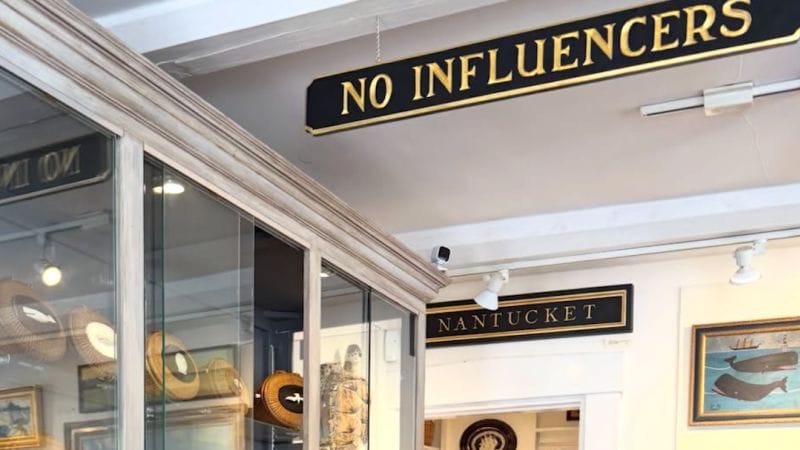
A Massachusetts craft shop's snarky "No Influencer" sign was supposed to shame content creators out of using the store as a free photo backdrop — instead it went viral, and the shop has now sold roughly 600 of the signs as merch.
Bedside sleep gadgets are graduating from white noise to scent: startups like Kimba and Memory Air are piping AI-tuned essential oils into bedrooms overnight, chasing a sleep-tech device market some forecasts put above $160B by 2035.
A California drone startup called Rainmaker says its cloud-seeding fleet delivered 19 million gallons of precipitation across Alaska — the first time a private company has published measured results for weather modification at that scale.
See you tomorrow,
Jose Kont
The human behind The Investor Society.