
Félix Raises US$200 Million Led by a16z and General Catalyst to Expand Beyond Remittances Into Financial Services
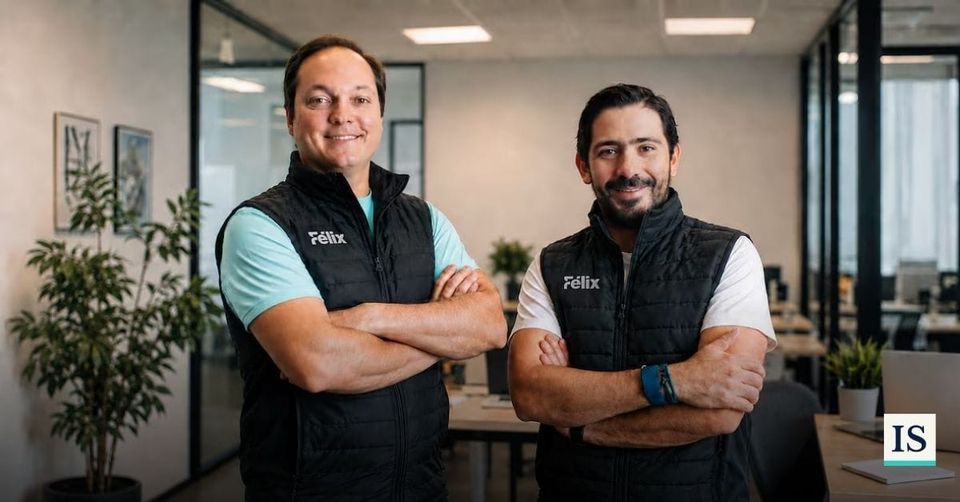
Félix, the Miami-based fintech that lets Latin American workers in the United States send money home through a WhatsApp conversation, has raised US$200 million in a Series C round, the company confirmed on September 1, 2026. The financing is split between roughly US$87 million in equity led by Andreessen Horowitz and about US$113 million in credit from General Catalyst's Customer Value Fund, with participation from QED Investors, Castle Island Ventures, Switch Ventures, Contour Venture Partners and Endeavor Catalyst. The company did not reveal its valuation after this round, saying only it had “increased threefold” since its Series B, a $75 million round led by QED Investors in 2025.
Félix was founded in 2020 by Manuel Godoy, chief executive officer, and Bernardo García, both Wharton graduates, and now operates across 11 Latin American markets including Mexico, Colombia, Ecuador, El Salvador, Brazil, Costa Rica, Honduras and Peru. Users type or send voice notes to a chatbot inside WhatsApp, and recipients collect funds as local-currency bank deposits or cash at partner stores, while the transfer itself settles behind the scenes in Circle's USDC stablecoin. The company says it has processed more than US$8 billion in transactions, serves more than 6 million people and grew revenue 2.5 times over the past year. Proceeds will fund entry into Brazil and Venezuela, plus a push beyond transfers into lending, savings and an AI assistant Félix calls a cognitive financial companion.
Six years ago, Félix started with a simple idea: sending money home should feel as easy as sending a message.
— Félix (@Felixpago) September 1, 2026
Today, we're raising $200M in funding, led by @a16z and participation of @QEDInvestors, @CastleIslandVC, Switch Ventures, Contour Venture Partners and @endvr_catalyst… pic.twitter.com/ACCWkhhyJd
Market Context
The raise lands at an unusual moment for the remittance business. Latin America receives more than US$160 billion a year from workers abroad, but Mexico, the largest single corridor, took in about US$61.7 billion in 2025, a drop of roughly 4.7% and the first annual decline in 11 years. A new 1% U.S. federal excise tax on remittances funded with cash, money orders and cashier's checks took effect January 1, 2026, and the Joint Committee on Taxation projects it will raise about US$10 billion through 2034. Transfers funded from bank accounts or cards are exempt, which is precisely the profile of a digital-first sender.
That regulatory line has become a competitive one. Bitso, the region's largest crypto exchange, moved US$6.5 billion in U.S.-Mexico remittance volume in 2024, more than 10% of the corridor, most of it on stablecoin rails. Félix is chasing the same efficiency without asking users to touch crypto, and it is doing so against a field that includes Remitly, Wise and the incumbents Western Union and MoneyGram. Its own funding trajectory has accelerated sharply: US$15.5 million in a Series A led by Castle Island Ventures in May 2024, US$75 million led by QED in April 2025, and now US$200 million sixteen months later.
The Signal
"We want to build a Goldman Sachs-style experience for a user who has historically been completely underserved." — Manuel Godoy, co-founder and CEO, Félix, in an interview with Bloomberg
Money-transfer startup Felix Pago raised $200 million to expand beyond remittances and offer services such as lending and savings to Latin American immigrants in the US https://t.co/7mTW8uw1aQ
— Bloomberg (@business) September 1, 2026
Regional Relevance
For the United States, the deal is a bet on a customer base that domestic banks have priced out or passed over. Roughly 6 million people already use Félix to move money, and the company is now proposing to sell them credit and savings products through the same chat window. That makes it a test of whether the immigrant financial-services market, long treated as a low-margin transfers business, can support a full consumer bank built on messaging apps and stablecoin settlement. Andreessen Horowitz writing the equity check, and General Catalyst supplying a credit facility larger than the equity itself, signals institutional appetite for lending against these customers rather than simply charging them a fee per transaction.
For Latin America, the money arrives as household income from abroad is shrinking. With Mexican remittances falling and a U.S. tax now applied to the cash-funded transfers that unbanked senders rely on most, the cost of each transaction matters more than it did a year ago. BBVA Research estimates 84% of Mexican migrants in the U.S. hold bank accounts, against 65% in Honduras, 72% in Guatemala and 74% in El Salvador, meaning the tax falls hardest on Central American corridors where Félix is expanding.
Miami's role is worth noting as well. The city has become the default headquarters for fintechs serving both sides of the hemisphere, and a locally founded unicorn strengthens the case that Latin America-facing financial infrastructure can be built and capitalized from U.S. soil rather than from São Paulo or Mexico City.
The Other Side
Can a remittance app credibly become a lender? Transfers are a low-risk, fee-based business. Credit is not. General Catalyst's Customer Value Fund structure suggests the debt is tied to customer acquisition economics, but underwriting loans to a population with thin U.S. credit files, variable income and, in many cases, uncertain residency status introduces a loss profile Félix has not yet demonstrated it can manage through a downturn.
Does the stablecoin advantage survive regulation? Félix's cost edge depends in part on settling in USDC and on senders funding transfers from cards and accounts that fall outside the new excise tax. Both are policy-dependent. Analysts have already flagged that the tax pushes volume onto rails regulators cannot easily monitor, which is the kind of observation that tends to precede a rule change rather than follow one.
Sources & Transparency
- Felix Pago Raises $200 Million to Expand Into Financial Services
- WhatsApp Remittance Startup Félix Secures $200M Series C Led By A16z, General Catalyst
- Felix Pago Raises $200 Million to Push Past Remittances
- Félix raises $200 million to bring loans and savings to WhatsApp
- Félix levanta US$200M y entra al club de unicornios desde WhatsApp
- Felix Pago raises $15.5 million to help Latino workers send money home via WhatsApp