
Norbert Health Raises US$14 Million Series A for Autonomous Robotic Nursing Assistants
Norbert Health, a Brooklyn-based company that turns robotic hardware into autonomous nursing assistants, raised a US$14 million Series A announced September 1, 2026. The round was led by William A. Marino with Cardinal Group, with participation from Exor Seeds and CareIT, and an angel roster that includes Datadog co-founders Alexis Le-Quoc and Olivier Pomel, Noom co-founder and executive chairman Saeju Jeong, and Owkin chief executive Thomas Clozel. The financing brings total capital raised to US$19 million.
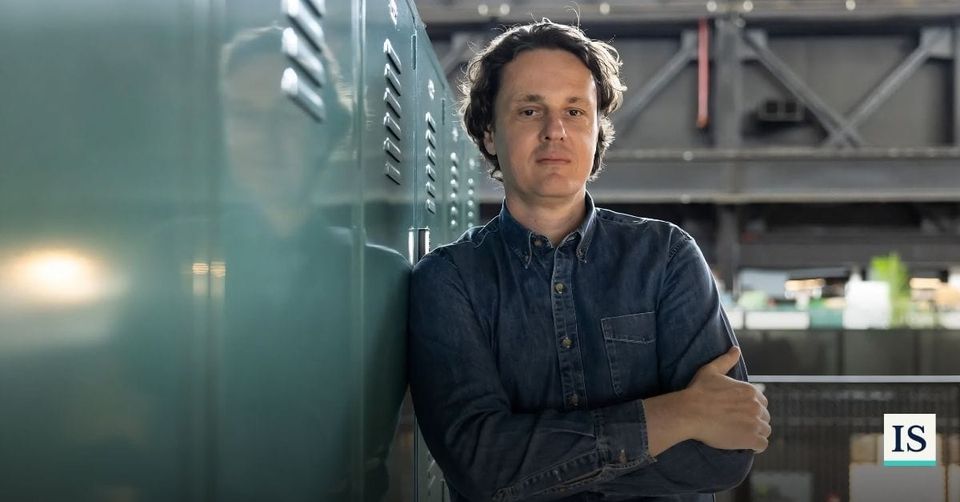
The company, led by co-founder and chief executive Alexandre Winter, sells a control system rather than a robot. Its software layer takes third-party robotic platforms and gives them contactless medical-grade sensing, the ability to execute clinical protocols, multilingual patient communication, documentation into electronic health records and the billing infrastructure needed for reimbursement. Norbert-powered robots have been running in skilled nursing facilities across the United States since August 2025 and now round on hundreds of patients a day, capturing vitals without contact, conducting assessments and handling patient requests. The company reports a 96% patient acceptance rate and 82% monitoring compliance, close to double the baseline it cites for manual remote monitoring. New capital will go toward expanding the clinical skill library, including post-fall neurological evaluations, pressure injury prevention, cognitive screening and fall-risk reassessment, plus regulatory clearances and deployments in additional care settings.
Market Context
The federal government's own projections describe a nursing gap that does not close on its own. The Health Resources and Services Administration expects an 8% shortage of registered nurses in 2028, narrowing to 3% by 2038, but a far sharper shortfall among licensed practical and vocational nurses, the workforce that staffs long-term care: 17% of demand unmet in 2028, widening to 30%, or roughly 246,000 full-time positions, by 2038. Rural facilities fare worst. Skilled nursing operators, which run on thin margins and heavy agency-staffing costs, are where that math bites first, and it is where Norbert has chosen to deploy.
The company's history explains its unusual entry point. Norbert began as a contactless vital-signs scanner, raising a US$5 million seed extension in 2021 led by Serena Capital and HCVC with Exor, C4 Ventures, LDV Capital and Newlab, built around multi-sensor measurement of temperature, heart rate, heart-rate variability and blood-pressure indicators from several feet away. Mounting that sensing stack on a mobile platform, rather than building a humanoid from scratch, lets Norbert compete on clinical capability at a US$14 million round size while better-funded humanoid developers work on hardware.
The Signal
"Healthcare labor is one of the largest markets in the US economy, and robots have never had a credible route into it until now." — Saeju Jeong, co-founder and executive chairman, Noom
Regional Relevance
For the United States, this is a small round attached to a large structural problem. Hospital and long-term-care operators have tried to solve staffing with software, scheduling tools, documentation assistants and remote monitoring, and the labor gap persisted because the missing work is physical: walking into a room, checking a patient, writing it down. Norbert's claim is that the bottleneck was never mobility but clinical competence, and that a robot which can bill for what it does has a business model rather than a pilot. The angel bench is the sharpest signal here, with the founders of Datadog and Noom putting personal capital behind a thesis that healthcare labor is addressable by machines.
The deployment setting matters as much as the technology. By starting in skilled nursing facilities rather than academic hospitals, Norbert is targeting the segment with the least capacity to absorb wage inflation and the least access to specialized staff, which is also the segment where regulatory scrutiny of care quality is most intense. Any adverse event involving an autonomous assistant in that environment becomes a national story quickly.
Norbert's Brooklyn base and European investor lineage, with Exor and earlier backers Serena Capital and HCVC, also situates it in the transatlantic health-robotics corridor, where aging populations in Europe and Japan create a second demand pool for the same clinical skills, subject to different device-approval regimes.
The Other Side
Is a control system a defensible position, or a feature the hardware makers absorb? Norbert deliberately does not build robots, which keeps capital needs low. It also means its value sits in a layer that well-funded platform manufacturers have every incentive to build themselves once the clinical playbook is visible in the market.
Do the reported metrics measure care or acceptance? A 96% patient acceptance rate and 82% monitoring compliance say patients tolerate the robot and data gets collected. Neither yet demonstrates improved clinical outcomes, shorter response times or reduced adverse events, which is what operators and payers ultimately buy. Winter frames the requirement himself: "Robots that assist nurses can help reduce the burden, but only if they have clinical skills."
Who carries liability, and who signs off? The company lists regulatory clearances as a use of proceeds, meaning several of its planned capabilities, including post-fall neurological evaluation, are not yet cleared. Autonomous assessment of a patient after a fall in a skilled nursing facility raises questions about supervision requirements, malpractice exposure and reimbursement coding that have no settled answers.
Sources & Transparency
- Norbert Health Raises $14 Million Series A to Power Autonomous Robotic Nursing Assistants
- Norbert Health Raises $14 Million Series A to Power Autonomous Robotic Nursing Assistants
- Norbert Health Raises Another $5M to Make Contactless Vital Sign Monitoring a Reality
- Contactless Care: Robots for an Aging World with Norbert Health's Alexandre Winter